Case file · Apparition · House or mansion
50 Berkeley Square
Also known as The most haunted house in London, The Nameless Horror of Berkeley Square
A Georgian townhouse in Mayfair that Victorian London called its most haunted house — home to a nameless horror in the attic that probably never existed.
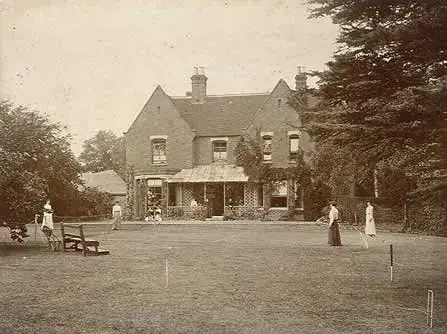
Number 50 is a four-story Georgian townhouse on the west side of Berkeley Square in Mayfair, built in the mid-18th century and once the home of the prime minister George Canning, who is commemorated by a blue plaque. In the second half of the 19th century it became, by reputation, the most haunted house in London.
The reputation grew out of neglect. From 1859 until his death in 1874 the house was occupied by Thomas Myers, who was said to have been jilted by his fiancée and to have shut himself away, living alone in the decaying house, sleeping by day and wandering the rooms at night. Passersby saw a dirty, shuttered house with lights moving in the windows at odd hours; tax summonses went unpaid. By the early 1870s the journal Notes and Queries was carrying letters about the strange house in Berkeley Square, and the stories multiplied.
In their fullest form they describe a room at the top of the house that no one could survive a night in: a maid found screaming and insane who died in hospital the next day, a skeptical gentleman who rang the bell in terror and was found dead, a Lord Lyttelton who fired at a shape with a gun loaded with coins, and two sailors on shore leave who broke in, one dying as he fled. The entity was a brown mist, a white figure, a lunatic relative once locked in the attic and fed through a hole, a murdered child or, most memorably, something with no name at all. The 1879 Mayfair Magazine and Charles Harper’s Haunted Houses (1907) did much to fix the legend.
Most of it does not survive scrutiny. Lady Dorothy Nevill, a relative of Myers, wrote in 1906 that his grief had made him behave strangely and that the lights and noises were simply him; she called the whole story nonsense. Writers on the case have noticed that the details closely echo Edward Bulwer-Lytton’s 1859 ghost story “The Haunted and the Haunters,” versions disagree about which Lord Lyttelton was involved and when, and the sailors’ tale has been traced to the early 20th-century ghost writer Elliott O’Donnell, with no evidence behind it. Peter Underwood’s Haunted London (1975) revived interest.
From the late 1930s the house was the premises of the antiquarian booksellers Maggs Bros. Little was reported for decades, though staff later described a column of brown mist crossing the old “haunted room” in 2001 and other odd moments. The house is a private building and can only be seen from the square.
What people report
A brown mist or white figure in the top-floor room, screams, dragging sounds on the stairs, lights in the windows, and a nameless terror said to drive people mad or frighten them to death — almost all reported secondhand in Victorian and Edwardian accounts. A few modern staff reports describe a moving mist and a sense of being watched.
Where and when
The top-floor (sometimes second-floor) room at the back of the house, the staircase, and the windows seen from the square at night.
Timeline of the haunting
- 1859Thomas Myers moves in 50 Berkeley Square
The new occupant, reputedly heartbroken after a broken engagement, lived as a recluse for fifteen years as the house fell into disrepair.
- 1872–73Letters in Notes and Queries London
Correspondents traded rumors about the haunted house in Berkeley Square; a common conclusion was that its neglected state was feeding imaginative stories. Further exchanges followed in 1879 and 1880–81.
- November 1874Death of Thomas Myers London
Myers’s death ended the occupancy that had given the house its eerie appearance, but by then the ghost stories had taken on a life of their own.
- 1879Mayfair Magazine spreads the legend London
A widely repeated article claimed that a maid who slept in the haunted room had been found mad and died, and that a nobleman who spent a night there was struck dumb with fear.
- 1906Lady Dorothy Nevill’s verdict London
In her memoirs, Myers’s relative explained the nocturnal lights and noises as his own eccentric habits and dismissed the haunting as nonsense.
What could explain it?
- The lights and noises that started the legend match the habits of a reclusive occupant, Thomas Myers, as described by his relative Lady Dorothy Nevill.
- Many of the details resemble Bulwer-Lytton’s 1859 story “The Haunted and the Haunters,” suggesting fiction fed the folklore.
- Key episodes, such as the sailors’ break-in, can be traced to later ghost writers and have no documentary support; versions contradict one another on names and dates.
- Victorian Notes and Queries correspondents themselves concluded that the house’s dilapidation was inspiring the stories.
Ghost tours, books and screen
The house appears in Victorian periodicals, Charles Harper’s Haunted Houses (1907), Elliott O’Donnell’s books, Peter Underwood’s Haunted London (1975), London ghost walks, podcasts and horror fiction about “the nameless horror of Berkeley Square.”
Places to visit
The square’s gardens are public; number 50 is a private building marked by George Canning’s blue plaque and can be seen only from outside.
Where it’s reported
50 Berkeley Square in the news
No recent headlines about 50 Berkeley Square. Our news desk checks every day — see all the latest paranormal news.
Sources
First published · Updated