Case file · Folklore spirit · Road, bridge or woods
The Bennington Triangle
Also known as Glastenbury Mountain disappearances, Glastenbury Triangle
Five people vanished near Glastenbury Mountain between 1945 and 1950, cases later bundled into Vermont’s best-known tale of the unexplained.
The “Bennington Triangle” is not a place on any map. The phrase was coined in 1992 by the Vermont writer Joseph A. Citro, who borrowed the idea from the Bermuda Triangle and applied it to a stretch of woods around Glastenbury Mountain in the south of the state, near Bennington and the Long Trail. The reality behind it is a short run of missing-person cases from the years just after the Second World War, which newspapers of the day, including the Bennington Evening Banner, noticed and compared to the mystery of James Hilton’s Lost Horizon.
The first case was Middie Rivers, a 74-year-old hunting guide who disappeared on 12 November 1945 while leading four hunters near Hell Hollow Brook, close to the Long Trail. Hundreds of volunteers and soldiers searched for days and found little more than a cartridge. On 1 December 1946, 18-year-old Paula Welden, a Bennington College sophomore, set out to walk the Long Trail in a red jacket and was reportedly seen by several people before she vanished. A reward of $5,000, the FBI and large search parties turned up nothing; her story is said to have inspired Shirley Jackson’s novel Hangsaman. In December 1949 James Tedford, a 68-year-old resident of the Vermont Soldiers’ Home, disappeared during a bus trip back to Bennington, with his belongings left behind. On 12 October 1950 eight-year-old Paul Jepson vanished from his mother’s pickup while she tended animals; bloodhounds followed his scent to a crossroads and lost it. A few weeks later, 53-year-old Freida Langer, an experienced hiker camping at the Somerset Reservoir, fell in a stream, went to change, and never returned. Her body was found in May 1951 in an area that had already been searched, and officials could not establish how she died.
Retellings add layers that the record does not. Popular accounts speak of a curse on Glastenbury Mountain, of a stone that swallows people, of a wild creature once dubbed the Bennington Monster, of lights and UFOs. The claim of an Indigenous curse is repeated by writers but is poorly documented and is best treated as a modern story laid over the landscape rather than as Abenaki tradition. A death in 1943, that of hunter Carl Herrick, is often added to the lists although his body was found and the cause was determined.
Without the myth, the cases look quite different. They span five years, victims aged 8 to 74, and very different circumstances: an old guide in hunting season, a student on a winter hike, a man on a bus, a child at a dump or farm, and a hiker at a reservoir. Investigators and later writers have suggested getting lost in fog, rough terrain and old mine shafts, an abduction in the child’s case and, in Langer’s case, a possible medical event such as a seizure. The area was also, by then, almost deserted: Glastenbury had been a logging and charcoal-burning town in the 19th century, and the legislature unincorporated it in 1937, when only seven people lived there.
What people report
No ghost is reported in the original cases. Folklore since the 1990s adds claims of unexplained lights, strange sounds, disorienting winds, a hairy creature and a “window” to the unknown on Glastenbury Mountain.
Where and when
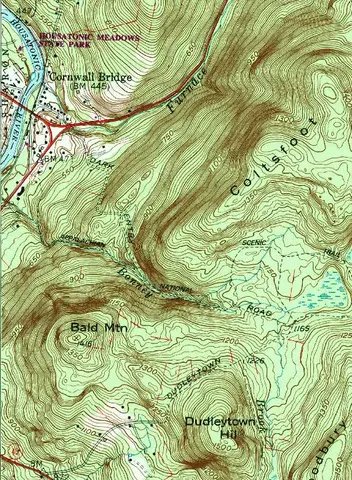
Glastenbury Mountain, the Long Trail near Route 9, Hell Hollow Brook, Bickford Hollow and the Somerset Reservoir area of the Green Mountains.
Timeline of the haunting
- 12 November 1945Middie Rivers disappears Hell Hollow, Vermont
The 74-year-old guide goes ahead of a hunting party near the Long Trail and is never seen again; searchers find only a cartridge.
- 1 December 1946Paula Welden vanishes on the Long Trail Bennington, Vermont
The 18-year-old Bennington College student sets out alone and is reported by several people on the trail. A large search and an FBI inquiry find no trace.
- December 1949James Tedford leaves no trace on a bus Bennington, Vermont
A 68-year-old Soldiers’ Home resident goes missing between a bus stop and Bennington; his belongings are left behind and he is never found.
- Late October 1950Freida Langer’s body found the next spring Somerset Reservoir, Vermont
The hiker disappears after falling into a stream. Searchers fail to find her until May 1951, when her body is discovered in an area already covered.
- 12 October 1950Paul Jepson goes missing Bennington, Vermont
An eight-year-old boy disappears from his mother’s truck; bloodhounds trace his scent only to a crossroads.
What could explain it?
- Counting different cases together makes a pattern: the victims were of different ages and sexes and the circumstances differ, so the “triangle” is largely a label applied afterwards.
- Dense forest, fog, steep terrain and cold in late autumn can disorient even experienced walkers, and unmarked mine shafts or deep water could hide a body for months. Langer’s case shows a body can lie near an area already searched.
- Some individual cases have ordinary possibilities: that Welden had planned to leave, that a motorist took or struck Jepson, that Tedford left the bus unnoticed, or that Langer suffered a seizure.
- The supernatural lore, including the “curse,” was largely assembled in the 1990s by writers and tellers rather than recorded by the families or contemporary newspapers.
Ghost tours, books and screen
The cases inspired Shirley Jackson’s Hangsaman, plus decades of books, podcasts and local-interest articles, with the half-vanished town of Glastenbury often described as a ghost town.
Places to visit
The club maintains the Long Trail through Glastenbury; check conditions and carry navigation, because the area is remote.
Where it’s reported
Sources
First published · Updated