Case file · Residual haunting · House or mansion
Treasurer’s House, York
Also known as The Roman soldiers of York, The Case of the Roman Soldiers
In 1953 a young apprentice in this York house’s cellar said he watched a column of Roman soldiers march out of the wall — visible only from the knees up.
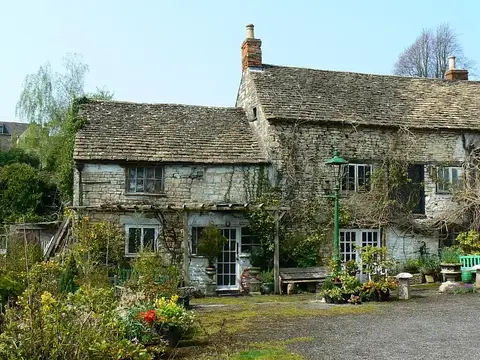
Treasurer’s House stands in Minster Yard, just north of York Minster, on the site of the residence of the cathedral’s treasurers, an office created in 1091 and abolished at the Reformation in 1547. Most of the present house was rebuilt by the Young family in the early 1600s, later divided into tenements, and then bought up and restored between 1897 and 1900 by the industrialist Frank Green. When Green retired in 1930 he gave the house and its contents to the National Trust — the first time the Trust had received a home together with its furnishings. The house sits over one of the main Roman roads leading out of the legionary fortress of Eboracum, and Roman column bases were found in its foundations.
In 1953 the National Trust was replacing Green’s coal-fired heating, and an 18-year-old apprentice heating engineer named Harry Martindale was working on a ladder in the cellar. He later said he heard a trumpet-like note growing louder, then saw a soldier in a helmet emerge from the wall, followed by a horse and a straggling column of men who crossed the cellar and disappeared into the opposite wall. They seemed cut off at about the knees — as if walking on a surface some eighteen inches below the cellar floor. He described them as small, shabby and tired, in green tunics, carrying short swords and round shields, nothing like the Romans in films. Terrified, he fell from his ladder and fled; he took two weeks off work.
Martindale stayed quiet for about twenty years, partly for fear of what it might do to his career — he later became a police officer — before telling his story in the 1970s on television and to the writer John Mitchell, with whom he started one of York’s first ghost walks in 1973. Supporters, including a Society for Psychical Research account, point out that excavations showed the Roman road ran about eighteen inches below the cellar floor, and that his details of round shields and rough dress better match late Roman auxiliary troops than popular images of legionaries. Martindale told the story many times without changing its details, reportedly refused payment for it, and died in 2014. Others are said to have seen the soldiers since, and the house is also said to hold the ghost of a 17th-century owner, George Aislaby.
Skeptics note that the account was first made public two decades after the event, by which time the cellar’s Roman road and late-Roman military dress were more widely known, and that a lone witness, frightened and exhausted at the top of a ladder in a dim cellar, is exactly the situation in which vivid hallucinations occur. The story has nonetheless become the cornerstone of York’s claim to be one of the most haunted cities in Europe.
What people report
A column of Roman soldiers and a horse passing through the cellar walls, seen only from the knees up, preceded by a trumpet-like sound — reported by Harry Martindale in 1953 and by later witnesses — plus figures and footsteps elsewhere in the house.
Where and when
The cellar beneath the house, where the Roman road runs below the floor (shown on seasonal cellar tours). Other reports come from the upper rooms.
Timeline of the haunting
- 1930Frank Green gives the house away York
The restorer handed Treasurer’s House and its contents to the National Trust. Stories later circulated that a guest at one of his parties had seen Roman soldiers in the cellar.
- 1953Harry Martindale’s Roman soldiers Cellar, Treasurer’s House
The 18-year-old apprentice reported a trumpet call and a procession of weary soldiers and a horse crossing the cellar, visible only from the knees up. He fled and took two weeks off work.
- 1973York’s ghost walks begin York
Martindale and writer John Mitchell launched one of the city’s first ghost walks, a tradition that has since become a major tourist business.
- 1998Told to the SPR United Kingdom
Mitchell and Martindale gave a talk at the Society for Psychical Research’s annual conference; the recording is held in the Society’s archive.
- 2014Death of Harry Martindale York
Martindale died having told the same story for decades; asked whether he believed in ghosts, he reportedly said he only believed in what he saw.
What could explain it?
- The account rests on a single witness and was first told publicly about twenty years later, leaving room for memory to absorb details learned in the meantime.
- Fear, fatigue, dim light and working at height in a cellar are conditions known to produce vivid hallucinations and misperceptions.
- That a Roman road lies under the house was established when Frank Green found Roman column bases there decades earlier; it was not secret knowledge.
- York’s ghost-walk industry, which Martindale helped found, has every reason to keep the story polished.
Ghost tours, books and screen
The Roman soldiers are York’s signature ghost story, retold on every ghost walk and featured in the first episode of Discovery Channel’s Ghosthunters and many British TV specials. In 2002 a ghost society declared York the world’s most haunted city.
Places to visit
The house and garden are open to visitors, with cellar tours at certain times of year.
Where it’s reported
Treasurer’s House, York in the news
No recent headlines about Treasurer’s House, York. Our news desk checks every day — see all the latest paranormal news.
Sources
First published · Updated