Case file · Apparition · Hospital or asylum
Beechworth Lunatic Asylum (Mayday Hills)
Also known as Mayday Hills Hospital, Mayday Hills Lunatic Asylum, Beechworth Hospital for the Insane, the Lion of Beechworth
A gold-rush town’s vast Italianate asylum, open 1867–1995, where night tours tell of the kindly Matron Sharpe and figures above the old theatre stage.
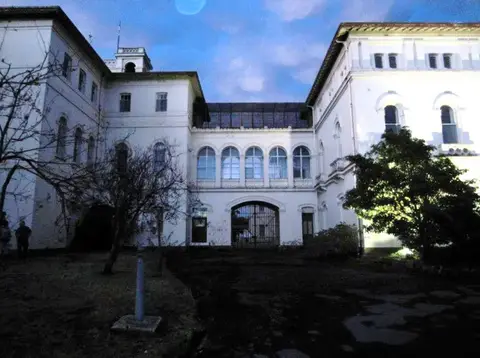
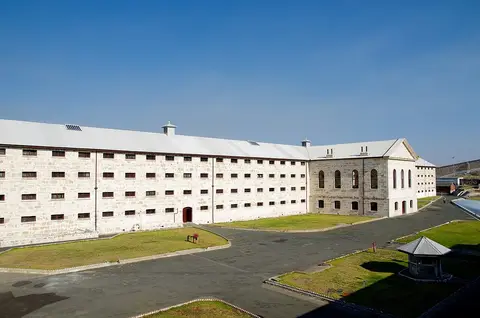
Beechworth was born in the Ovens gold rush of 1852 – the township was first called Mayday Hills – and by the early 1860s it was one of the richest towns in Victoria, with a courthouse, a gaol and a hospital to match. Between 1864 and 1867 the colony’s Public Works Department added a lunatic asylum on a hill above the town, one of a trio with Kew and Ararat modelled on Colney Hatch in England. Its long, E-shaped Italianate block, corner towers and separate mortuary (1868) still dominate the skyline.
Patients lived inside a walled compound edged with a ha-ha, a sunken wall that looked low from outside but rose sheer from within. Work was treated as therapy: men laboured on the asylum’s farm, piggery and gardens, and women in the laundries. The hospital grew through the 1870s and 1880s, was renamed Mayday Hills in the 20th century and absorbed each new wave of psychiatric treatment before closing in 1995, after 128 years. Tour guides often repeat a rule from its history: two signatures could commit a person, but it took eight to let them out.
La Trobe University ran a campus on the site from 1996 until 2011, and the complex was then sold to private owners, who lease buildings to tourism and arts businesses. The grounds are on the Victorian Heritage Register as a state-significant asylum landscape.
The ghost stories grew up alongside the night tours that now run in the empty wards. Guides speak of Matron Sharpe, remembered as a gentle nurse whose presence is said to calm rather than frighten; of a former groundsman called Arthur in a green woollen jacket; and of a woman said to have fallen from a third-storey window. None of these figures has been tied to a named person in the published record. In 2018 the writer Ellen Muller, reviewing the tour for Overland, argued that ghost-hunting at asylums risks treating patients’ suffering as entertainment – a question the site’s own history tours try to answer by telling patients’ stories as people’s lives.
What people report
Visitors on the night tours describe footsteps and doors in empty corridors, children’s voices in the old recreation hall, cold spots, a smell of decay, and figures watching from a room above the stage. Matron Sharpe is described as a reassuring presence felt in the ward where electroconvulsive therapy was once given.
Where and when
Tours begin in the foyer of the Bijou Theatre, the asylum’s recreation hall, and move through the women’s wards, the treatment rooms and the grounds. The viewing room above the stage and the upper floors of the main block are the most-mentioned spots.
Timeline of the haunting
- 1867The asylum opens Beechworth, Victoria
The Beechworth Lunatic Asylum opens above the gold-rush town. It will be extended in 1873 and again with detached cottages in the late 1880s.
- 1995Mayday Hills closes Beechworth, Victoria
After 128 years the hospital shuts, as Victoria moves psychiatric care into the community. La Trobe University takes over the site the following year.
- 2013Sold to local owners Beechworth, Victoria
After the university campus closes, the complex is sold to two Beechworth businessmen. Day history tours, night ghost tours and paranormal investigations follow.
- 23 July 2018“The past is a ghost story” Beechworth, Victoria
Overland publishes Ellen Muller’s essay on the Beechworth and Ararat tours, questioning whether ghost tours reinforce stigma against people with mental illness.
What could explain it?
- The named ghosts come from tour storytelling and have not been matched to individual patients or staff in the records, which suggests they are composites or local legend.
- Large, empty Victorian buildings creak, settle and carry sound in unexpected ways; draughts through long corridors and broken sashes explain many footsteps, doors and cold spots.
- Expectation is high: visitors arrive after dark, in costume-led tours, having just heard about restraint, shock treatment and lonely deaths.
- Critics of “dark tourism” point out that the commercial value of a haunted reputation gives operators every reason to keep stories alive.
Ghost tours, books and screen
Beechworth’s asylum hosts Asylumfest, a horror film and writing festival held around the end of October, along with writers’ retreats, horror screenings and overnight stays. It is often paired with Aradale and J Ward in Ararat as the core of Victoria’s “asylum tourism”, and the town’s gold-rush streets and Ned Kelly connections bring visitors year-round.
Places to visit
Runs daytime history tours, after-dark ghost tours and longer paranormal investigations of the old asylum.
Where it’s reported
Beechworth Lunatic Asylum (Mayday Hills) in the news
No recent headlines about Beechworth Lunatic Asylum (Mayday Hills). Our news desk checks every day — see all the latest paranormal news.
Sources
First published · Updated