Case file · Demonic case · Hospital or asylum
Exorcism of Roland Doe
Also known as The 1949 St. Louis exorcism, Robbie Mannheim case, The case behind The Exorcist
In 1949 Jesuit priests performed an exorcism on a Maryland teenager in St. Louis. The case inspired The Exorcist; researchers suspect a troubled boy.
The boy at the centre of America’s most famous exorcism is known only by pseudonyms – “Roland Doe” in the priests’ records and “Robbie Mannheim” in later books. He was a 13-year-old only child, born in 1935, living with his parents and grandmother in Cottage City, Maryland, a small working-class town on the edge of Washington, D.C. (early reports placed the family in neighbouring Mount Rainier). His aunt, a spiritualist, had introduced him to the Ouija board. On 15 January 1949, according to the diary later kept by the priests, the family began hearing dripping and scratching noises in the house; on 26 January the aunt died, and the disturbances reportedly intensified – shaking furniture, flying objects, a bed that would not stay still.
The family’s Lutheran pastor, Luther Miles Schulze – who described the events to the parapsychologist J. B. Rhine, though Rhine never witnessed anything himself – advised the parents to consult a Catholic priest. Accounts that a Washington priest began an exorcism at Georgetown University Hospital, and that the boy wounded him with a bedspring, have not been substantiated and are disputed by later researchers. When scratches spelling “LOUIS” were said to appear on the boy’s body, the family took him to relatives in the St. Louis area. There Jesuit priests from Saint Louis University became involved, and on 16 March 1949 Archbishop Joseph E. Ritter authorised Father William S. Bowdern to perform the rite of exorcism.
Over the following weeks the boy was moved between his relatives’ home in Normandy, Missouri, a Jesuit rectory and the Alexian Brothers Hospital in south St. Louis, where much of the ritual took place. Bowdern was assisted by Father William Van Roo and a young Jesuit, Walter Halloran, who later said the boy broke his nose during a struggle. Father Raymond J. Bishop kept a daily diary of events. The priests recorded convulsions, violent outbursts, obscenities, words appearing on the boy’s skin and apparent reactions to sacred objects. According to the diary, on the night of 18 April 1949 the boy calmed, spoke as if a different voice had been driven out, and the case was declared over. He returned to Maryland and, by all accounts, lived an ordinary life.
On 20 August 1949 the Washington Post ran a story headlined “Priest Frees Mt. Rainier Boy Reported Held in Devil’s Grip.” A Georgetown student named William Peter Blatty read it, and in 1971 he published The Exorcist, changing the boy into a 12-year-old girl; the 1973 film made the case world-famous. Later investigators have been far more sceptical. Thomas B. Allen, in Possessed (1993), concluded that the boy was deeply disturbed rather than possessed. Writer Mark Opsasnick, who interviewed neighbours and classmates in Cottage City for a 1999 investigation, described an isolated, troubled boy prone to tantrums and pranks, found that much of the legend rested on hearsay, and concluded that “those involved saw what they were trained to see.” Even Walter Halloran said he could not vouch that it was a genuine possession. The boy’s real identity has been protected by the Church and by most researchers; we do not speculate about it.
What people report
The priests’ diary and later accounts describe scratching and knocking sounds, moving furniture and objects, a shaking bed, scratches and words appearing on the boy’s skin, convulsions, unusual strength, obscene outbursts, and violent reactions to holy water and prayers in Latin.
Where and when
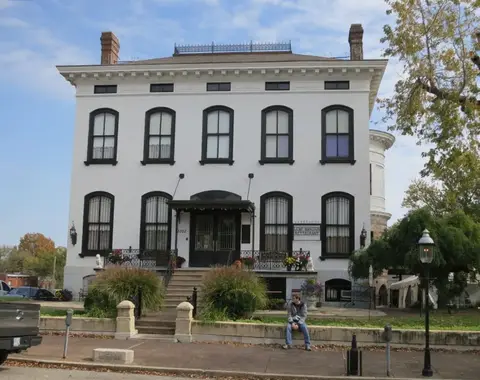
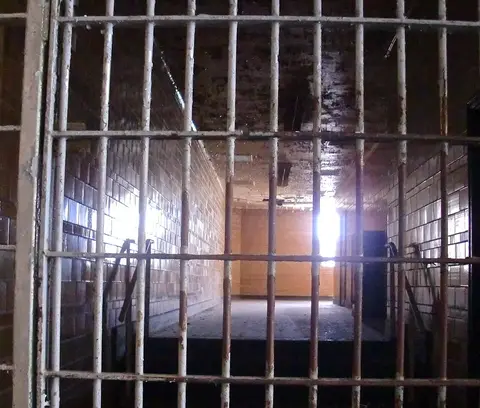
The disturbances began at the family home in Cottage City, Maryland (a private residence). The exorcism itself was carried out in the St. Louis area – at relatives’ home in Normandy, a Jesuit rectory at Saint Louis University and, above all, the Alexian Brothers Hospital in south St. Louis.
Timeline of the haunting
- 15 January 1949First disturbances Cottage City, Maryland
According to the priests’ diary, the boy and his grandmother hear dripping and scratching sounds, and a picture on the wall shakes.
- 26 January 1949Death of the boy’s aunt Cottage City, Maryland
The aunt who had introduced him to the Ouija board dies; the family links her death to the escalating events.
- 16 March 1949Exorcism authorised in St. Louis St. Louis, Missouri
Archbishop Joseph E. Ritter gives Father William Bowdern permission to begin the formal rite, assisted by Father Raymond Bishop and a young Jesuit, Walter Halloran.
- 18 April 1949The rite ends St. Louis, Missouri
At the Alexian Brothers Hospital, the priests record a final dramatic night after which the boy is declared free; the diary closes the next day.
- 20 August 1949The Washington Post story Washington, D.C.
Reporter Bill Brinkley’s article on the exorcism of a “Mt. Rainier boy” is read by student William Peter Blatty, planting the seed for The Exorcist.
- 1999Opsasnick’s investigation Cottage City, Maryland
Mark Opsasnick’s research relocates the case to Cottage City, challenges the Georgetown episode and portrays the boy as a troubled teenager rather than a victim of possession.
What could explain it?
- Investigators who interviewed people who knew the boy describe an isolated, unhappy teenager with a history of tantrums and pranks; many of the reported events are within a 13- or 14-year-old’s capability.
- The main source is a diary written by priests who expected to find possession, and several famous episodes – notably the Georgetown attack – appear to rest on hearsay.
- Psychiatric explanations offered include conversion disorder, other mental illness, or abuse-related trauma; none can be confirmed at this distance.
- Retellings since 1949, and especially since The Exorcist, have added dramatic details absent from contemporary accounts.
Ghost tours, books and screen
The case inspired William Peter Blatty’s novel The Exorcist (1971) and William Friedkin’s 1973 film, one of the most successful horror films ever made, as well as Thomas B. Allen’s book Possessed (1993), a 2000 TV film of the same name, and documentaries including In the Grip of Evil (1997) and The Haunted Boy (2010).
Places to visit
The homes involved are private residences and the hospital buildings are not open for tours; please respect the privacy of the people connected with the case.
Where it’s reported
Exorcism of Roland Doe in the news
No recent headlines about Exorcism of Roland Doe. Our news desk checks every day — see all the latest paranormal news.
Sources
First published · Updated