Case file · Demonic case · Castle or palace
Leap Castle
Also known as Léim Uí Bhanáin, The Bloody Chapel, The Leap Castle Elemental
An Irish midlands stronghold with a “Bloody Chapel,” an oubliette and a foul-smelling “elemental,” often billed as the world’s most haunted castle.
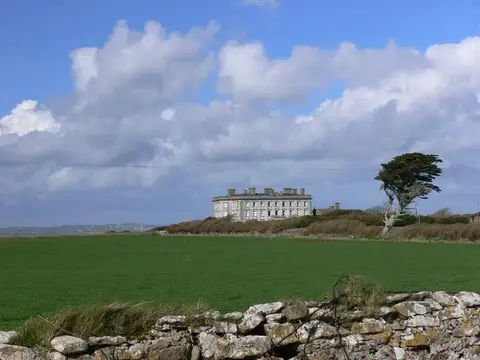
Leap Castle rises from a rocky outcrop about six kilometers north of Roscrea, guarding a pass through the Slieve Bloom Mountains. Its name, Léim Uí Bhanáin, “the Leap of the O’Bannons,” recalls the clan that built the first fortress here under their overlords, the O’Carrolls; legend says two O’Bannon brothers settled a dispute over the chieftainship by leaping from the rock. Dates for the tower house range from the 13th to the late 16th century. The Earl of Kildare attacked it in 1513 and 1516, and in 1642 it passed by marriage to the Darby family, who remodeled and extended it over the following centuries.
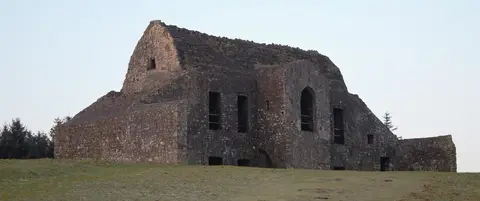
The O’Carrolls left a bloody reputation. After the death of Mulrooney O’Carroll in 1532, a feud over the chieftainship turned brother against brother; according to legend, one of them, a priest, was cut down at the altar while saying Mass for the family in the upper chamber, ever since called the Bloody Chapel. In the chapel’s corner is an oubliette, a narrow pit said to have swallowed prisoners; tradition holds that when it was cleared during Darby-era work, workmen removed cartloads of human bones. Other tales tell of mercenaries poisoned at a feast after doing the O’Carrolls’ bidding.
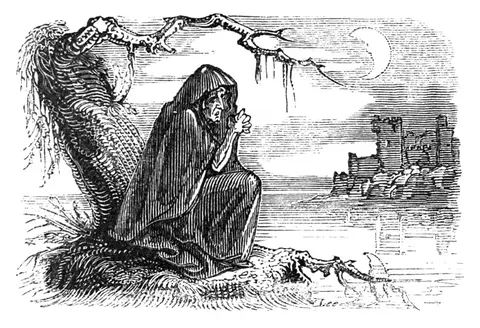
The ghosts came to public attention through Mildred Darby, a writer of Gothic fiction who held séances at Leap in the early 1900s and wrote vividly about the house, most influentially in an account published in The Occult Review in December 1908. She described furniture-moving noises in the night and the castle’s most notorious presence, the “elemental” — a gray, half-human, half-animal shape with dark holes for eyes and an overpowering stench of decay. Other ghosts include the Red Lady, a tall woman in red holding a dagger, associated with a story of a prisoner whose baby was killed; two girls, Emily and Charlotte, said to play in the hall and on the stairs; and lights seen streaming from the chapel windows. The castle was burned in 1922 during the Irish Civil War and left a shell.
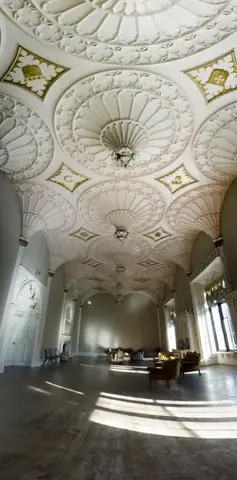
In 1974 the Australian historian Peter Bartlett, whose mother was a Bannon, bought the ruin and began restoring it; since 1991 it has belonged to the musician Sean Ryan and his wife Anne. Both owners have described poltergeist-style trouble during restoration — tools moved, a ladder that seemed pushed from the wall — and the castle has been featured on Most Haunted, Ghost Hunters, Ghost Adventures and Scariest Places on Earth. Its own archive now carefully separates documented history from tradition and testimony.
What people report
A foul-smelling gray “elemental,” a Red Lady with a dagger, two little girls, a murdered priest, lights in the Bloody Chapel windows, footsteps and furniture-moving noises, doorbells ringing with no one there, and poltergeist activity during restoration — reported by the Darbys, their guests, later owners and TV investigators.
Where and when
The Bloody Chapel at the top of the tower and its oubliette, the main hall and stairwell (the girls), the former nursery (the Red Lady), and the battlements; passersby report light from the chapel windows at night.
Timeline of the haunting
- After 1532The O’Carroll feud Leap Castle
The death of Mulrooney O’Carroll set off a bloody family struggle; tradition says a priest brother was murdered at the altar in what became the Bloody Chapel.
- 1642The Darbys take over Leap Castle
The castle passed by marriage to the Darby family, who remodeled it extensively and held it until 1922.
- December 1908Mildred Darby’s account Leap Castle
The novelist wife of Jonathan Darby, who held séances at the castle, described its ghosts, including the horrifying elemental, in The Occult Review, giving Leap its reputation.
- 1922The castle is burned County Offaly
During the Irish Civil War raiders looted and burned the castle, leaving it a roofless shell for half a century.
- 1974Restoration begins Leap Castle
Peter Bartlett bought the ruin and began restoring it; after his death in 1989 the work passed to Sean and Anne Ryan, owners since 1991.
What could explain it?
- The castle’s fame as a haunted house traces largely to the writings and séances of one Edwardian Gothic novelist, Mildred Darby.
- The murdered priest and the oubliette full of bones are traditions; the castle’s own archive labels them as legend and testimony rather than verified history.
- Restoring a burned ruin is dangerous work; falls and moved tools are what one would expect on a building site, ghost or no ghost.
- Reputation feeds itself: TV visits and the “world’s most haunted” label set expectations for every visitor.
Ghost tours, books and screen
Leap Castle features in Robert Hardy’s Castle Ghosts of Ireland (1996), Aaron Mahnke’s Lore podcast and book, the covers of Tim Winton’s novel The Riders, and many paranormal TV series.
Places to visit
The castle is a private family home; its official archive asks visitors to confirm current arrangements before traveling.
Where it’s reported
Leap Castle in the news
No recent headlines about Leap Castle. Our news desk checks every day — see all the latest paranormal news.
Sources
- Wikipedia: Leap Castle
- Leap Castle archive: The Bloody Chapel
- Leap Castle archive: Folklore
- Leap Castle archive: The Elemental
- Offaly History: The most haunted castle in Ireland – the story of novelist Andrew Merry, aka Mrs Mildred Darby (Noel Guerin, 2018)
- NUI Galway Landed Estates Database: Darby (archived)
First published · Updated