Case file · Apparition · Battlefield or fort
Fort Douglas and Clem
Also known as Camp Douglas, Fort Douglas Military Museum, Clem of Fort Douglas
A Civil War-era Army post above Salt Lake City, where museum staff describe Clem, a bearded soldier in blue who breathes on necks and walks the stairs.
Fort Douglas was founded on 26 October 1862, when Colonel Patrick E. Connor marched his California and Nevada volunteers to a bench above Salt Lake City and set up Camp Douglas, named for Senator Stephen A. Douglas. The soldiers were there to guard the overland mail and telegraph lines and to keep watch on the territory’s Latter-day Saint leadership. In January 1863 Connor’s troops attacked a Shoshone encampment on the Bear River under Chief Bear Hunter, a massacre that is memorialised in the fort’s cemetery and remembered by the Northwestern Shoshone. The camp became a regimental post and was renamed Fort Douglas in 1878.
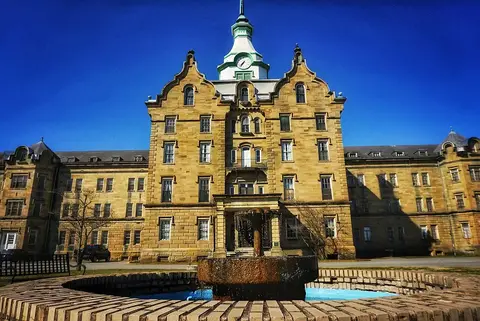
The fort grew with the railroad and the army. It trained troops for the Spanish–American War and the two World Wars and held German and other prisoners; its cemetery, still maintained, contains soldiers, Bear River casualties and prisoners of war. The army closed it on 26 October 1991, and most of the property passed to the University of Utah. The Fort Douglas Military Museum now fills two stone barracks built in 1875 that at various times served as a mess hall, fire station, post office and storage. The fort is a National Historic Landmark.
The best-known ghost is a soldier called Clem. The name was reportedly given by a local Boy Scout troop after a night in the museum. Curators and volunteers describe a stocky man with dark hair and a beard in a blue Federal uniform; he is said to breathe on people’s necks, climb the stairs with heavy footsteps, and move objects. He is also said to wander as far as the University of Utah’s Marriott Library. The museum holds an annual October event in Clem’s honour. Accounts disagree about who he was: some call him a Civil War veteran who died at the fort, in some tellings by his own hand, while others treat him simply as an unnamed soldier of the nineteenth-century garrison.
Other legends are told of the fort: a young woman in white said to haunt the fort’s old Carlson Hall, a girl in the officers’ housing, a woman in purple in Chapel Glen and footsteps in the cemetery. None of them is attached to a documented witness or date in the sources consulted. The tales sit alongside a documented, solemn history, and museum staff treat the fort’s dead, including the prisoners of war and those killed in the nineteenth-century Indian wars, with respect.
What people report
A stocky, bearded man in a Federal uniform, breath on the back of the neck, footsteps on the stairs with nobody there, objects moving in the museum, an elevator that malfunctions, and a woman in white or purple in other buildings.
Where and when
The Fort Douglas Military Museum’s barracks buildings, the University’s Carlson Hall, Officers’ Circle housing, Chapel Glen and the fort cemetery.
Timeline of the haunting
- 26 October 1862Camp Douglas is established Salt Lake City, Utah
Colonel Patrick Connor’s volunteers built the post above Salt Lake City during the Civil War.
- January 1863Bear River Massacre Preston, Idaho
Connor’s troops from the fort attacked a Shoshone camp on the Bear River; some of the soldiers killed there are commemorated in the fort cemetery.
- 1975Museum opens in the 1875 barracks Salt Lake City, Utah
The Utah National Guard’s museum began in the barracks buildings, where staff and volunteers later reported Clem.
- 26 October 1991The fort closes Salt Lake City, Utah
Fort Douglas officially closed; the University of Utah took most of the land and the museum remained.
What could explain it?
- Identity guesswork: Clem is described as a Civil War veteran, an unnamed barracks soldier or a man who died by his own hand, which suggests the nickname came first and the history was added later.
- Scout origins: the nickname is traced to a youth overnight, a setting in which stories and darkness tend to produce reports.
- Old barracks: stone and timber buildings with narrow stairs and heating systems make footsteps and breathing-like draughts easy to hear.
- Source limits: the stories rest on museum staff recollections and popular articles, with no independent record of a specific death behind the figure.
Ghost tours, books and screen
Clem is celebrated each October at the museum and appears in KSL, ABC4 and Salt Lake Magazine Halloween lists and in Legends of America’s Utah pages. The fort’s cemetery and the Bear River Massacre are also the focus of memorial events.
Places to visit
A Utah National Guard museum in the 1875 barracks on the University of Utah campus; check current hours before visiting.
Where it’s reported
Sources
First published · Updated