Case file · Poltergeist · House or mansion
Gef the Talking Mongoose
Also known as The Dalby Spook, The Talking Mongoose of Cashen’s Gap, Doarlish Cashen
In the 1930s an Isle of Man farm family said a chatty mongoose lived in their walls. Investigators heard a girl’s voice and found dog hair instead.
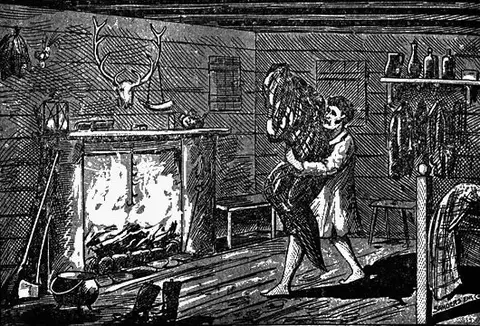
In September 1931, James and Margaret Irving and their 13-year-old daughter Voirrey, living on a remote hill farm called Doarlish Cashen — Cashen’s Gap — above the hamlet of Dalby on the west coast of the Isle of Man, said they were hearing scratching, rustling, spitting and animal noises behind the wooden paneling of their old stone farmhouse. Soon, they said, the noises turned into words. The creature introduced itself as Gef, a mongoose born in New Delhi in 1852, “an extra extra clever mongoose,” and told the family, “I am a freak. I have hands and I have feet, and if you saw me you’d faint.”
According to the Irvings, Gef sang songs, recited verse, warned of visitors, killed rabbits for the household and took biscuits and bananas from a saucer hung for him. Voirrey described him as the size of a small rat with yellowish fur and a bushy tail. Reporters from the British tabloids poured onto the island, and the “Dalby Spook” became a national joke and sensation. Many visitors said they heard a voice; almost nobody saw anything. An Isle of Man Examiner reporter said he caught Voirrey making the noises, and that her father tried to persuade him they came from elsewhere.
Psychical researchers took the case seriously enough to investigate. In July 1935 Harry Price and Richard Lambert, editor of the BBC’s magazine The Listener, visited and later wrote The Haunting of Cashen’s Gap (1936). They found the house lined with double wooden paneling that turned it into “one great speaking-tube,” through which a voice could be sent all over the building; a hair said to be Gef’s was identified by a naturalist as dog hair, probably from the family’s sheepdog, Mona; and the Natural History Museum said alleged paw prints were not a mongoose’s. Nandor Fodor, who stayed a week without hearing Gef, preferred a psychological explanation centered on James Irving’s personality.
Most investigators then and since — including Joe Nickell and the psychologist Richard Wiseman — conclude that Voirrey produced the voice by ventriloquism and that the family, reporters and credulous researchers did the rest. The case had a strange afterlife: in 1937 Lambert won £7,600 in a slander action against a man who had said he was “off his head” for believing in a talking mongoose — the BBC’s notorious “Mongoose Case,” which led to a government inquiry into the corporation’s treatment of staff. The Irvings left the farm after James died in 1945. Voirrey, who died in 2005, maintained to the end that she had not invented Gef.
What people report
A squeaky, high-pitched voice that talked and sang from behind the wall paneling; scratching, spitting and animal noises; occasional glimpses of a small yellowish animal; stolen food and thrown objects — reported by the Irving family and by visitors who heard the voice.
Where and when
Inside the paneled farmhouse at Doarlish Cashen (Cashen’s Gap), especially behind the wooden walls and around Voirrey’s room; a few sightings were claimed around the farm and in a neighbor’s yard.
Timeline of the haunting
- September 1931Noises in the walls Cashen’s Gap, Isle of Man
The Irvings reported animal sounds behind the paneling that soon became a talking voice calling itself Gef.
- 1932The press descends Isle of Man
Newspapers made the “Dalby Spook” a sensation; a local reporter said he caught Voirrey making the noises, and some articles openly suggested ventriloquism.
- July 1935Harry Price and Richard Lambert visit Cashen’s Gap
The investigators found a house built like a speaking tube; hair samples sent for analysis proved to be dog hair. Their book followed in 1936.
- 1937The Mongoose Case London
Lambert won a slander suit against Sir Cecil Levita, who had said he was unfit for the British Film Institute board for believing in the mongoose; the BBC’s conduct in the affair prompted a government inquiry.
- 1945The Irvings leave Isle of Man
After James Irving’s death, Margaret and Voirrey sold the farm. A new owner later claimed to have shot Gef, but the animal he showed was far too large and the wrong color.
What could explain it?
- Voirrey Irving’s ventriloquism is the explanation most investigators favor; a reporter said he caught her making the sounds.
- Double wooden paneling with air gaps let a voice travel through the house, as Price and Lambert noted.
- Physical evidence — hair, prints, photos — pointed to the family sheepdog or nothing identifiable, not to a mongoose.
- An isolated, bored teenager on a remote farm, parents who embraced the story and a hungry tabloid press are a familiar recipe for a self-sustaining hoax.
Ghost tours, books and screen
Gef has inspired Christopher Josiffe’s book Gef! (2017), Lemon Demon’s song “Eighth Wonder,” a Big Finish Doctor Who audio drama, the 2023 film Nandor Fodor and the Talking Mongoose with Simon Pegg and Neil Gaiman as the voice of Gef, and a 2025 opera. James Irving’s diaries are in Harry Price’s archive at Senate House Library, London.
Places to visit
Harry Price’s papers, including James Irving’s diaries and the Gef files, are held in the library’s archive; the farm site itself is private land.
Where it’s reported
Gef the Talking Mongoose in the news
No recent headlines about Gef the Talking Mongoose. Our news desk checks every day — see all the latest paranormal news.
Sources
First published · Updated