Case file · Folklore spirit · Road, bridge or woods
The Ghost of Mad Anthony Wayne
Also known as General Anthony Wayne’s ghost, Wayne’s two graves
Anthony Wayne died in 1796 and was buried twice; the legend says his ghost rides the road each New Year’s Day, seeking bones lost in 1809.
General Anthony Wayne, nicknamed “Mad Anthony,” was a Pennsylvanian soldier of the American Revolution who later commanded the army that won the Battle of Fallen Timbers in 1794. On his way home from a western post he fell ill, and he died on 15 December 1796 at Presque Isle, now Erie, Pennsylvania. The cause is usually given as gout, though one source notes it is only the likely one. At his own request he was buried at the foot of the flagpole of the fort.
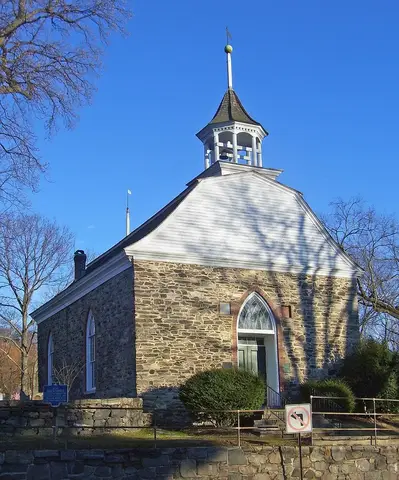
The unusual part of the history came in 1809, when his son Isaac Wayne arranged to bring the remains to the family plot at St. David’s Episcopal Church in Radnor, Chester County. The Erie History Center (Hagen History Center) says a physician, Dr. J. G. Wallace, rendered the body in an iron kettle (the kettle survives in its collection) so the bones could be carried over the long road. The bones went to Radnor, where he was reburied at St. David’s; the rest was returned to the grave in Erie, which is why Wayne is said to have two graves. Wikipedia adds that the Erie remains were rediscovered in 1878.
A ghost story grew from this. According to the legend, some bones fell from the wagon on the journey, and each year on 1 January, Wayne’s birthday, his ghost, sometimes with his horse Nancy, rides the route between Erie and Chester County in search of them. The Erie museum traces the missing-bones detail to Glenn Tucker’s 1973 biography and treats it as a legend. A popular version retold on Today I Found Out, reprinted from Uncle John’s Bathroom Reader, places the ghost on the modern highways.
There are no named witnesses to a Wayne apparition in any source consulted for this entry. What survives is the story of a man whose body was divided between two graves, which is true, and a tale built around that. Rendering a body for transport was an accepted practice of the day, and the Erie museum calls it doubtful that anything else was done with the remains.
What people report
No documented sightings; the tradition says Wayne’s ghost rides on New Year’s Day, accompanied by his horse, looking for bones lost on the 1809 journey.
Where and when
The road between Erie and Radnor, Pennsylvania (often placed on Route 322); the graves at Erie’s Wayne Blockhouse and St. David’s churchyard, Radnor.
Timeline of the haunting
- 15 December 1796Wayne dies at Presque Isle Erie, Pennsylvania
The general dies, probably of gout, and is buried at the foot of the fort’s flagpole.
- 1809Isaac Wayne has the remains brought home Erie, Pennsylvania
Dr. J. G. Wallace prepares the remains for transport; the bones are taken to Radnor and the rest is reburied in Erie.
- 1878Erie grave rediscovered Erie, Pennsylvania
The remains left at Presque Isle are found again, according to Wikipedia.
- 1973Glenn Tucker’s biography Pennsylvania
The Erie museum cites Tucker as a source of the claim that some bones were not handed over to Isaac, the seed of the lost-bones story.
What could explain it?
- The ghost is folklore built on a real and unusual event: the general’s remains were divided and buried in two places.
- The missing-bones claim rests on a single biography and retellings, with no contemporary account of bones falling from a wagon.
- Popular retellings differ on details such as the route, the year and what was lost, a mark of oral legend rather than a documented haunting.
Ghost tours, books and screen
Wayne’s story appears in Pennsylvania folklore collections and in trivia books; the town of Wayne and his Chester County home, Waynesborough, bear his name, and the Erie museum holds the kettle.
Places to visit
The museum holds the iron kettle said to have been used in 1809.
Where it’s reported
Sources
First published · Updated