Case file · Apparition · Prison or jail
Palacio de Lecumberri
Also known as Lecumberri, El Palacio Negro, The Black Palace, Archivo General de la Nación
Mexico’s notorious “Black Palace” prison, now the national archive, where night staff tell of a gaunt prisoner still waiting for a visit.
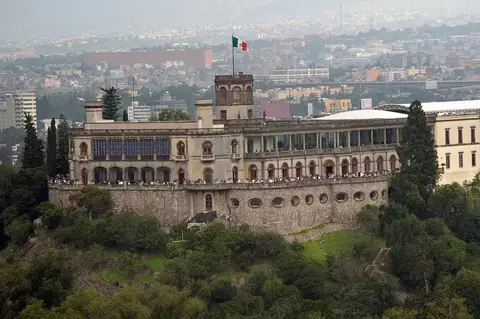
For three-quarters of a century Lecumberri was the most feared address in Mexico. Planned after the penal reforms of the 1870s and begun in the 1880s on land once owned by a Spaniard named Lecumberri, the penitentiary was a panopticon: a central watchtower about 35 metres high, with long cell galleries radiating from it like the spokes of a wheel, an arrangement inspired by the philosopher Jeremy Bentham. President Porfirio Díaz inaugurated it in September 1900. Its 804 cells were meant for men, women and juveniles; within decades it was badly overcrowded.
Its nickname, El Palacio Negro – the Black Palace – is explained in different ways: some say it came from sewage flooding just before the opening, others from the brutality inside. Accounts of the prison record beatings, killings, drug dealing and deaths from malnutrition, and it held many people jailed without fair trial. During the Decena Trágica of February 1913, President Francisco I. Madero and Vice-President José María Pino Suárez were shot dead while being taken to the prison, one of the defining crimes of the Mexican Revolution.
Its inmates read like a cross-section of 20th-century Mexico: the muralist David Alfaro Siqueiros, the novelist José Revueltas, union leaders Valentín Campa and Demetrio Vallejo, students arrested after the 1968 movement, Ramón Mercader – the Soviet agent who killed Leon Trotsky in 1940 – and, briefly as a young man, the singer Juan Gabriel. After a notorious tunnel escape and a shift in penal policy, Lecumberri closed in 1976. Rather than being demolished, it was restored and reopened on 27 August 1982 as the headquarters of the Archivo General de la Nación, Mexico’s national archive.
The ghost stories belong to the archive era. Archivists, guards and night cleaners have long traded tales of footsteps in the empty galleries, sobbing and murmurs from former cells, and figures glimpsed in the corridors after dark. The best known, retold by Mexico City media, is the story of Jacinto: a night cleaner hears someone breathing behind him, turns to find a haggard man in a chair who says only, “Amalia didn’t come again,” and vanishes. Weeks later, so the story goes, the cleaner found a file for a prisoner named Jacinto, accused by his wife Amalia, who had promised to visit him and never did. Other tales speak of a man in black, sometimes called a charro negro, walking the galleries.
None of these stories can be traced to a named witness or a specific file, and they work best as an oral memorial: the building now stores the nation’s records, including the files of the political police, but the people once locked inside it left only their names. Visitors today can see the restored rotunda and galleries during archive hours.
What people report
Footsteps and voices in empty galleries, weeping from former cells, cold spots, and apparitions – above all a gaunt prisoner who speaks of a wife who never came, and a man dressed in black. Most reports are attributed to night-shift staff and guards and passed on through journalism and word of mouth.
Where and when
The radiating galleries, now lined with archive stacks; the central rotunda beneath the old watchtower; and corridors patrolled by night staff. Stories cluster in the late-night shift, when the archive is closed.
Timeline of the haunting
- September 1900Porfirio Díaz opens the penitentiary Mexico City
The panopticon prison opened as a showpiece of modern penal reform. It soon became overcrowded and infamous as the Black Palace.
- 22 February 1913Madero and Pino Suárez are killed Mexico City
The deposed president and vice-president were shot while being transferred to Lecumberri during the coup known as the Decena Trágica. The official claim of an escape attempt was widely disbelieved.
- 1976The prison closes Mexico City
After a notorious tunnel escape and new rehabilitation policies, Lecumberri was decommissioned. Historians and architects campaigned to save the building from demolition.
- 27 August 1982Reopened as the national archive Mexico City
President José López Portillo inaugurated the Archivo General de la Nación in the restored prison. Ghost stories among archive staff circulated in the years that followed.
- May 2019The legend of Jacinto in print Mexico City
Chilango magazine published the story of the night cleaner’s encounter with the prisoner waiting for Amalia, bringing the archive’s staff lore to a wide readership.
What could explain it?
- No archival record of a prisoner named Jacinto has been published; the story has the classic shape of a moral folk tale.
- Large masonry galleries carry sound oddly; ventilation, pipes and traffic on surrounding avenues produce knocks and murmurs at night.
- Night shifts, fatigue and a building with a dark reputation are a recipe for misperceived shadows and sounds.
- The building’s real history of suffering makes ghost stories a natural way for staff and visitors to talk about the past.
Ghost tours, books and screen
Lecumberri appears in Mexican literature and cinema, notably José Revueltas’s prison novel El apando (1969), written while he was held there, and Felipe Cazals’s 1976 film of it. Its ghost stories are a staple of Mexico City’s “haunted places” journalism and of local legend collections.
Places to visit
The national archive occupies the former prison; check the archive’s website for public hours and exhibitions.
Where it’s reported
Palacio de Lecumberri in the news
No recent headlines about Palacio de Lecumberri. Our news desk checks every day — see all the latest paranormal news.
Sources
- Chilango: El fantasma enamorado que llora en Lecumberri (Mauricio Nava, 23 May 2019)
- Milenio: Palacio de Lecumberri, historia del Archivo General de la Nación (5 June 2021)
- Google Arts & Culture / AGN: 40 years of the AGN in Lecumberri
- VICE México: Visité Lecumberri, el “Palacio Negro” (Ollin Velasco, 7 February 2019)
- Wikipedia: Palacio de Lecumberri
First published · Updated