Case file · Haunted object · Public building
Robert the Doll
Also known as Robert, Key West’s haunted doll, The Otto doll
A sailor-suited Key West doll that artist Gene Otto blamed for his childhood mischief – now in a museum case, surrounded by letters of apology.
Robert is a straw-stuffed doll about forty inches tall, dressed in a white sailor suit and holding a small toy lion. According to the Key West Art & Historical Society, which owns him, he was made by the Steiff company of Germany around the turn of the twentieth century and was bought in 1904 for Robert Eugene “Gene” Otto, a boy from a prominent Key West family; the sailor suit may once have been Gene’s own. A popular variant of the story says the doll was a gift from a Bahamian servant with a grudge – a detail that has helped attach ideas of voodoo to the legend, though there is no evidence for it.
Gene took the doll everywhere and, as the family told it, blamed it for anything that went wrong: “I didn’t do it. Robert did it.” He grew up to be an artist, studied in New York and Paris, married Annette Parker in Paris in 1930, and returned with her to the family house on Eaton Street, where Robert sat in the turret room that served as Gene’s nursery and later his studio. Children walking past later said they saw the doll at different windows.
Gene died in 1974 and Annette two years later. The house passed to new owners, including Myrtle Reuter, who kept Robert and later said he moved around by himself. In 1994 she donated him to the Key West Art & Historical Society, and he went on display at Fort East Martello, a Civil War-era fort turned museum. The Eaton Street house now operates as a guest house, the Artist House.
Robert’s fame grew in the museum. Staff and visitors began reporting that cameras jammed or batteries died near his case, and a custom took hold that visitors should ask his permission before taking a photograph. People who did not, and later suffered bad luck, have sent the museum a steady stream of letters apologising to the doll. Robert has travelled to a paranormal convention in Clearwater in 2008 and to Las Vegas in 2015 for television, and he inspired a series of low-budget horror films beginning with Robert (2015).
What people report
Visitors and staff report cameras and phones malfunctioning near the case, the doll’s expression appearing to change, and misfortune befalling people who photograph him without asking. Earlier stories, from the Otto household and later residents of the house, describe giggling, footsteps and the doll seeming to move from place to place.
Where and when
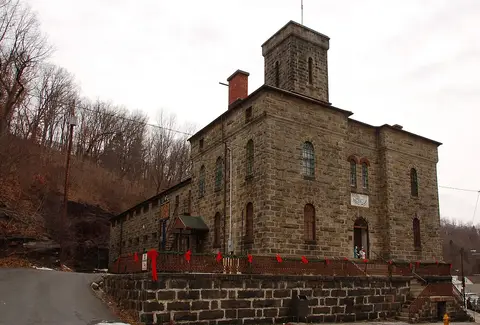
Robert’s glass case at Fort East Martello Museum, where apology letters are displayed around him; earlier stories centre on the turret room of the former Otto house on Eaton Street, now a guest house.
Timeline of the haunting
- 1904Gene Otto receives his doll Key West, Florida
According to the museum, the Steiff-made doll was bought in 1904 for young Gene Otto, who named it Robert after himself.
- 1974Death of Gene Otto Key West, Florida
After the artist’s death, and his wife’s two years later, later occupants of the Eaton Street house began telling stories about the doll left behind.
- 1994Robert goes to the museum Key West, Florida
Myrtle Reuter donated the doll to the Key West Art & Historical Society, saying it moved by itself. He has been displayed at Fort East Martello ever since.
- May 2008First trip off the island Clearwater, Florida
Robert was exhibited at TAPSCon, a paranormal convention run by The Atlantic Paranormal Society – reportedly the first time he had left Key West.
- October 2015Robert in Las Vegas Las Vegas, Nevada
The doll was taken to Zak Bagans’ Haunted Museum for a Travel Channel programme, first broadcast in April 2016 on Deadly Possessions.
What could explain it?
- A child’s scapegoat: by the family’s own account, young Gene blamed his toy for his own misbehaviour – the seed of the legend.
- Pareidolia and lighting: a hand-made, weathered face appears to change expression under different light and from different viewing angles.
- Selective memory: visitors who later suffer bad luck remember not asking permission; the many who skip the ritual without consequence do not write in.
- Equipment failure: cameras and phones fail regularly in Key West’s heat and humidity, and a busy dim display case invites malfunctions to be noticed.
- Museum tradition: the permission ritual and apology letters are part of how the exhibit is presented, encouraging visitors to take part.
Ghost tours, books and screen
Robert is often cited as a forerunner of the modern “haunted doll” legend – scholars have suggested that stories like Annabelle’s grew from his. He has appeared on Travel Channel programmes, in Lore, on Ozzy & Jack’s World Detour and in a five-film horror series, and he is a centrepiece of Key West ghost tours.
Places to visit
Key West Art & Historical Society museum in a Civil War-era fort; general admission includes a visit to Robert, open daily.
Where it’s reported
Robert the Doll in the news
No recent headlines about Robert the Doll. Our news desk checks every day — see all the latest paranormal news.
Sources
First published · Updated