Case file · Apparition · Castle or palace
The White Lady of the Hohenzollerns
Also known as Die Weiße Frau, White Lady of the Berlin Palace, White Lady of the Plassenburg
For four centuries a pale woman was said to appear in the palaces of Prussia’s ruling Hohenzollerns to announce a coming death in the family.
The White Lady – die Weiße Frau – is the most famous family ghost in German history. Belief in such spirits grew up among the high nobility of early modern Europe, where a ghostly ancestress who foretold deaths could serve, like a coat of arms or a founding legend, as a mark of a dynasty’s importance. No family’s White Lady was better known than that of the Hohenzollerns, the margraves, electors and later kings of Prussia and German emperors.
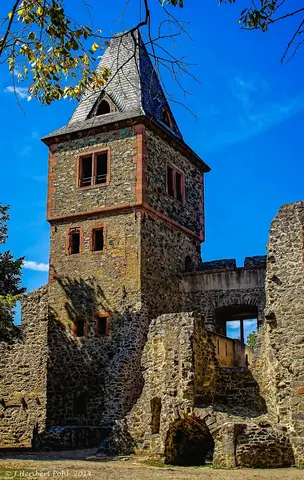
Her story begins at the Plassenburg, the Hohenzollern fortress above Kulmbach in Franconia. According to the legend, recorded by chroniclers from the 16th century onwards, the widowed Countess Kunigunde of Orlamünde fell in love with Albrecht, son of the Burgrave of Nuremberg, and misunderstood a message that “four eyes” stood in the way of their marriage – he meant his parents, she thought her two young children – with tragic results. Repenting, she founded the convent of Himmelkron and died as its abbess. Historians have long pointed out that the real Kunigunde died childless, so the tale cannot be true as told; other writers identified the ghost with Bertha of Rosenberg from Bohemia. The White Lady was said to have appeared at the Plassenburg in 1486.
In Berlin, the Hohenzollerns’ main residence, she was first reported on 1 January 1598, eight days before the death of Elector John George. There she was identified with Anna Sydow, mistress of his father Joachim II, whom John George had imprisoned in the Spandau Citadel despite a promise to provide for her; she died there in 1575. Over the following centuries courtiers reported the White Lady before the deaths of John Sigismund in 1619, of Frederick I in 1713, of Frederick William II in 1797 and of Emperor Frederick III in 1888, and she was said to have been seen wringing her hands in the palace before a failed assassination attempt on Frederick William IV in 1844. The historian Karl Eduard Vehse later noted, drily, that under Frederick William I the ghost had twice been caught – once a kitchen boy, once a soldier in disguise.
She also travelled. A Hohenzollern prince, Louis Ferdinand of Prussia, was said to have seen her at the Heidecksburg in Rudolstadt the night before he was killed at the Battle of Saalfeld in October 1806, and at the New Palace in Bayreuth she supposedly threatened the French general Jean-Louis-Brigitte Espagne in 1809 and gave Napoleon a restless night in 1812 – an episode Theodor Fontane mentions in Effi Briest. The Berlin Palace itself was damaged in World War II, demolished by the East German government in 1950 and rebuilt in the 2010s as the Humboldt Forum; the Plassenburg still stands above Kulmbach.
What people report
A tall woman in white – or sometimes in black – gliding through corridors and stairwells, seen by courtiers, guards and royal family members. Her appearance was taken as an omen of a death or disaster in the dynasty rather than a threat in itself, though some legends say she attacked those who insulted her.
Where and when
The Berlin Palace (Stadtschloss), especially its stairs and state rooms; the Plassenburg at Kulmbach; the New Palace in Bayreuth; the Heidecksburg in Rudolstadt; and other Hohenzollern residences.
Timeline of the haunting
- 1486First reported at the Plassenburg Kulmbach, Franconia
Chroniclers record the White Lady at the Hohenzollern fortress of the Plassenburg, where the legend of Countess Kunigunde of Orlamünde is set.
- 1 January 1598The White Lady in Berlin Berlin Palace
The ghost is reported in the Berlin Palace eight days before the death of Elector John George, and linked to his father’s imprisoned mistress Anna Sydow.
- 9 October 1806Prince Louis Ferdinand’s omen Heidecksburg, Rudolstadt
According to his adjutant, the prince sees the White Lady in the Green Salon; the next day he is killed at the Battle of Saalfeld.
- 14 May 1812Napoleon’s uneasy night New Palace, Bayreuth
Legend says the White Lady troubled Napoleon when he stayed at the palace on his way to Russia, a story later retold by Theodor Fontane.
- 1888Before the death of Frederick III Berlin
The White Lady is reported once more before the death of Emperor Frederick III after only 99 days on the throne.
What could explain it?
- Dynastic folklore: historians see the White Lady as a status symbol of early modern noble houses, much like a family legend or coat of arms.
- Hindsight: sightings were usually reported or remembered after a death had occurred, making the omen look accurate.
- Pranks and impostors: contemporary sources record at least two people caught dressed as the White Lady in the Berlin Palace.
- Historical errors: the Kunigunde legend contradicts the record, since the real countess had no children.
Ghost tours, books and screen
The White Lady appears in Theodor Fontane’s novel Effi Briest, in countless collections of German legends and in modern ghost tours of Berlin and Bayreuth. The idea of a family ghost who announces deaths has close cousins in the Irish banshee and in white ladies across Europe.
Places to visit
The rebuilt Berlin Palace now houses museums and exhibitions, including displays on the history of the site.
The Hohenzollern fortress where the White Lady legend began is open as a museum complex.
Where it’s reported
The White Lady of the Hohenzollerns in the news
No recent headlines about The White Lady of the Hohenzollerns. Our news desk checks every day — see all the latest paranormal news.
Sources
First published · Updated