Case file · Apparition · Road, bridge or woods
Beatrice Cenci and the Ponte Sant’Angelo
Also known as The ghost of Beatrice Cenci, La Bella Cenci, Ponte Sant’Angelo
Executed beside Rome’s Castel Sant’Angelo in 1599, the young noblewoman Beatrice Cenci is said to return to the bridge each year on the eve of her death.
The Ponte Sant’Angelo, built by the emperor Hadrian in AD 134 to reach his mausoleum – later the papal fortress of Castel Sant’Angelo – is one of the most beautiful bridges in Rome, lined with Bernini’s angels. For centuries, though, the little square at its northern end was also where the papal authorities carried out public executions. The most famous person to die there was Beatrice Cenci, and Romans have long said she has never left.
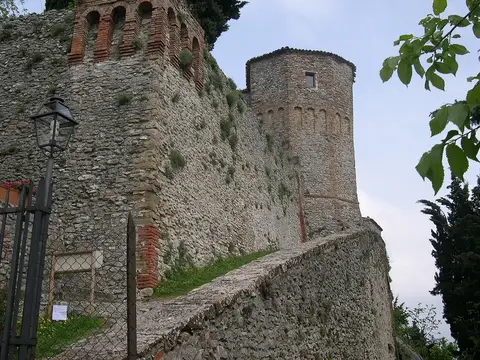
Beatrice was born in Rome on 6 February 1577, the daughter of Count Francesco Cenci, one of the city’s richest and most violent nobles, who had repeatedly been fined and jailed for his crimes. Contemporary accounts and the later legend describe years of abuse at his hands; when she sought help from the authorities, he confined her and her stepmother Lucrezia at the family’s isolated castle at Petrella Salto in the Abruzzo mountains. In September 1598 Francesco was killed there, and his death was staged as a fall from a balcony. Papal investigators uncovered the plot, and Beatrice, Lucrezia and her brothers Giacomo and Bernardo were arrested and tried.
The case gripped Rome. The defence lawyer Prospero Farinacci argued that Beatrice had acted against an abusive father, and crowds petitioned for mercy, but Pope Clement VIII – alarmed by a run of killings within noble families – refused. On 11 September 1599 Beatrice, Lucrezia and Giacomo were executed in front of a vast crowd at the head of the bridge; only the young Bernardo was spared. Beatrice’s body lay on view until evening and was then carried by mourners to the church of San Pietro in Montorio, where she was buried without an inscription, as was the rule for the executed. Her remains were scattered in 1798, when French troops broke open tombs for their lead.
Rome turned her into a heroine – a symbol of the people against an arrogant aristocracy and an unforgiving papacy – and its popular storytellers gave her a ghost. Every year on the night of 10–11 September, the legend says, Beatrice walks back onto the Ponte Sant’Angelo, a pale young woman returning to the place where she died. Writers from Shelley and Stendhal to Dumas and Artaud retold her story, and the bridge still draws walkers on the anniversary night.
What people report
The tradition describes a young woman in white, sometimes said to carry the marks of her execution, walking across the bridge or standing at its northern end on the eve of 11 September. Accounts are passed on by Roman storytellers, guides and ghost-walk leaders rather than recorded by named witnesses.
Where and when
The Ponte Sant’Angelo and the square in front of Castel Sant’Angelo, around midnight on 10–11 September each year.
Timeline of the haunting
- 6 February 1577Beatrice is born Rome
Beatrice Cenci is born into one of Rome’s wealthiest and most notorious noble families.
- 9 September 1598Death of Francesco Cenci Petrella Salto, Abruzzo
The count is killed at the family castle and the death made to look like a fall. Investigators soon suspect murder.
- 11 September 1599Execution at the bridge Ponte Sant’Angelo, Rome
Beatrice, her stepmother and her elder brother are executed before a huge crowd that had pleaded for mercy. She is buried at San Pietro in Montorio.
- 1819Shelley’s The Cenci Rome and Livorno
Percy Bysshe Shelley writes his verse tragedy The Cenci, making Beatrice a Romantic heroine across Europe.
What could explain it?
- Folk memory: the ghost is part of a long Roman tradition of honouring a popular victim of papal justice, not a set of documented sightings.
- Anniversary expectation: people who visit the bridge on the night of 10–11 September are primed to see a white figure among the crowds and shadows.
- Romantic literature amplified the legend, so later ‘sightings’ often echo the plays and novels rather than local reports.
Ghost tours, books and screen
Beatrice Cenci inspired Shelley’s The Cenci (1819), Stendhal’s Les Cenci (1837), Alexandre Dumas’s essay in Celebrated Crimes, Antonin Artaud’s Les Cenci (1935) and operas by Alberto Ginastera and Berthold Goldschmidt. A portrait long attributed to Guido Reni, now in Rome’s Palazzo Barberini, fixed her image for the Romantics.
Places to visit
The pedestrian bridge leads to Castel Sant’Angelo, now a national museum; Beatrice’s unmarked grave lies in San Pietro in Montorio on the Janiculum.
Where it’s reported
Beatrice Cenci and the Ponte Sant’Angelo in the news
No recent headlines about Beatrice Cenci and the Ponte Sant’Angelo. Our news desk checks every day — see all the latest paranormal news.
Sources
First published · Updated