Case file · Folklore spirit · Castle or palace
Glamis Castle
Also known as The Monster of Glamis, Earl Beardie, The Grey Lady of Glamis
The Queen Mother’s childhood home, a turreted Scottish castle of secret rooms, a card-playing earl who gambled with the Devil, and the “Monster of Glamis.”
Glamis Castle rises from parkland in the Vale of Strathmore in Angus. In 1372 Robert II granted the castle to Sir John Lyon, whose descendants — later the Earls of Strathmore and Kinghorne — have lived there ever since. The present fairy-tale silhouette of towers and turrets dates largely from rebuilding in the 1600s. It was the childhood home of Lady Elizabeth Bowes-Lyon, later Queen Elizabeth the Queen Mother, and her daughter Princess Margaret was born there in 1930. Shakespeare made Macbeth Thane of Glamis, though the real Macbeth had no connection with the castle.
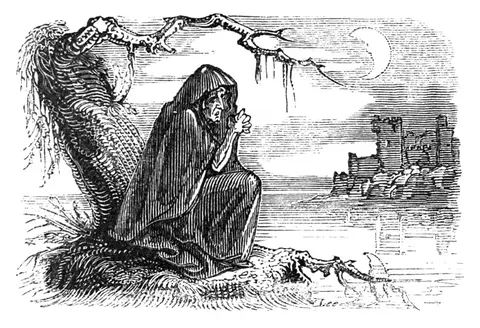
Its ghost lore draws on real family tragedies. In 1537 Janet Douglas, Lady Glamis, caught up in James V’s feud with her Douglas kin, was accused of treason, of poisoning her late husband and finally of witchcraft, and was burned at the stake in Edinburgh; the king then seized Glamis. She is identified with the Grey Lady said to appear in the castle chapel, where tour guides say one seat is always left empty for her. Another legend tells of “Earl Beardie,” a 15th-century lord who insisted on playing cards on the Sabbath and swore he would play with the Devil himself — and did, with a stranger who arrived to join the game. His shouts and rattling dice are said to echo from a sealed room. Other tales feature a tongueless woman and a hidden chamber where a band of Ogilvies, given sanctuary, were locked away and left to starve.
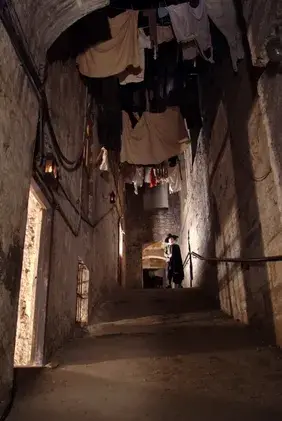
The most famous story is the “Monster of Glamis.” The family record shows that Thomas, first son of Lord Glamis, was born and died on October 21, 1821. Rumors spread later in the century that he had in fact survived with severe disabilities and was kept hidden in a secret suite for the rest of his life, fed by a trusted servant, while a younger brother inherited. Guests reportedly hung towels from every window they could find to locate the missing rooms. The tale was fixed in its modern form by the ghost writer James Wentworth Day in 1967.
Historians and skeptics point out that the earliest Victorian accounts speak of a mysterious family “secret” but barely mention a monster, that Wentworth Day was a prolific collector of ghost stories, and that a 17th-century family portrait showing sons not yet born — a common convention of the time — may have helped seed rumors of a hidden heir. The family has firmly denied the monster story. A real child’s short life sits at the center of the legend, and the castle today tells its ghost stories as part of its history tours and seasonal Halloween events.
What people report
A Grey Lady in the chapel, the noise of a furious card game and dice from a sealed room (Earl Beardie), a tongueless woman, and the long-rumored hidden suite of the “Monster” — reported by guests, guides and family members since the 19th century.
Where and when
The chapel (the Grey Lady’s reserved seat), the oldest part of the castle around the crypt and the supposed sealed rooms, the battlements sometimes called the “Mad Earl’s Walk,” and the grounds.
Timeline of the haunting
- July 17, 1537Janet Douglas burned Edinburgh
Lady Glamis, a victim of James V’s vendetta against her family, was executed on charges of treason and witchcraft. She is remembered as the castle’s Grey Lady.
- October 21, 1821Birth and death of an heir Glamis Castle
The family record states that Thomas, first son of Lord Glamis, was born and died on the same day. Later rumor insisted that he lived on in secret.
- 1870A guest’s stories Glamis Castle
The singer and composer Virginia Gabriel stayed at the castle and later provided accounts that fed the growing legend of the castle’s hidden secret.
- 1882The towels in the windows Glamis Castle
A New York Times account described house guests hanging cloth from every window to find the secret room, and finding windows outside that matched no room inside — a tale retold ever since.
- 1967The monster in print London
James Wentworth Day’s The Queen Mother’s Family Story gave the “Monster of Glamis” its now-familiar form, and most later retellings depend on it.
What could explain it?
- The Monster legend contradicts the family record that the 1821 heir died on the day of his birth; its detailed form rests on a 1967 book by a prolific ghost-story writer.
- Large old castles routinely contain sealed or inaccessible spaces left by rebuilding, which explains “missing” windows without a hidden prisoner.
- A family portrait painted with sons not yet born, a period convention, may have seeded rumors of an unacknowledged heir.
- Earl Beardie’s card game is a widespread moral folktale about breaking the Sabbath, told of other places too.
Ghost tours, books and screen
Glamis is linked to Macbeth, appeared on Royal Bank of Scotland ten-pound notes from 1987, and features in countless books on Scottish ghosts; its Monster has inspired novels, songs and a Skeptoid episode.
Places to visit
The castle opens for guided tours in season and hosts Halloween storytelling events.
Watch
Where it’s reported
Glamis Castle in the news
No recent headlines about Glamis Castle. Our news desk checks every day — see all the latest paranormal news.
Sources
First published · Updated