Case file · Poltergeist · Cemetery or church
Greyfriars Kirkyard and the Mackenzie Poltergeist
Also known as Mackenzie Poltergeist, Black Mausoleum, Bluidy Mackenzie
Edinburgh’s storied old graveyard, where since the late 1990s ghost-tour visitors say an unseen force has bruised, scratched and knocked them out.
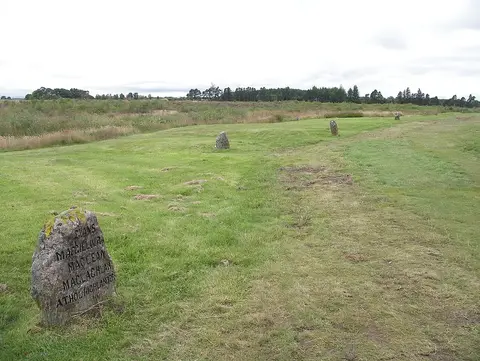
Greyfriars Kirkyard was laid out in 1562 on the grounds of a dissolved Franciscan friary just south of Edinburgh’s Old Town, and is crowded with grand 17th- and 18th-century monuments, iron mortsafes built to foil bodysnatchers, and the grave of John Gray, whose dog, Greyfriars Bobby, became a Victorian legend. It is also bound up with the Covenanters: the National Covenant was signed at Greyfriars Kirk in 1638, and after their defeat at Bothwell Brig in 1679 some 1,200 Covenanter prisoners were held in an open field beside the kirkyard, later walled in as tomb enclosures known as the Covenanters’ Prison.
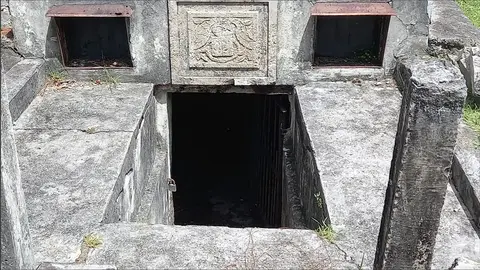
Overlooking it all is the domed mausoleum of Sir George Mackenzie of Rosehaugh (1636–1691), the Lord Advocate who prosecuted Covenanters so relentlessly that he was remembered as “Bluidy Mackenzie.” According to the now-famous story, around 1998–99 a homeless man seeking shelter from a storm broke into the tomb, opened a coffin and fled screaming when it crumbled around him — and from then on, something began attacking visitors.
The reports came mostly from night-time ghost tours, especially after Jan-Andrew Henderson founded City of the Dead Tours in 1999 and gained access to the locked Covenanters’ Prison. Tourists described cold spots, sudden nausea, strange smells, banging, and being pushed, scratched, bitten or bruised by something they could not see; some collapsed. Henderson’s 2001 book, The Ghost That Haunted Itself, claimed that two dozen people were knocked unconscious in two years and that two exorcisms failed, and later press accounts cited hundreds of “attacks.” Neighbors of the kirkyard reported smashed crockery and unexplained laughter.
Even Henderson, who calls himself a scientific person, admits he does not know what to believe — and the very title of his book hints at the self-reinforcing nature of the case. In 2003 two teenagers broke into the Mackenzie tomb through a ventilation slot, damaged the coffins and stole a skull, narrowly escaping a charge of violating sepulchres. The mausoleum is chained shut; the Covenanters’ Prison can only be visited on a guided tour, and the kirkyard itself is a working burial ground and peaceful public space by day.
What people report
Cold and hot spots, nausea, dizziness and fainting, unexplained scratches, bruises and bites, being pushed or grabbed, foul smells and banging around the Black Mausoleum and Covenanters’ Prison — reported mainly by ghost-tour visitors since 1999; also broken crockery and laughter in neighboring homes.
Where and when
The Covenanters’ Prison, a gated enclosure of tombs in the southwest of the kirkyard, and the nearby Mackenzie mausoleum (the “Black Mausoleum”). Most incidents are reported on night tours.
Timeline of the haunting
- 1679The Covenanters imprisoned Greyfriars, Edinburgh
After the Battle of Bothwell Brig, about 1,200 Covenanters were held in the open in a field next to the kirkyard. The area later became the Covenanters’ Prison.
- 1691Death of “Bluidy Mackenzie” Edinburgh
Sir George Mackenzie, the lawyer who prosecuted the Covenanters, died and was buried in his Italianate domed mausoleum at Greyfriars.
- 1998–1999The mausoleum is disturbed Mackenzie mausoleum
A homeless man is said to have broken into the tomb and disturbed the coffins. The same period saw City of the Dead Tours begin night visits to the Covenanters’ Prison.
- 2001The Ghost That Haunted Itself Edinburgh
Tour founder Jan-Andrew Henderson published his account of the poltergeist, claiming dozens of collapses and two failed exorcisms.
- 2003The tomb broken into again Mackenzie mausoleum
Two teenage boys entered the tomb through a vent, broke open coffins and took a skull; the opening was sealed afterward.
What could explain it?
- Nearly all reports come from paid night tours that tell visitors in advance about a violent poltergeist, a textbook setup for suggestion and the “nocebo” effect, including fainting.
- Fainting and nausea are common in crowds standing in cold, dark, frightening conditions; scratches and bruises can come from walls, railings, clothing and jostling.
- The leading chronicler of the case founded the tour company that profits from it, and the incident count is based on tour records rather than independent investigation.
- No physical evidence links the reported injuries to any outside force.
Ghost tours, books and screen
The Mackenzie Poltergeist is a fixture of Edinburgh ghost tours and paranormal TV, and the subject of Henderson’s The Ghost That Haunted Itself (2001). Greyfriars is also loved for the story of Greyfriars Bobby.
Places to visit
Night tours take visitors into the locked Covenanters’ Prison; the rest of Greyfriars Kirkyard is open to the public during the day.
Where it’s reported
Greyfriars Kirkyard and the Mackenzie Poltergeist in the news
No recent headlines about Greyfriars Kirkyard and the Mackenzie Poltergeist. Our news desk checks every day — see all the latest paranormal news.
Sources
First published · Updated