Country file · Europe
Haunted places in Ireland
What are the most haunted places in Ireland? The best-known are Leap Castle, Loftus Hall, The Banshee and The Hellfire Club, Montpelier Hill, among 7 on file.
Ireland gave the world the banshee, and its relationship with the dead runs deep: the keening women who once lamented at wakes, the fairy mounds that gave the bean sí her name, and a vast archive of supernatural belief collected from storytellers and schoolchildren by the Irish Folklore Commission in the 1930s, much of it now online at dúchas.ie. Many Irish ghost stories are less about haunted buildings than about omens — death coaches, warning cries and lights on the bog.
- 7 hauntings
- 12 recorded sightings
Haunted places in Ireland
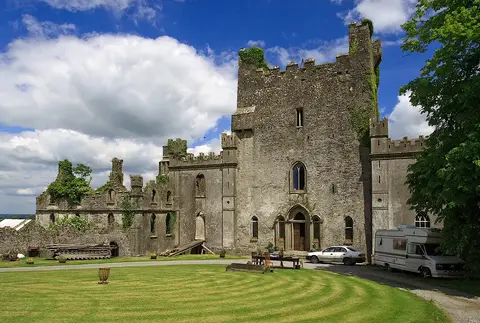
Leap Castle
An Irish midlands stronghold with a “Bloody Chapel,” an oubliette and a foul-smelling “elemental,” often billed as the world’s most haunted castle. Widely reported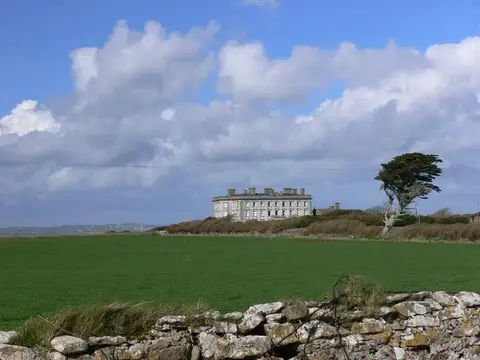
Loftus Hall
A lonely Wexford mansion where, legend says, a card-playing stranger with a cloven hoof vanished through the roof and left Anne Tottenham mad. Regional legend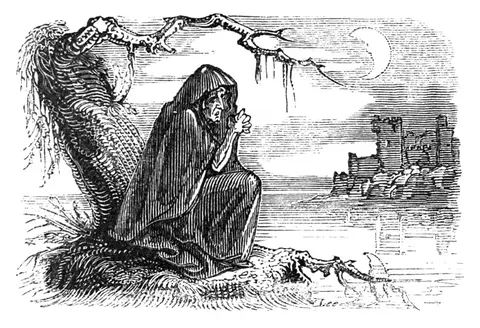
The Banshee
The “fairy woman” of Irish folklore whose keening cry at night warns an old family that one of its members is about to die — Ireland’s most famous spirit. Folklore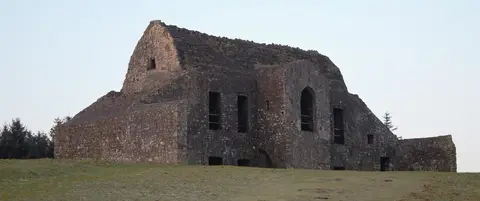
The Hellfire Club, Montpelier Hill
A gaunt 1725 hunting lodge above Dublin, built from an ancient tomb and tied to the rakes of the Hellfire Club, the Devil at cards and a monstrous cat. Regional legend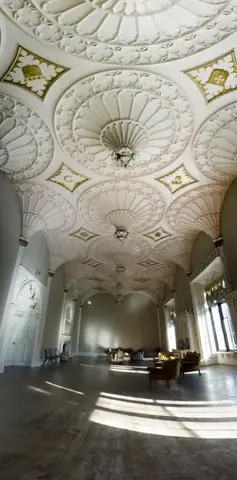
Charleville Castle
A Gothic Revival castle in the Offaly woods, where a little girl named Harriet is said to skip down the great staircase on which she fell to her death. Regional legend
Will-o’-the-Wisp
Pale flickering lights over marshes and bogs that lure travellers off the path – folklore’s ghost lights, and a puzzle chemists are still trying to solve. Folklore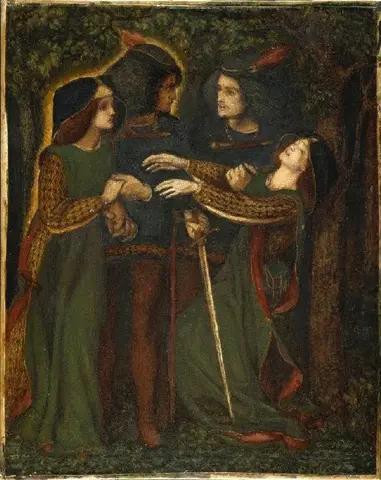
Doppelgänger
A ghostly double of a living person – an omen of death in folklore, a favourite of writers, and a real if rare experience neurologists can now explain. FolkloreThe ghost lore of Ireland
The great haunted houses mostly belong to the Anglo-Irish gentry and the clans before them. Leap Castle in County Offaly, an O’Carroll stronghold with a “Bloody Chapel” and a monstrous “elemental” described by the novelist Mildred Darby, is often called the most haunted castle in the world; nearby Charleville Castle has the ghost of a little girl on its staircase. On the Hook Peninsula in Wexford, Loftus Hall tells of a card game with the Devil, a story also told of the Hellfire Club ruin that looks down on Dublin from Montpelier Hill, built in 1725 with stones taken from a Neolithic passage tomb.
Several of Ireland’s most famous haunted buildings are private homes or volunteer-run trusts with irregular opening times, so check before traveling. Ireland’s many megalithic tombs, holy wells and fairy forts are protected monuments and, for many people, places of living tradition — visit them with care.
Ghost-hunting hotspots
- County Offaly
Ireland’s haunted-castle heartland, with Leap and Charleville a short drive apart in the Slieve Bloom foothills and the forests around Tullamore.
- Dublin and the Dublin Mountains
Georgian and medieval Dublin has ghost walks, old gaols and churches, while the hills above the city hold the Hellfire Club and the Killakee black-cat legend.
- The Hook Peninsula, County Wexford
A windswept headland of Norman landings, an ancient lighthouse and the legends of Loftus Hall.
- County Clare and the Burren
Home of the O’Brien family banshee: Lady Fanshawe’s famous 17th-century encounter probably took place at the O’Briens’ castle of Leamaneh, near Lake Inchiquin.
Timeline
- 1812The castle is completed Charleville Castle
Francis Johnston’s Gothic Revival castle for Charles William Bury, 1st Earl of Charleville, was finished after twelve years of building.
- 1861Harriet’s fall Charleville Castle
Lady Harriet Bury, aged seven, was killed when she fell while sliding down the staircase banister, as newspapers of the time reported. Popular accounts give the date as April 8. She became the castle’s best-known ghost.
- 1870–71The hall is rebuilt Loftus Hall
The 4th Marquess of Ely replaced the old rambling mansion with the present nine-bay house.
- December 1908Mildred Darby’s account Leap Castle
The novelist wife of Jonathan Darby, who held séances at the castle, described its ghosts, including the horrifying elemental, in The Occult Review, giving Leap its reputation.
- 1912The castle is left empty Charleville Castle
Colonel Charles Howard-Bury moved to Belvedere House; the castle stood unoccupied and later lost its roof.
- 1914True Irish Ghost Stories Loftus Hall
Seymour and Neligan published a clergyman’s account of the legend, of guests disturbed in the Tapestry Room, and of his own encounter there.
- 1922The castle is burned Leap Castle
During the Irish Civil War raiders looted and burned the castle, leaving it a roofless shell for half a century.
- 1937–1939The schoolchildren’s folklore The Hellfire Club, Montpelier Hill
Pupils recording local lore for the Schools’ Collection wrote down the tale of a priest, masked card players and a black cat at the “Brass Castle.”
- 1973Restoration begins Charleville Castle
Michael McMullen started restoring the ruin, work later continued by others and by the Charleville Castle Heritage Trust.
- 1974Restoration begins Leap Castle
Peter Bartlett bought the ruin and began restoring it; after his death in 1989 the work passed to Sean and Anne Ryan, owners since 1991.
- October 2016The passage tomb confirmed The Hellfire Club, Montpelier Hill
Archaeologists excavating behind the ruin uncovered the remains of a large Neolithic passage tomb, confirming the old story that the lodge was built from it.
- 2020Closed to the public Loftus Hall
After nearly a decade of tours and paranormal events, the house closed; it was sold the following year, and sold again in 2025 to new owners planning a hotel.
From other news sites
Latest from Ireland
No recent paranormal headlines from Ireland. See all the latest paranormal news.