Case file · Demonic case · House or mansion
Loftus Hall
Also known as Redmond Hall, The Devil at Loftus Hall, The ghost of Anne Tottenham
A lonely Wexford mansion where, legend says, a card-playing stranger with a cloven hoof vanished through the roof and left Anne Tottenham mad.
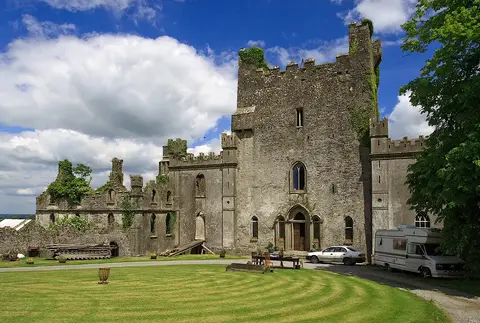
Loftus Hall stands on the windswept Hook Peninsula in southwest County Wexford, within sight of Hook Lighthouse. The site goes back to the Norman invasion: Raymond FitzGerald landed nearby in 1170, and the Redmond family built a castle here around 1350, known as Redmond’s Hall. In 1642 the elderly Alexander Redmond held it against government troops during the Confederate Wars, but after the Cromwellian conquest the family lost it, and the Loftus family took over, making it their seat from 1666. The present mansion was built in 1870–71 for the 4th Marquess of Ely, with a grand staircase and modern comforts reputedly meant to impress Queen Victoria, who never came.
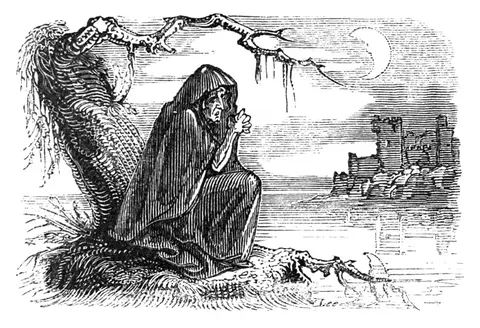
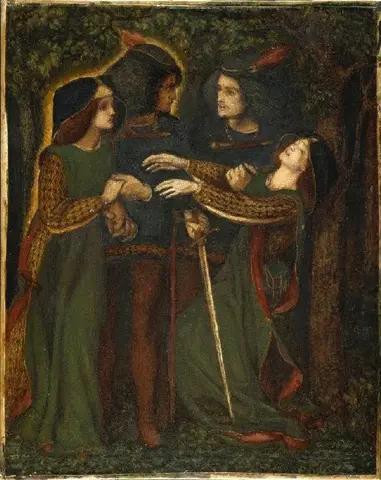
Its legend belongs to the older house. In the mid-18th century Charles Tottenham, who had married into the Loftus family, lived at the hall with his second wife and his daughter Anne. One stormy night a handsome stranger arrived — by sea in some versions, on horseback in others — and was taken in. During a game of cards Anne dropped a card (or a ring) and, reaching under the table, saw that the stranger had a cloven hoof. He shot up through the ceiling in a ball of fire, leaving a hole in the ceiling. Anne lost her reason and was shut away in the Tapestry Room, where she died; the story says her body was so contorted that she was buried sitting up.
Afterward, the tale goes, the hall was plagued by disturbances until a priest, Father Broders, confined them to the Tapestry Room. Later guests who slept there told of something heavy leaping onto the bed, curtains torn back, and a tall lady in stiff brocade at the bedside — accounts collected in St. John D. Seymour and Harry Neligan’s True Irish Ghost Stories (1914), from a writer who said he had seen her himself. Even that early account offered a human explanation: a lonely young woman fell in love with a passing visitor who rode away, her mind gave way, and “a strange legend was at once invented to account for this calamity.”
The house has since been a convent, a hotel and a tourist attraction. The Quigley family bought it in 2011 and ran ghost tours and paranormal nights, and it hosted Ghost Adventures and the film The Lodgers (2017). It closed to the public in 2020 and was sold in 2021 to a developer who began converting it into a hotel, then abandoned the plan after nearly €2 million of work; in November 2025 it was reported sold again, for about €3 million, to the County Meath investor Patrick McDermott.
What people report
Apparitions of Anne Tottenham and of a tall lady in brocade, something heavy leaping onto beds, curtains torn back, unexplained noises and cold in the Tapestry Room, and a dark presence identified with the Devil — reported by family guests in the 18th and 19th centuries and by modern tour visitors.
Where and when
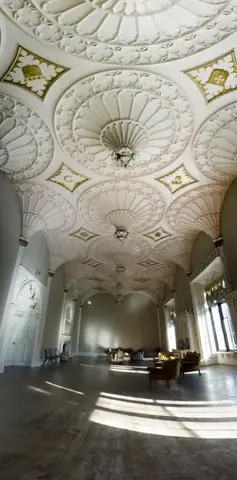
The Tapestry Room, where Anne was said to be confined and to have died; the card room with its legendary damaged ceiling; and the main staircase and halls.
Timeline of the haunting
- July 20, 1642The siege of Redmond’s Hall Hook Peninsula
Sixty-eight-year-old Alexander Redmond and nine defenders held the hall against government troops until Confederate forces arrived and routed the attackers.
- 1775The stranger at the card table Loftus Hall
According to the most common modern version, this is the year of the card game and of Anne Tottenham’s death in the Tapestry Room.
- 1870–71The hall is rebuilt Loftus Hall
The 4th Marquess of Ely replaced the old rambling mansion with the present nine-bay house.
- 1914True Irish Ghost Stories Dublin
Seymour and Neligan published a clergyman’s account of the legend, of guests disturbed in the Tapestry Room, and of his own encounter there.
- 2020Closed to the public Loftus Hall
After nearly a decade of tours and paranormal events, the house closed; it was sold the following year, and sold again in 2025 to new owners planning a hotel.
What could explain it?
- The oldest written account itself explains the legend as a story invented to cover a young woman’s breakdown after a doomed romance.
- The Devil-at-cards tale is a widespread European folktale type, told of many other houses and inns.
- The present house was built nearly a century after the events it is supposed to have witnessed.
- Much of the modern reputation was built by tours and paranormal events run as a business from 2012 to 2020.
Ghost tours, books and screen
The legend inspired the 1993 film The Legend of Loftus Hall; the house was a location for The Lodgers (2017) and is said to have inspired Fowl Manor in Eoin Colfer’s Artemis Fowl books. It appeared on Ghost Adventures.
Places to visit
Loftus Hall is privately owned and not open; it can be seen from the public road and from Hook Lighthouse nearby.
Where it’s reported
Loftus Hall in the news
No recent headlines about Loftus Hall. Our news desk checks every day — see all the latest paranormal news.
Sources
- Wikipedia: Loftus Hall
- Project Gutenberg: St. John D. Seymour and Harry L. Neligan, True Irish Ghost Stories (1914)
- South East Radio: Loftus Hall sells for €3 million (12 November 2025)
- Beat 102 103: Loftus Hall sold for €3 million (12 November 2025)
- Dictionary of Irish Architects: Loftus Hall (Fethard), Co. Wexford
First published · Updated