Case file · Poltergeist · House or mansion
The Stratford Knockings (Phelps Mansion)
Also known as Phelps Mansion poltergeist, Stratford Mysteries, Rev. Eliakim Phelps haunting
In 1850 a retired minister’s Stratford home was ransacked by unseen hands, drawing reporters and Spiritualists to one of America’s first poltergeist cases.
The house at the centre of the Stratford Knockings was built in 1826 by Matthias Nicoll for his daughter Elizah and her husband, Captain George Dowdall (some sources spell it Dowell), a sea captain who had made money in the China trade. In 1848 it was bought by the Rev. Eliakim Phelps, a retired clergyman – described as Congregational in some accounts and Presbyterian in others – who moved in with his much younger second wife, her three children from an earlier marriage, and an infant of their own. Grown children from his first marriage lived elsewhere.
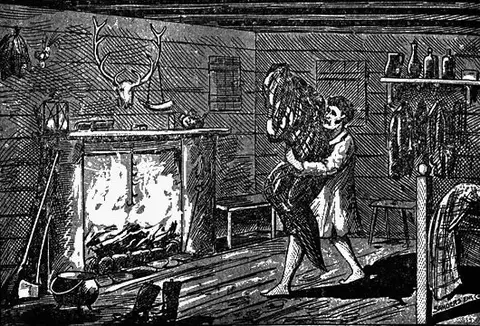
On Sunday, 10 March 1850 the family came home from church to find the house in disorder. Doors stood open, clothes were flung about and drawers had been emptied, yet silver and cash lying in plain view were untouched. Over the following weeks the household reported objects that moved or vanished, windows that broke, raps on the walls and furniture, and rooms in which clothing had been arranged into figures – in one widely repeated account, a number of stuffed shapes in the family’s clothes kneeling around open Bibles. The two stepchildren in the house, a teenage girl and an eleven-year-old boy (named Harry or Henry in different retellings), were said to be the main targets; the boy was reportedly lifted from his chair.
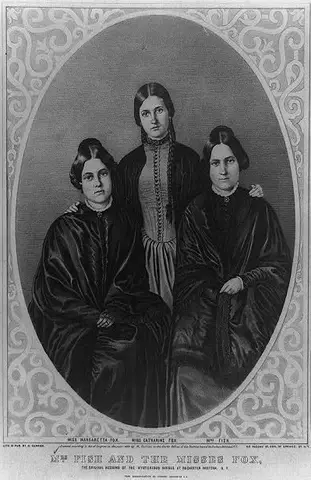
The story arrived at a moment of great public appetite. The Fox sisters had made rapping spirits a national sensation in 1848, and Phelps – respected, educated and apparently unwilling to be laughed at – let reporters and curious neighbours into the house. A Hartford newspaper account of April 1850 gave a detailed description, and local editors who spent the night reported that they could not explain what they saw. Phelps tried to speak to the knocking by a code of raps. The answers he received were inconsistent, and the “spirit” declared at one point that it was causing mischief simply for fun. In September 1850 three Shakers from the Mount Lebanon community, who had been in contact with the family, travelled to Stratford to visit the household.
The family left Stratford within a few years (accounts give 1852 or 1858). Moses Y. Beach, the publisher of the New York Sun, later owned the house, and the disturbances faded from the record. The case was retold in Modern Spiritualism: Its Facts and Fanaticisms (1855) and has been revived by regional writers ever since. The mansion later served as a home for the elderly and was demolished in 1974, so the “haunted house” itself is gone and the case survives only in newspapers, memoirs and local lore.
What people report
Rooms ransacked with nothing stolen, objects thrown or carried between rooms, windows broken, rapping on walls, clothing arranged into human-shaped figures, items vanishing from locked places and reappearing, and a child said to be lifted from his chair.
Where and when
The Phelps house in Stratford, mainly the upstairs bedrooms and the dining room, centred on the children of the household. Activity was reported from March 1850 and, in some accounts, again after the family returned from Philadelphia in 1851.
Timeline of the haunting
- February 1848Phelps buys the house Stratford, Connecticut
The Rev. Eliakim Phelps bought the 1826 mansion from the family of the sea captain who built it and moved in with his wife and her children.
- 10 March 1850The house is found ransacked Stratford, Connecticut
Returning from church, the family found doors open and belongings scattered through the house although valuables were untouched. This is the usual start date for the Knockings.
- 27 April 1850A newspaper account spreads the story Hartford, Connecticut
A detailed report in a Hartford paper described the breakages, thrown objects and arranged figures, and brought crowds of visitors and Spiritualists to Stratford.
- September 1850Shaker visitors Stratford, Connecticut
Three members of the Mount Lebanon Shaker community, Richard Bushnell, Antoinette Doolittle and Jane Knight, travelled to the house after the Phelps family had visited them.
- 1855The case enters Spiritualist literature United States
The Stratford disturbances were recounted in the book Modern Spiritualism: Its Facts and Fanaticisms, helping to fix the story in American paranormal history.
- 1974The mansion is demolished Stratford, Connecticut
By then a home for the elderly, the house was torn down, according to local accounts.
What could explain it?
- Most observers at the time suspected a hoax. The popular theory in Stratford was that Phelps’s young wife and the stepchildren staged events to relieve boredom, and activity seemed to follow the eleven-year-old boy, starting and stopping with his comings and goings.
- Poltergeist researchers often point to an adolescent at the centre of a household as a sign of deliberate or unconscious trickery, and the dramatic “kneeling figures” would have needed hours of unobserved work in a house full of children.
- Whether Phelps took part or was himself deceived is unknown. He gained no clear financial advantage, and several reporters wrote that they saw no sign of fraud, but many contemporary newspaper articles relied on hearsay and unnamed witnesses, and no independent investigation was ever carried out.
- The local link to Goody Bassett, said to have been hanged for witchcraft near the site in 1651, is later speculation that does not appear in the earliest reports.
Ghost tours, books and screen
The Stratford Knockings are one of the best-known 19th-century American poltergeist cases and are often cited in histories of the Spiritualist movement. They have been retold in New England folklore podcasts, local-history articles and anthologies of Connecticut ghost stories.
Places to visit
The local historical society preserves the town’s past; the Phelps house itself no longer stands.
Where it’s reported
Sources
First published · Updated