Case file · Poltergeist · House or mansion
The Morse Poltergeist of Newbury
Also known as The Demon of Newbury, The Daemon at William Morse his House, Elizabeth Morse witchcraft case
In 1679 an elderly Newbury couple were pelted by stones and tormented by moving objects, a case that ended with a witchcraft death sentence.
In the winter of 1679 the quiet household of William Morse, a cobbler, and his wife Elizabeth, an elderly couple in the Massachusetts coastal town of Newbury, was overtaken by strange disturbances. The couple’s young grandson, John Stiles, lived with them. William wrote down the events at friends’ suggestion, and his “Relation” was later printed by Increase Mather in his 1684 collection of wonders, known today as Remarkable Providences. It is an early and unusually well-documented poltergeist-type case from colonial New England, and one that ended in a legal tragedy.
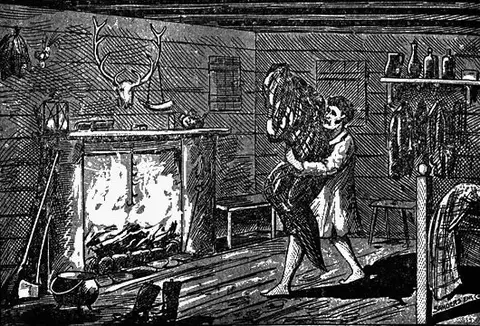
According to Morse’s account, on 3 December 1679 noises began on the roof and a hog appeared inside the locked house. On 8 December, stones and bricks flew through the room, a bedstead was lifted, and a cat was flung at Mrs. Morse. Ashes were thrown into food; William was struck with a bag of hops and a hammer, pinched and scratched; and the boy was tossed about and found with pins, forks and knives sticking in his back. Neighbors including Stephen Greenleaf, Thomas Rogers and George Hardy later corroborated some of the incidents. Mather himself noted that the true reason for the disturbances was “as yet not certainly known.”
Suspicion fell on Caleb Powell, a seafaring man and frequent visitor with a reputation for occult knowledge. Powell said that Elizabeth was suspected of witchcraft and that the boy was the cause of the trouble, and offered to end the disturbances if he could have him for a day; William agreed, and the house was quiet for a time. But when the boy returned and fell into fits, William accused Powell of working with the Devil and had him jailed. Powell was tried and cleared for lack of evidence. The accusation then turned on Elizabeth. In January 1680 neighbors gave depositions describing her supposed bewitching of children and livestock; she was arrested in March, held at Ipswich and Boston, and convicted in May. Governor Simon Bradstreet sentenced her to hang.
The sentence was never carried out. Her execution was repeatedly delayed, and in spring 1681 she was allowed to go home, restricted to within sixteen rods of her house, with the death sentence formally standing. William died in 1683, and the date of Elizabeth’s death is unknown. Modern historians offer a neat explanation: the historian John Demos suggests that William, by blaming Powell, tried to deflect suspicion from his wife, and Emerson Baker, in The Devil of Great Island, argues that the stone-throwing, or “lithobolia,” was the work of the mischievous grandson. A very similar case struck George Walton’s house on Great Island in New Hampshire in 1682, also recounted by Mather.
What people report
Stones and bricks thrown into and at the house, objects and furniture moving, a hog appearing in a locked house, vanished small items, and the grandson afflicted with fits and pins found in his body.
Where and when
The Morse house in Newbury and its yard; the activity was reported over weeks in December 1679 and beyond.
Timeline of the haunting
- 3 December 1679Noises and a hog in the locked house Newbury, Massachusetts
William Morse’s account begins with sounds on the roof and a hog appearing inside the locked house.
- 8 December 1679Stones, bricks and a flying cat Newbury, Massachusetts
Stones and bricks are thrown, a bedstead is lifted and a cat is hurled at Mrs. Morse, according to Morse’s written Relation.
- May 1680Elizabeth Morse convicted Boston, Massachusetts
After neighbors’ depositions in January and her arrest in March, Elizabeth is convicted of witchcraft and sentenced to hang by Governor Bradstreet.
- Spring 1681Released to her home Newbury, Massachusetts
Elizabeth is allowed to return home, confined to within sixteen rods; her death sentence is never carried out.
- 1684Mather prints the account Boston, Massachusetts
Increase Mather publishes Morse’s Relation in his Illustrious Providences, the source for the case.
What could explain it?
- Juvenile prank: both Powell’s original diagnosis and Emerson Baker’s modern analysis point to John Stiles, the grandson, as the source of the stone-throwing and apparent attacks.
- Fear of witchcraft: 17th-century New England attributed misfortune to witches, and an elderly woman with a long local reputation was an obvious target.
- Shifting blame: the historian John Demos suggests William Morse may have accused Caleb Powell to deflect suspicion away from his wife.
- A pattern: similar “lithobolia” cases in the 1680s, including the Walton case on Great Island, suggest a recognizable type of story, whether prank, fraud or collective suggestion.
Ghost tours, books and screen
The Morse case is a standard reference in histories of colonial New England witchcraft and in poltergeist literature, and the Salem Witch Museum includes the homestead site in its guide to local witchcraft-era places.
Places to visit
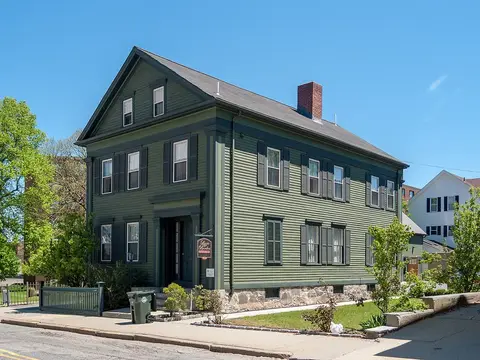
The museum’s locations guide describes the site of the Morse home in Newburyport; the original house no longer stands.
Where it’s reported
Sources
First published · Updated