Case file · Shadow figure · Hospital or asylum
Waverly Hills Sanatorium
Also known as Waverly Hills, Woodhaven Geriatric Center
Louisville’s vast 1926 tuberculosis hospital is one of America’s most famous haunted buildings – and its real history is more moving than the myths.
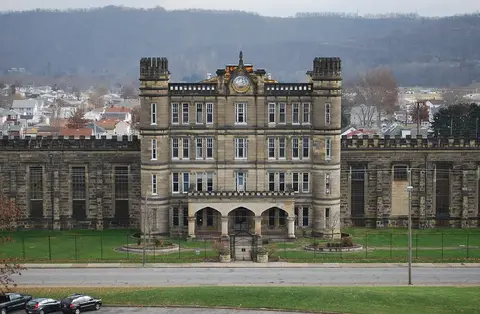
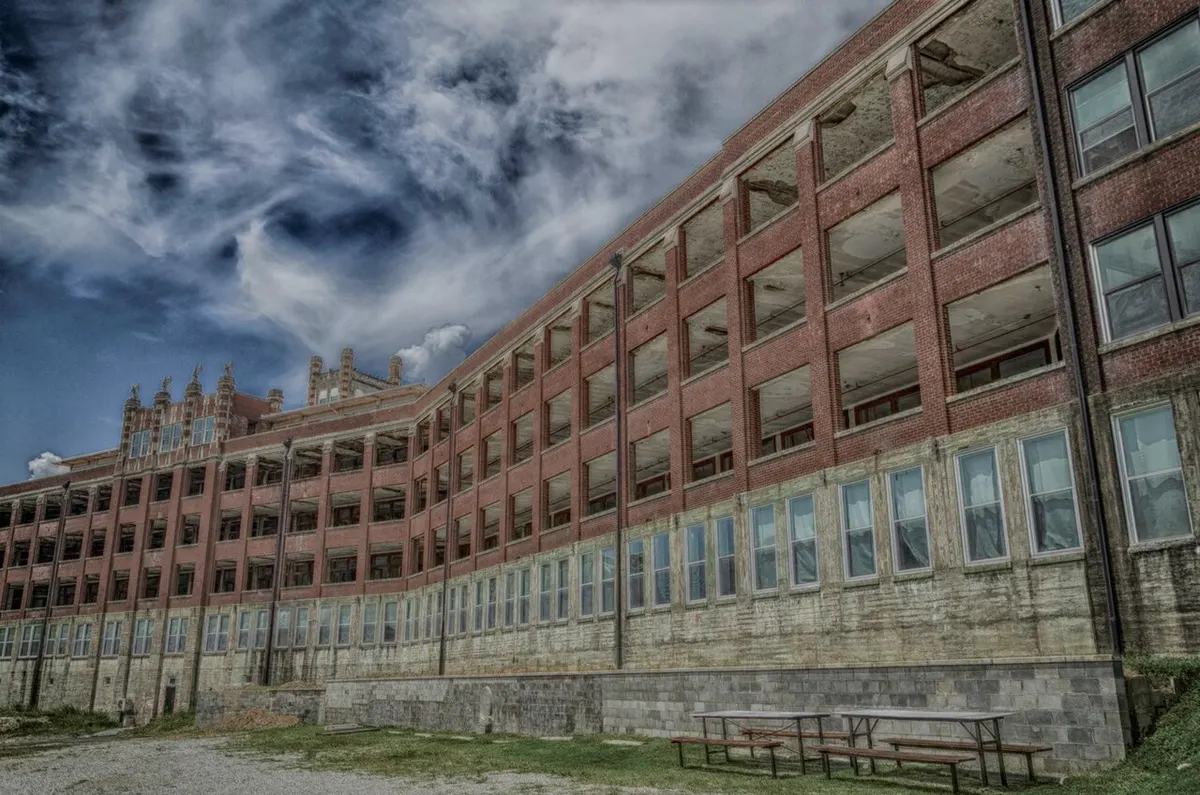
In the early twentieth century Louisville and Jefferson County had some of the highest tuberculosis death rates in the United States. With no cure, doctors prescribed rest, rich food and fresh air, and in 1910 the county opened a small sanatorium of wooden open-air pavilions on a breezy hill in the city’s south-west, land once owned by Major Thomas Hays, who had named it Waverly after Sir Walter Scott’s novels. Demand soon outstripped it, and on 17 October 1926 a five-storey brick and concrete hospital designed by local architect D. X. Murphy opened with room for some 400 patients, its long sun porches built to catch the wind.
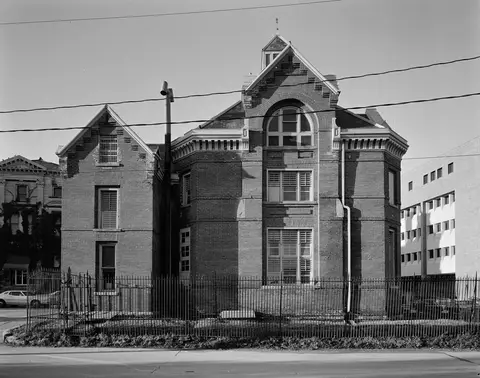
Waverly was a self-contained town, with its own farm, slaughterhouse, water treatment, laundry, post office and zip code, and staff lived on site. It was also segregated: Black patients were treated in a separate, much smaller wooden building down the hill, which later burned. Esther Maxwell Barrens became the first Black nurse there in 1926, and former patient Lillie Gilliam, sent to the Black ward as a fourteen-year-old in the late 1940s, has described “two Waverlys.” Treatments included surgery to collapse diseased lungs – frightening, but at the time the best medicine available. Patients began receiving streptomycin in 1949, and as antibiotics emptied the wards the hospital closed in June 1961.
In 1962 the building reopened as Woodhaven Geriatric Center, a nursing home for elderly and disabled residents; the state closed it in 1982 after a grand jury found neglect and poor conditions. Over the next two decades the empty hospital was vandalised, plans for a prison, apartments and a giant Jesus statue all fell through, and the building acquired its legend. In 2001 Tina and Charlie Mattingly bought it, and they now fund its restoration through tours, investigations and a Halloween haunted house.
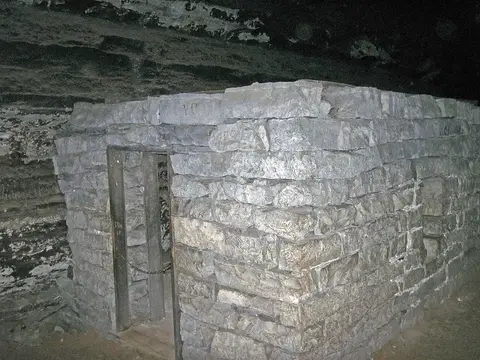
Much of what is said on ghost tours does not survive contact with the record. The often-repeated claim that 63,000 people died at Waverly is impossible to square with a hospital of a few hundred beds – and happens to match the number of Americans who died of tuberculosis in a single year, 1945. The 500-foot tunnel down the hillside was built to carry supplies and steam, and while stories say it was also used to move the dead discreetly, the nickname “death tunnel” appears to date only from the 1980s. Room 502 is tied to legends about nurses’ deaths that have never been confirmed. The thousands of real patients who were treated, recovered or died here are documented in the hospital’s own records, and their story is reason enough to visit.
What people report
Visitors and investigators report shadow figures crossing the long corridors, especially on the fourth floor; a small boy nicknamed “Timmy” said to play with a ball left out for him; disembodied voices and footsteps; doors slamming; a woman said to cry for help on the roof; and apparitions in Room 502. Ghost-hunting television has recorded EVP sessions and thermal-camera “figures” throughout the building.
Where and when
The fourth floor, with its long empty hallways, is famous for shadow people; the fifth floor holds Room 502; the third floor is associated with the boy; and the tunnel (“body chute”) is a highlight of night tours. Most reports come from after-dark tours and investigations.
Timeline of the haunting
- 26 July 1910The first sanatorium opens Louisville, Kentucky
A wooden administration building and two open-air pavilions for about 40 patients open on Waverly Hill, built for around $25,000.
- 17 October 1926The great hospital opens Louisville, Kentucky
The five-storey Tudor Gothic building, with its sun porches and supply tunnel, opens with capacity for around 400 patients.
- June 1961Tuberculosis hospital closes Louisville, Kentucky
With antibiotics making sanatorium care obsolete, Waverly Hills closes; remaining patients are transferred elsewhere.
- 1982Woodhaven nursing home shut down Louisville, Kentucky
The state closes Woodhaven Geriatric Center after a grand jury inspection finds abuse and poor conditions. The empty building becomes a magnet for trespassers and legends.
- 2001The Mattinglys buy the building Louisville, Kentucky
Tina and Charlie Mattingly purchase Waverly and open it for historical and paranormal tours, using the proceeds for restoration.
- 2006Ghost Hunters visits Louisville, Kentucky
The Sci Fi Channel series airs an investigation at Waverly (season 2), one of many TV visits – along with Ghost Adventures, Destination Fear and others – that make it world famous.
What could explain it?
- Long, symmetrical corridors open to the outside create moving light and shadow from passing clouds, headlights and visitors’ torches – ideal conditions for “shadow people.”
- The building is a large, partly ruined concrete shell: wind through broken windows, birds, animals and settling debris produce voices, footsteps and bangs.
- Tour narratives rely on exaggerated or unverifiable claims – the 63,000 death toll, the nurse legends of Room 502 – that prime visitors to expect the worst.
- Commercial ghost tours, paid investigations and TV episodes all benefit from the building’s reputation, and none has produced verifiable evidence.
Ghost tours, books and screen
Waverly Hills has appeared on Ghost Hunters, Ghost Adventures, Destination Fear and Ghost Files, inspired the low-budget horror film Death Tunnel (2005), and served as a model for a location in the video game Project Zomboid. Its Halloween haunted house is a major Louisville seasonal attraction.
Places to visit
Guided historical tours by day, paranormal tours and investigations after dark, and a Halloween haunted house; book ahead and enter only through the official gate.
Watch

Where it’s reported
Field reports
Waverly Hills Sanatorium in the news
No recent headlines about Waverly Hills Sanatorium. Our news desk checks every day — see all the latest paranormal news.
Sources
- Kentucky Historic Institutions: Waverly Hills Sanatorium
- Frazier History Museum: Independent Spirits – a brief history of Waverly Hills Sanatorium (2021)
- Louisville Public Media: Meet one of the few living patients from Waverly Hills Sanatorium’s segregated ward (2026)
- Wikipedia: Waverly Hills Sanatorium
- Waverly Hills Sanatorium (official site)
First published · Updated