ANNIVERSARY · KENTUCKY
Waverly Hills turns 100: the hospital behind the haunted legend
Louisville’s Waverly Hills Sanatorium opened its Tudor Gothic hospital in October 1926. A century on, its ghost stories often outshine its real history.
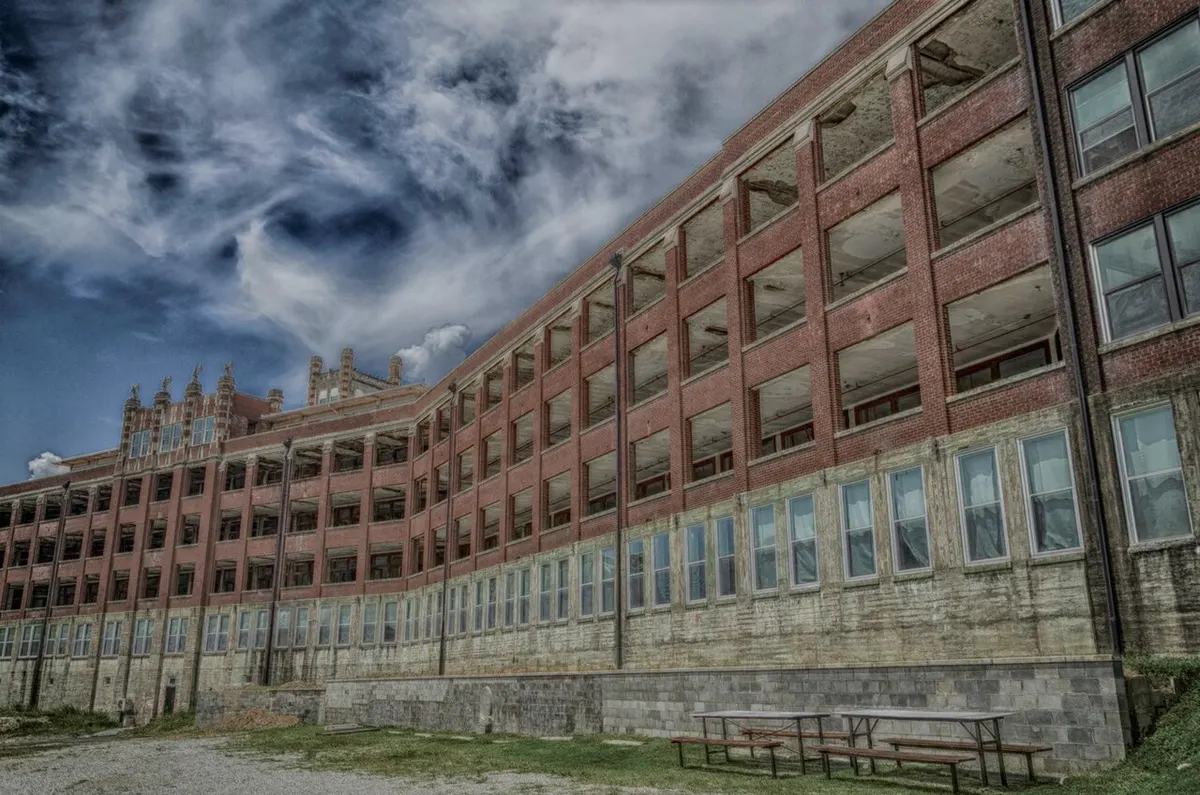
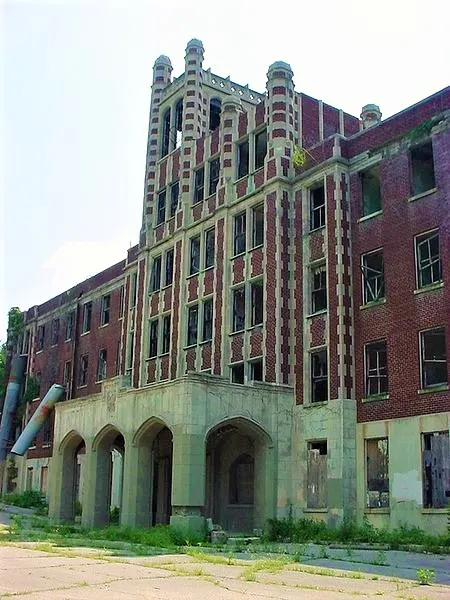
One hundred years ago this week, a huge new hospital opened on a hill in southwestern Louisville. Its long brick wings and open porches were designed for a disease that had no reliable cure: tuberculosis. Today Waverly Hills Sanatorium is better known as one of America’s most famous haunted buildings, the subject of TV investigations, overnight ghost hunts and a Halloween haunted house. Its centennial is a good moment to look at the hospital itself, and at the people who lived and worked there.
A building for fresh air
Waverly Hills began as a small tuberculosis hospital. According to the Kentucky Historic Institutions project, the first sanatorium opened on July 26, 1910, with a two-story wooden administration building and two open-air pavilions. Patients soon outgrew it. Construction of a five-story brick and concrete building began in March 1924, and the same source dates its opening to October 17, 1926, with room for about 400 patients. The Filson Historical Society, which marked the centennial with a talk on October 8, gives October 20, 1926, as the date the building was dedicated. The design, by the D. X. Murphy firm with Arthur Loomis, used the Tudor Gothic style and long south-facing porches where patients could rest in the open air, then the standard treatment.
The treatment changed with medicine. Streptomycin, discovered in 1943, reached Waverly Hills patients in 1949, the Kentucky Historic Institutions project says, and as cases fell the sanatorium closed in June 1961. The building reopened in 1962 as the Woodhaven Geriatric Center, a nursing home, which the state closed in the early 1980s after investigators found patient abuse and poor conditions. The building was listed on the National Register of Historic Places in 1983. Since 2001 it has been owned by Tina and Charlie Mattingly, whose tours and events fund its restoration.
The patients who aren’t in the ghost stories
Waverly Hills, like other hospitals in the Jim Crow South, was segregated. In March 2026, Louisville Public Media profiled Lillie Gilliam, then 93, one of the few living former patients from the separate sanatorium for Black patients. She was admitted at 14 in the late 1940s and stayed two years. She described “two Waverlys”: a small, 28-room wooden building for African American patients and the big brick hospital for white patients, which patients called “up on the hill.” Gilliam was taken there for surgery that removed two-thirds of her right lung. She went on to a long career in medical work. Charlie Mattingly told LPM the wooden building burned down, probably in the early 1960s, and that he hopes to mark its site.
How many died?
The most repeated figure in Waverly’s ghost lore is that 63,000 people died there. Its origin is revealing. In a 2004 article in the University of Louisville’s student newspaper, The Louisville Cardinal, the figure was given by Keith Age, president of a local ghost-hunting society. Other estimates vary widely: a 2019 WAVE 3 News report gave a range of 20,000 to 60,000, linked to the site’s historical society. Louisville Public Media’s profile, meanwhile, noted that in 1945 about 63,000 people died of tuberculosis across the entire United States, a striking echo of the number claimed for one Kentucky hospital.
Simple arithmetic suggests caution. Spread across the whole half-century from 1910 to 1961, 63,000 deaths would mean more than 1,200 a year – about three times the number of beds in the 1926 building – every single year. Tuberculosis did kill many people at Waverly, and their names deserve to be remembered; the Kentucky Historic Institutions project notes that a patient death index from 1911 onward is available to researchers. But the round numbers repeated on tours are estimates, not records.
The same applies to the famous tunnel. A roughly 500-foot tunnel carried steam and supplies from the heating plant up to the main building. Stories that it was used to move bodies out of sight of patients are widely repeated on tours, but Wikipedia’s account notes they rest on anecdote rather than documentation.
Ghosts, tourism and a centennial
Waverly’s haunted reputation took off in the 2000s, with episodes of Ghost Hunters in 2006 and Ghost Adventures in 2010. The site now offers historical tours, paranormal tours in the dark and overnight investigations. This month, its Halloween haunted house runs on Friday and Saturday nights through October 31, sold under the name “100 Years of Fear.”
Executive director Tina Mattingly told WAVE 3 News in 2019 that she has heard unexplained noises and doors slamming shut, and visitors tell similar stories. The building – huge, empty and echoing – is almost designed to produce such impressions. Drafts through broken windows, settling floors, sound carrying down long corridors and the expectations people bring with them explain much of what is reported. None of it has been shown to be paranormal.
A century on, the best way to honor Waverly Hills may be to remember why it was built. It was a place of hope for thousands of Kentuckians with a frightening disease, including teenagers like Lillie Gilliam who walked out and lived long lives.
Sources
- Kentucky Historic Institutions: Waverly Hills Sanatorium
- The Filson Historical Society: The Waverly Hills Sanatorium at 100 – A Virtual Reconstruction (event, Oct. 8, 2026)
- Louisville Public Media: Meet one of the few living patients from Waverly Hills Sanatorium’s segregated ward (March 2, 2026)
- The Louisville Cardinal: Waverly Hills Sanatorium continues reconstruction (Oct. 26, 2004)
- WAVE 3 News via KFVS12: History and hauntings at former tuberculosis hospital draws in thousands each year (May 13, 2019)
- Waverly Hills Sanatorium: official site (tours and haunted house)
- Xtreme Ticketing: Waverly Hills Halloween Haunted House Event 100 Years Of Fear (Oct. 2026 dates)
- Wikipedia: Waverly Hills Sanatorium