RESEARCH · USA
Who believes in ghosts in 2026? What two new surveys really show
A study links ghost belief to churchgoers who trust science; a YouGov poll finds 45% of Americans think ghosts exist. What the numbers do and don’t mean.
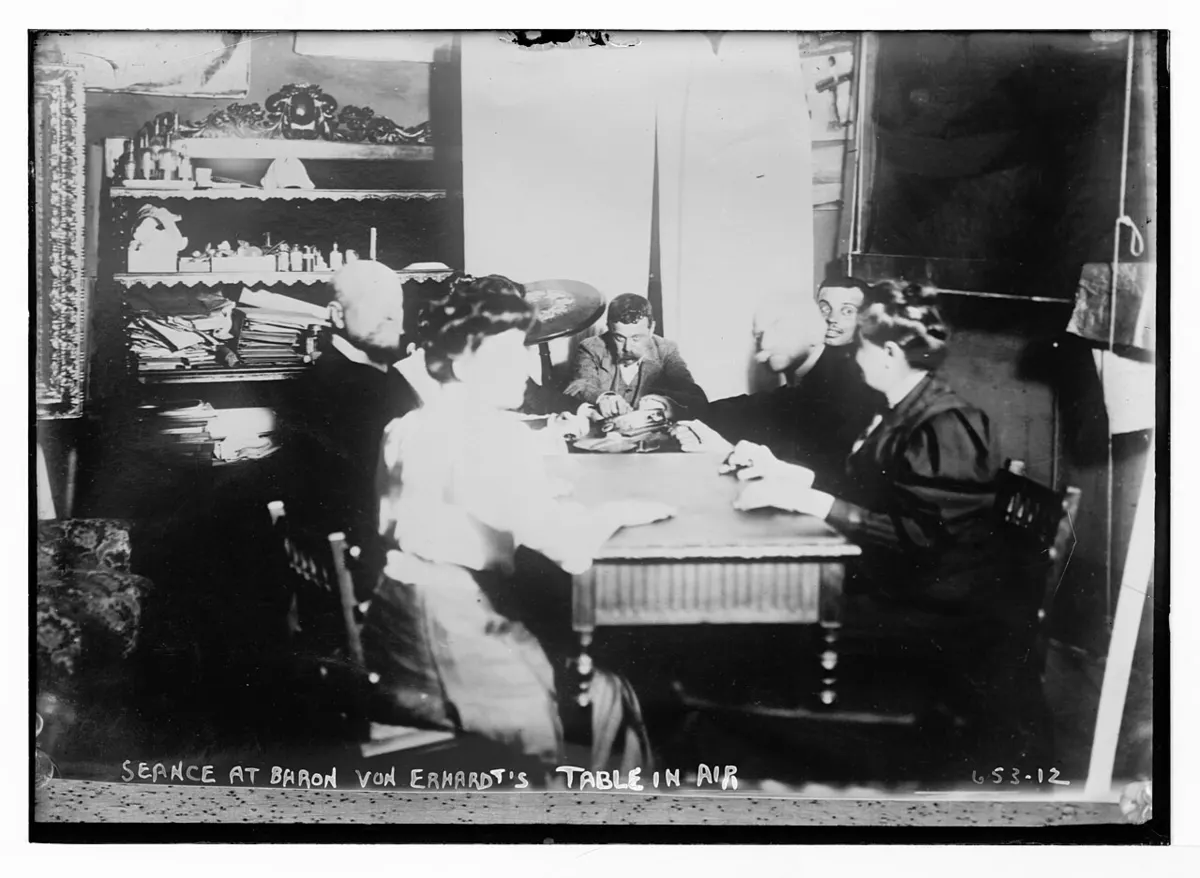
Every Halloween brings a new crop of headlines about how many Americans believe in ghosts. This October there are two worth reading closely: a peer-reviewed study about who holds such beliefs, which its author described in an article republished this week, and a fresh YouGov poll on how many people say they have had a paranormal experience. Together they give a picture of ghost belief in 2026 that is more interesting, and more complicated, than a single percentage.
The study: science, church and “magic”
The research, titled “The magic of secularization,” was published online by the journal Social Forces on July 20, 2026. Its authors are sociologists Paul Froese of Baylor University, Isaiah King of Carson-Newman University and Ruiqian Li of American University. Li summarized the findings for The Conversation, and the piece was republished by Phys.org on October 15 and by Religion News Service on October 16.
The team used the latest wave of the Baylor Religion Survey, a nationally representative survey of 1,812 American adults carried out by Gallup in early 2025. They measured what they call “secular rationalism” with four questions – for example, whether science is the only reliable way to understand the world, and whether people should decide spiritual questions for themselves instead of deferring to religious authorities. They measured belief in “magic” with six items that need no god or church, including ghosts, curses and communicating with the dead.
The headline finding cuts against a common assumption that trusting science pushes out belief in the supernatural. Among Americans who believe in God, those who scored high on secular rationalism were about twice as likely to lean toward magical beliefs as those who rejected it – 40% against 19%, according to Li’s summary. Among people who attend religious services, the gap was 28% against 19%. But among people who never attend services, or who don’t believe in God, secular rationalism made no difference.
Magic thrives where individual rationality and spirituality meet.
Ruiqian Li, in The Conversation, republished by Religion News Service, October 16, 2026
The authors’ interpretation is that losing trust in religious institutions does not necessarily lead people to stop believing in the supernatural. Instead, people who stay loosely religious but trust their own judgment may build their own beliefs, including about ghosts. Li is clear about the limits: the data are a single snapshot, so they cannot show whether people are moving toward or away from religion, and some of the groups being compared are small.
The poll: 45% say ghosts exist
The second dataset comes from YouGov, which surveyed 1,055 U.S. adult citizens online on September 25–28, 2026. In its published results, 45% said they think ghosts exist, 37% said they don’t and 17% weren’t sure. More people said demons exist (48%), and 43% said the same of psychics. Vampires and werewolves each drew under 10%.
Experiences were common but varied. Forty percent said they had felt “a presence or unknown energy,” 19% said they had seen a spirit or ghost and 20% said they had lived in a house they thought was haunted. Asked what lay behind their own experiences, people were evenly split: 36% thought there was probably a scientific explanation they didn’t know about, 36% thought it was supernatural and 28% weren’t sure. And 52% said a homeowner who believes a house is haunted should be legally required to tell buyers – compared with 75% who said that about a past murder.
Why the numbers don’t match
Readers who remember Gallup’s 2025 poll may notice a gap. Gallup, interviewing 1,003 adults by phone in May 2025, found that 39% believed ghosts or spirits of dead people can come back in certain places and situations, and that belief in ghosts was statistically about the same as in 2001. YouGov’s 45% is not necessarily a sign that belief is rising.
The questions are different. “Do you think ghosts exist?” is a broader question than whether the dead “can come back,” and YouGov offers a “not sure” option that soaks up many people. The methods are different too: YouGov uses an opt-in online panel weighted to match the population, with a margin of error of plus or minus 4.2 points, while Gallup used telephone interviews. Gallup itself warned that asking religion questions just before paranormal ones may affect the answers. The fair summary is that, for at least 25 years, somewhere between a third and a half of Americans have been open to the idea of ghosts, depending on how you ask.
What belief doesn’t tell us
Neither survey says anything about whether ghosts are real, and neither claims to. Feeling a presence, hearing unexplained sounds or seeing a light switch off are common experiences with many ordinary causes, from drafts and wiring to sleep and expectation; YouGov’s own respondents were as likely to suspect a scientific cause as a supernatural one. What the surveys do show is that ghost stories are not a fringe interest. They sit comfortably alongside churchgoing and trust in science, which helps explain why haunted hotels, prison tours and ghost walks fill up every October.
Sources
- Social Forces: Froese, King & Li, “The magic of secularization” (published online July 20, 2026)
- Religion News Service / The Conversation: Americans who go to church and trust science are also more likely to believe in ghosts and curses, new research shows (Oct. 16, 2026)
- Phys.org / The Conversation: Americans who go to church and trust science are also more likely to believe in ghosts and curses (Oct. 15, 2026)
- YouGov: Paranormal Encounters survey results, Sept. 25–28, 2026 (PDF)
- Gallup: Paranormal Phenomena Met With Skepticism in U.S. (July 23, 2025)