Country file · Europe
Haunted places in Northern Ireland
What are the most haunted places in Northern Ireland? The best-known are Springhill House, Crumlin Road Gaol and The Banshee.
Northern Ireland shares the whole island’s folklore — the banshee who keens for old families, fairy forts and thorn trees left untouched by farmers, death coaches on country roads — and adds the history of the Plantation of Ulster, when Scottish and English settlers built bawns and plantation houses across the 17th-century countryside. Many of its ghost stories belong to those planter families and their houses, and to the castles strung along the Antrim coast.
- 3 hauntings
- 7 recorded sightings
Haunted places in Northern Ireland
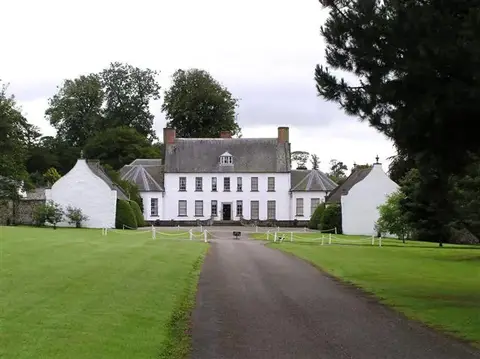
Springhill House
A gentle 17th-century plantation house in mid-Ulster whose family ghost, Olivia Lenox-Conyngham, is often called the best-documented ghost in Ireland. Regional legend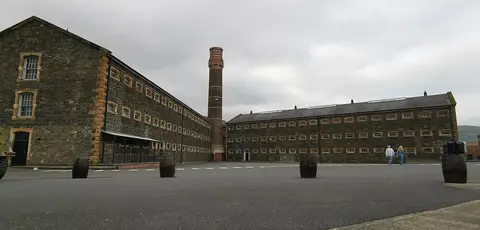
Crumlin Road Gaol
Belfast’s Victorian jail held 25,000 prisoners and saw 17 executions before it closed in 1996; staff, visitors and ghost tours say some never left. Local legend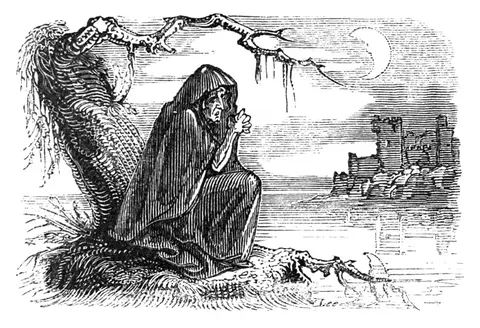
The Banshee
The “fairy woman” of Irish folklore whose keening cry at night warns an old family that one of its members is about to die — Ireland’s most famous spirit. FolkloreThe ghost lore of Northern Ireland
The province’s best-documented family ghost is Olivia Lenox-Conyngham of Springhill, a National Trust plantation house near Moneymore, said to have haunted it since her husband’s death in 1816. In Belfast, the Victorian Crumlin Road Gaol — scene of seventeen executions and much of the history of the Troubles — has become one of the city’s most popular attractions since it reopened in 2012, complete with paranormal tours. On the coast north of Larne, Ballygally Castle, a 1625 tower house turned hotel, is reputed to be one of the most haunted places in Ulster.
Many of the region’s historic houses are in the care of the National Trust or open as hotels and museums. Its painful recent history is still within living memory, so sites connected with the Troubles are best approached as places of remembrance rather than thrills.
Ghost-hunting hotspots
- Belfast
The Crumlin Road Gaol, linked by tunnel to the derelict courthouse opposite, anchors the city’s paranormal tours and Halloween scare events.
- The Antrim coast
Clifftop castles and coastal towns from Larne to the Causeway, including Ballygally Castle, a 17th-century tower house hotel with a reputation for ghosts.
- Mid-Ulster around Moneymore
Plantation country of bawns, estate villages and old houses such as Springhill, where family ghost stories run back two centuries.
Timeline
- 1816Death of George Lenox-Conyngham Springhill House
Disgraced after a quarrel with Castlereagh and suffering from depression, the owner of Springhill died by suicide. Tradition holds that his widow Olivia became the house’s ghost.
- 1846The first prisoners arrive Crumlin Road Gaol
One hundred and six inmates, including women and children, were walked in chains from Carrickfergus to the new county jail.
- September 2, 1942Execution of Tom Williams Crumlin Road Gaol
The 19-year-old IRA member was hanged for the killing of a police officer, one of six executions at the gaol carried out by Thomas Pierrepoint.
- 1957Bequeathed to the National Trust Springhill House
Captain William Lowry Lenox-Conyngham signed over the house and estate three days before his death; his mother Mina lived on there until 1961.
- 1961The last hanging Crumlin Road Gaol
Robert McGladdery was executed for the murder of Pearl Gamble, the last of the gaol’s seventeen hangings.
- 1996The gaol closes Crumlin Road Gaol
After 150 years the prison closed. The paranormal reputation grew while it stood empty awaiting restoration.
- November 2012Reopened to visitors Crumlin Road Gaol
The restored gaol opened as a tourist attraction and conference center, later adding paranormal tours and ghost-hunting events.
From other news sites
Latest from Northern Ireland
No recent paranormal headlines from Northern Ireland. See all the latest paranormal news.