Case file · Ghost light · House or mansion
Bacon’s Castle
Also known as Allen’s Brick House, Arthur Allen House, Bacon’s Castle Ghost Light
The oldest documented brick house in America, seized by rebels in 1676, where a red fireball is said to drift from a churchyard to the stair tower.
Bacon’s Castle, in Surry County near the James River, is regarded as the oldest documented brick dwelling in what is now the United States and one of only a few surviving great houses in the English Carolean style, with Flemish gables, triple-stacked chimneys and stair towers. The National Park Service says that in 1665 Arthur Allen, a wealthy merchant and county magistrate, built it near the river, with some local histories giving the earlier date of around 1655. Allen died in 1669 and the house passed to his son, Arthur Allen II, a member of the House of Burgesses. The house is now a National Historic Landmark, listed in 1960, and is run as a museum by Preservation Virginia.
The building takes its name from the political crisis of 1676. During Bacon’s Rebellion, an uprising in which Virginia colonists led by Nathaniel Bacon turned on Governor Berkeley, some seventy of Bacon’s followers seized the house in September and held it as a fort for more than three months, looting nearby plantations. Bacon himself died in October, and the garrison remained under other leaders until the rebellion’s collapse; the name “Bacon’s Castle” appears to have come into use much later, and Bacon neither lived at the house nor, as far as is known, visited it. The house later passed to the Hankins family, who sold the plantation in 1872, and then to the Warren family, who owned it until Walker Pegram Warren and his wife died in a car accident in 1973. The museum also interprets the lives of the enslaved people who lived and worked on the plantation, with surviving outbuildings.
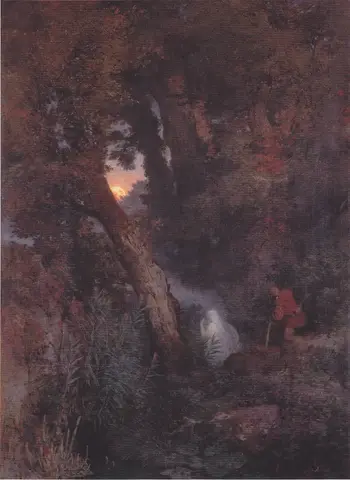
The best-known ghost story concerns a ball of red fire. A Surry County historical-society article describes a fireball that floats from an old church’s ruins across the fields toward the house, wanders for a time, frightens witnesses and then returns to the ruins. A 2015 account in Cooperative Living places its origin in a neighboring graveyard and has it entering the stair tower; one man was said to have seen it circle his bed, and a congregation at a night revival is said to have watched it pass. Other stories include a figure in seventeenth-century clothing who appears and vanishes on the stairs, a Civil War soldier in the garden, cold spots and whispers from the attic. Collectors of Virginia ghost lore add reports from the early 1900s of shattering glass and footsteps at the Warren family’s home and a child who asked about a “lady with white hands.”
Preservation Virginia has run seasonal haunted-history tours of the house, with an interpreter who mixes real history with legend. The tradition appears in printed collections such as L. B. Taylor Jr.’s Ghosts of Virginia and Beth Brown’s Haunted Plantations of Virginia. As with many plantation-house ghost stories, the interpretive challenge is to hold the legend alongside the harder history of the people who built and worked the property.
What people report
A red or orange ball of light moving from a churchyard to the house, a seventeenth-century figure on the stairs, a soldier in the garden, cold spots, whispers from the attic, lights switching on, footsteps in empty halls and, in older accounts, shattered glass and a thrown dictionary.
Where and when
The stair towers, the hallways and parlor, the attic, the garden and the fields between the house and the nearby church graveyard where the ghost light is said to start.
Timeline of the haunting
- 1665Arthur Allen builds the brick house Surry County, Virginia
A wealthy merchant and magistrate builds what becomes the oldest documented brick dwelling in the English colonies.
- September 1676Bacon’s followers seize the house Surry County, Virginia
Rebels loyal to Nathaniel Bacon fortify the house and hold it for over three months, giving it its name.
- 1960National Historic Landmark Surry County, Virginia
Bacon’s Castle is designated a National Historic Landmark for its rare Carolean architecture.
- 1973Preservation Virginia acquires the house Surry County, Virginia
After the deaths of the Warren owners in a car accident, the property was acquired for preservation and restoration.
- October 2015Cooperative Living retells the fireball story Surry County, Virginia
A magazine feature repeated the legend of a red fireball moving from the churchyard into the stair tower.
What could explain it?
- Marsh gas and other will-o’-the-wisp explanations have long been proposed for moving lights near graveyards and wetlands, though the Surry reports are undated and without named witnesses.
- Car headlights, farm vehicles and distant fires crossing open fields at night produce moving lights that are easy to read as a drifting fireball.
- Old brick houses with stair towers and drafts produce echoes, whispers and the feeling of someone on the stairs.
- The “Castle” name suggests a grander and darker story than the house’s history, and the ghost tradition is reinforced by tours and printed ghost collections.
Ghost tours, books and screen
The ghost light appears in L. B. Taylor Jr.’s Ghosts of Virginia, Marguerite Du Pont Lee’s Virginia Ghosts, Beth Brown’s Haunted Plantations of Virginia and statewide Halloween features, and Preservation Virginia offers haunted-history tours.
Places to visit
House museum with outbuildings and a 17th-century garden; seasonal haunted-history tours.
Where it’s reported
Sources
First published · Updated