Case file · Ghost light · Cemetery or church
Silver Cliff Cemetery Lights
Also known as Silver Cliff ghost lights, Dancing blue lights of Silver Cliff
Pale blue-white lights are said to drift among the graves of a Colorado mining-town cemetery, a legend reported since the 1880s and still unsettled.
Silver Cliff, in the Wet Mountain Valley of south-central Colorado, boomed after a silver strike in the late 1870s. The burial ground was established around 1879 (some sources say the early 1880s) as a resting place for the mining camp’s dead, many of them miners and infants, and it is split between a Catholic and a Protestant section. It is still owned and run by the town and is still used for burials.
The legend of the cemetery’s lights is older than any written record. The most common version has two or three miners walking home from a saloon, or from a party, and taking a shortcut through the graveyard, where they saw glowing balls of blue and white light dancing between the headstones. Accounts place the story in the 1880s or 1890s, and a skeptic in the tale is said to have gone out in the rain, surrounded by a glow, crying for help. The lights, which witnesses describe as round, whitish or blue, appearing three or four at a time, were still being reported in the twentieth century, and they were mentioned in the August 1969 National Geographic, which described dim, round spots of blue-white light among the graves.
Over the years local people have said the lights show up most readily on damp, cloudy or rainy nights. Paranormal groups have been given permission by the town to investigate, with mixed conclusions: one group has reported contact with spirits, while another found nothing paranormal after several visits and suggested phosphorescence, moisture in the air or reflected light. The town clerk has granted such access to specific groups, not to the general public, and the cemetery is not a place to wander at night.
The skeptical researcher Karen Stollznow, who wrote about the lights, argues that they are a personal visual experience rather than a measurable phenomenon: not everyone sees them, and the human eye is prone to perceive faint flashes and blue-ish glows after long periods in darkness. Other suggestions are the glow of the town’s lights bouncing off polished headstones, and marsh-gas-style “wildfire”. The cemetery’s mix of fact and folklore has made it one of Colorado’s best-known ghost-light sites, but the mystery has never been settled.
What people report
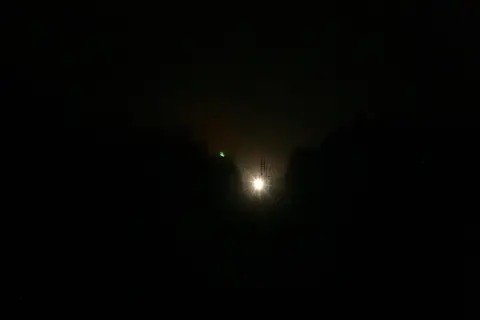
Visitors describe round, bluish or whitish lights, sometimes three or four at once, hovering or drifting among the headstones at night; some say they move away when approached.
Where and when
The town cemetery south of Silver Cliff in the Wet Mountain Valley, especially the Protestant (Cross of the Assumption) section, usually on damp or cloudy nights.
Timeline of the haunting
- 1879Cemetery established Silver Cliff, Colorado
The town sets aside land for the burial of its miners and their families during the silver boom.
- 1880s or 1890sThe miners’ shortcut Silver Cliff, Colorado
According to the founding legend, miners cut through the cemetery at night and saw floating blue-white lights; accounts disagree on the year.
- August 1969National Geographic mention Silver Cliff, Colorado
Edward Linehan’s article in the magazine describes dim, round spots of blue-white light among the graves and spreads the legend nationally.
- 1996Newspaper account Silver Cliff, Colorado
A California newspaper describes round, whitish glimmers that usually appear three or four at a time, as seen by visitors.
- September 2005A writer’s overnight watch Silver Cliff, Colorado
A visitor to the cemetery, writing for Legends of America, reports seeing coloured lights and an orange glow on a cloudy night. The account is anecdotal.
What could explain it?
- Light from Silver Cliff and Westcliffe reflecting off the sky, or off polished headstones, is the explanation most often given by skeptics, though some witnesses say the lights were reported before the area had electric power.
- Phosphenes and the eye’s sensitivity to faint blue light in darkness can produce floating spots that are visible only to some observers, a reason why not everyone who watches sees the lights.
- Damp air, dust and moisture, or phosphorescent decay in wet ground (the old “will-o’-the-wisp” explanation), may produce faint glows; and expectation is strong, since people who go to see the lights are already looking for them.
Ghost tours, books and screen
The lights are a staple of Colorado ghost-lore and appeared in the 1969 National Geographic, in newspaper features, in the writings of skeptical researcher Karen Stollznow and on the Silver Cliff town website. The town museum fields questions about them.
Places to visit
The town runs the cemetery and the local museum; treat the graves with respect and visit only in daylight.
Where it’s reported
Sources
First published · Updated