Case file · Residual haunting · Road, bridge or woods
Changi Beach
Also known as Changi Beach Park, Changi Beach massacre site
A Singapore beach park where 66 civilians were shot in the 1942 Sook Ching massacre – and where many say cries for help still carry over the water.
Changi Beach Park stretches for about 3 km along Singapore’s northeastern tip, from Changi Point to the Changi ferry terminal, looking across the strait to Pulau Ubin. It is one of the island’s oldest coastal parks, popular for picnics, barbecues, camping and night fishing, with planes from Changi Airport rumbling low overhead. To many Singaporeans it is also one of the most haunted places in the country, because of what happened here in the first days of the Japanese occupation.
After the British surrender on 15 February 1942, the Japanese military began the Sook Ching (“purge through cleansing”) operation, screening Singapore’s Chinese men and killing those judged anti-Japanese. Between 18 February and 4 March 1942, tens of thousands of civilians were executed. On 20 February, according to the National Heritage Board, hojo kempei (auxiliary military police) firing squads killed 66 Chinese men at the water’s edge on this stretch of Changi Beach. British and Australian prisoners of war from the Changi camp were sent to bury the dead. A few hundred metres south, Tanah Merah Besar beach – now under the airport runway – was one of the most heavily used killing grounds, where well over a thousand men and youths died.
Those deaths are the root of the ghost stories. Visitors and campers have long told of screams and crying from the sea after dark, of voices calling for help, and of figures – sometimes described as headless – walking along the waterline. The stories circulate in Singapore’s rich tradition of ghost talk, especially around the seventh lunar month, when the Hungry Ghost Festival honours wandering spirits.
The beach was rebuilt as a resort in the 1950s and reshaped again when much of the old shoreline was taken for Changi Airport in the 1970s. Today a National Heritage Board marker near Carpark 2 records the massacre. It is a place of memory as well as recreation; visitors who come because of the ghost stories are asked to remember that the men who died here were real civilians, most of them never named in public records.
What people report
Campers, fishermen and park visitors describe screams, wailing and cries for help coming from the water at night, unexplained voices, cold patches, and headless or shadowy figures walking along the shore or wading into the sea. The reports are anecdotal and mostly passed on by word of mouth and online.
Where and when
The stretch of sand near Carpark 2 and the heritage marker, and the shoreline toward Changi Point, after dark – especially during the seventh lunar month.
Timeline of the haunting
- 20 February 1942The Changi Beach massacre Changi, Singapore
Japanese auxiliary military police shoot 66 Chinese male civilians at the water’s edge during the Sook Ching operation. Prisoners of war from Changi are made to bury the dead near the beach.
- May 1958A seaside resort opens Changi, Singapore
Government work on a beach resort at Changi is completed, part of the post-war development that turned the shore into a recreation area.
- 1975The airport takes the shore Changi, Singapore
About two-thirds of the beach is acquired for a runway for the new Changi Airport, changing the landscape where the killings took place.
What could explain it?
- The massacre is real and well documented; the reported cries are part of a wider pattern in which communities remember mass killings through ghost stories.
- At night the beach carries sounds a long way: wind and surf, birds, voices from other campers and boats across the strait, and aircraft noise from Changi.
- Expectation shapes perception – visitors who know the history are primed to interpret ordinary noises and shapes on a dark shore as ghostly.
- Ghost talk peaks during the Hungry Ghost month, when Singaporean media and storytellers revisit the island’s “haunted” places.
Ghost tours, books and screen
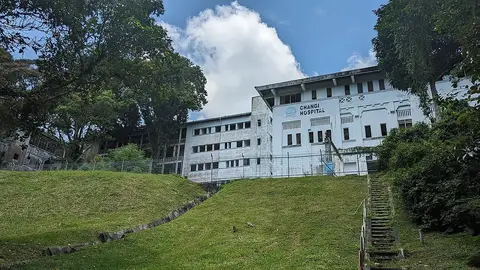
Changi Beach features on nearly every list of haunted places in Singapore, in local ghost-story books and podcasts, and in late-night “ghost hunting” trips by young Singaporeans. Its heritage marker is one of several wartime sites in the Changi area, which also include the Changi Chapel and Museum.
Places to visit
National Heritage Board page on the marker and the events of 20 February 1942.
Where it’s reported
Changi Beach in the news
No recent headlines about Changi Beach. Our news desk checks every day — see all the latest paranormal news.
Sources
First published · Updated