Case file · Folklore spirit
Pontianak
Also known as Kuntilanak, Puntianak, Mati-anak, Langsuir (related)
The long-haired woman in white of Malay and Indonesian folklore – a spirit of childbirth announced by a baby’s cry and the scent of frangipani.
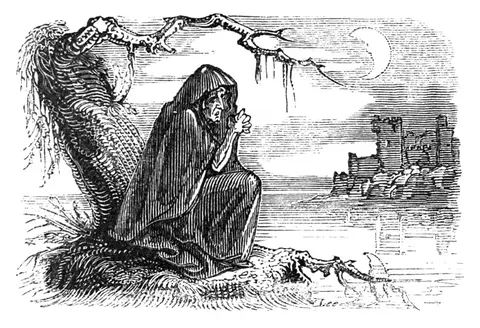
The pontianak (in Indonesia, the kuntilanak) is the most famous ghost of the Malay world. In the classic telling she is the spirit of a woman who died in pregnancy or childbirth, or of her stillborn child, who returns at night as a beautiful woman with very long black hair and a white gown. She is said to rest by day in banana or other large trees, to signal her presence with the sound of a crying baby or a woman’s laughter, and to carry a sweet scent of frangipani (plumeria) that turns into the smell of decay. Her targets in the stories are men who wrong women, travellers out alone at night, and newborns and their mothers.
She belongs to an old family of childbirth spirits. Writing in 1900, the British colonial ethnographer Walter William Skeat listed the pontianak – also called mati-anak, which he linked to the word for “stillborn” – among four spirits feared at childbirth in the Malay Peninsula, along with the langsuir, the bajang and the penanggalan. In the version he recorded, the original langsuir was a woman of great beauty who died of shock on learning her child was stillborn, and the pontianak was that child. Midwives and healers used charms, plants and protective rites to keep such spirits away from mothers and babies. The legend reflects the real dangers of childbirth in the past, and it remains part of the living folk beliefs of many families, alongside – and sometimes in tension with – Islam.
The ghost even gave her name to a city. According to the traditional founding story of Pontianak, capital of West Kalimantan in Indonesian Borneo, the river mouth where Syarif Abdurrahman Alkadrie established his settlement on 23 October 1771 was haunted by pontianak until he drove them away with cannon fire and built a mosque and palace on the spot. Local celebrations still fire bamboo cannons in memory of the tale.
In the 20th century the pontianak became a film star. Cathay-Keris’s Pontianak (1957), directed by B. N. Rao with Maria Menado in the title role, opened in Singapore on 27 April 1957, ran for months and launched a whole genre in Malaya and Singapore; the film itself is now believed lost. Film scholar Rosalind Galt’s Alluring Monsters (2021) argues that the pontianak has since become a way for Southeast Asian cinema to talk about gender, colonialism, religion and the loss of the forests she was said to live in.
What people report
Traditional signs of a pontianak include a baby crying where no baby is, a woman’s laughter or humming, dogs whining or howling at night, the scent of frangipani followed by a foul smell, and a pale woman in white glimpsed among trees or by the roadside. In some regions she takes the form of a night bird. People in Malaysia, Singapore and Indonesia still tell first-hand stories of such encounters, especially near banana trees, old kampung houses and dark roads.
Where and when
Not one place: the pontianak is reported across peninsular Malaysia, Singapore, Brunei and Indonesia, particularly in Kalimantan and Sumatra. Her traditional haunts are banana and other large trees, forest edges, graveyards and lonely roads at night.
Timeline of the haunting
- 23 October 1771A city named for a ghost Pontianak, West Kalimantan, Indonesia
Syarif Abdurrahman Alkadrie founds the settlement that becomes Pontianak. Its founding legend says he drove away the pontianak haunting the riverbank with cannon fire.
- 1900Recorded in Malay Magic Malay Peninsula
Walter William Skeat’s Malay Magic describes the pontianak or mati-anak as one of the feared spirits of childbirth, and records charms used against it.
- 27 April 1957Pontianak premieres Singapore
B. N. Rao’s film, starring Maria Menado, opens to huge audiences and spawns sequels and rival productions – the start of the pontianak film genre.
- November 2021Alluring Monsters New York
Columbia University Press publishes Rosalind Galt’s study of the pontianak in Southeast Asian cinema, a sign of the figure’s cultural weight.
What could explain it?
- Childbirth spirits are found in many cultures; they personify the very real risks of pregnancy and infant death before modern medicine.
- Night sounds of the tropics – some birds, cats in heat and nightjars – can resemble a baby’s cry or a woman’s laugh.
- Frangipani is a common tree near graves and houses in the region, and blooms most fragrantly at night, which links its scent to the spirit.
- Cautionary stories about the pontianak warned men against mistreating women and kept people from wandering alone after dark.
Ghost tours, books and screen
The pontianak has starred in dozens of Malaysian, Singaporean and Indonesian films, from Pontianak (1957) and Sumpah Pontianak (1958) to Pontianak Harum Sundal Malam (2004) and Revenge of the Pontianak (2019), and in the Indonesian Kuntilanak films. She also appears in games such as DreadOut and in Zen Cho’s fiction.
Where it’s reported
Pontianak in the news
No recent headlines about Pontianak. Our news desk checks every day — see all the latest paranormal news.
Sources
First published · Updated