Case file · Other · Cemetery or church
Masakado’s Mound (Masakado-zuka)
Also known as Kubizuka, Shōmonzuka, 将門塚, Taira no Masakado’s head mound
A small memorial to the rebel warrior Taira no Masakado amid Tokyo’s office towers – a site so revered and feared that the city has built around it.
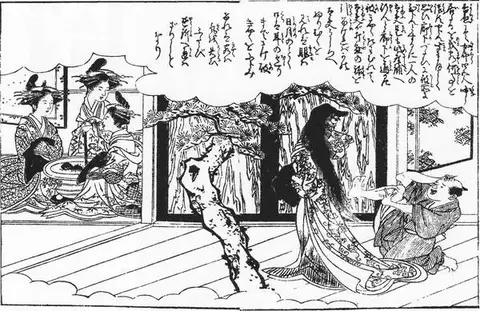
Taira no Masakado was a 10th-century warrior of the Kantō who rose against the imperial court in Kyoto, declared himself a “new emperor” of the eastern provinces, and was killed in battle in 940. His head was taken to the capital to be displayed. According to legend it would not rest: it flew back east and came down in the fishing village of Shibasaki, on the shore of what would become Edo and then Tokyo, where local people buried it. The mound that marks the spot now stands in Ōtemachi, among the glass towers of Tokyo’s financial district, facing the Imperial Palace moats.
From early on Masakado was feared as an onryō, a wrathful spirit, and also honoured as a protector of the eastern people who had defied distant rulers. Chiyoda City’s local-history archive relates that disasters around the mound were blamed on his anger, and that in 1309 he was enshrined as a deity at the nearby Kanda Myōjin shrine to calm him. When the shogunate moved Kanda Myōjin to its present site in 1616, the mound stayed where it was, in the grounds of daimyo mansions and later, from the Meiji era, in a courtyard of the Ministry of Finance.
The modern legend of the curse dates from the 1920s. The Great Kantō Earthquake of 1923 wrecked the ministry and damaged a memorial stone erected on the mound in 1906. During rebuilding, a temporary office was put up over the courtyard and the mound was cut down. Then, in 1926, the serving Finance Minister died, and staff and workers suffered further deaths and injuries. These were attributed to Masakado; the temporary building was removed, the mound restored in 1927, and the memorial stone re-erected in 1940. Later tellings add that heavy machinery overturned when US occupation forces tried to clear the site after 1945 – a story repeated widely but not documented.
Today the site is cared for by the Shiseki Masakado-zuka Hozonkai, a preservation society made up of Kanda Myōjin’s chief priest and neighbouring companies, which holds memorial rites. It was renovated between November 2020 and April 2021 alongside the Otemachi One redevelopment; office workers still stop to bow and leave water, flowers or sake, and frog figurines are left as offerings because kaeru (“frog”) also means “to return.” It is a place of worship first, and visitors are expected to behave accordingly.
What people report
Rather than apparitions, the mound is known for a curse: misfortune, illness and accidents said to befall those who disturb or disrespect it, from the 1920s Finance Ministry deaths to rumours about nearby offices whose desks are never placed with workers’ backs to the mound. Some visitors also describe a heavy or tense atmosphere at the site.
Where and when
The mound and its stone monument stand in a small walled enclosure in Ōtemachi 1-chōme, near exit C5 of Ōtemachi Station. Masakado is also enshrined as a deity at Kanda Myōjin, about 2 km to the north.
Timeline of the haunting
- 940The death of Masakado Shimōsa Province (now Ibaraki/Chiba)
Masakado is killed in battle by forces loyal to the court, and his head is taken to Kyoto. Legend says it later returned east and was buried at Shibasaki.
- 1309Enshrined to calm his spirit Edo (Tokyo)
According to Kanda Myōjin’s tradition, as related by Chiyoda City’s local-history archive, Masakado is enshrined as a deity there to pacify the spirit blamed for disasters around the mound.
- 1926The Finance Ministry deaths Ōtemachi, Tokyo
After the mound is cut down for a post-earthquake temporary office, the serving Finance Minister dies, and further deaths and injuries among staff and workers follow. The run of misfortune is blamed on Masakado, and the building is removed.
- 1940The memorial stone returns Ōtemachi, Tokyo
The commemorative stone damaged in the 1923 earthquake is re-erected, after the mound itself was restored in 1927.
- November 2020 – April 2021Renovation and an earthquake Ōtemachi, Tokyo
The preservation society closes the site for renovation. Bunshun Online reports that a small earthquake three days after work began prompted jokes and worries about the curse; the site reopens in spring 2021.
What could explain it?
- The 1926 deaths came in the aftermath of the 1923 earthquake, when illness and accidents were common; a pattern was found after the fact and linked to the disturbed mound.
- Belief in onryō – spirits who must be honoured to stop them causing harm – is a long-standing strand of Japanese religion, and the “curse” is best understood as part of that tradition rather than as a ghost sighting.
- Stories about the US occupation bulldozer and about office layouts are repeated in books and media but have not been documented.
- Developers’ caution may be as much about respect, reputation and the site’s legal protection as about fear.
Ghost tours, books and screen
Masakado’s curse looms over modern Tokyo fiction, above all Hiroshi Aramata’s novel Teito Monogatari (1985–87) and its film adaptation, and he appears in manga, anime and the Megami Tensei games. Masakado is honoured at Kanda Myōjin, one of Tokyo’s most important shrines, and in festivals such as Sōma Nomaoi in Fukushima.
Places to visit
The great shrine where Masakado is honoured as one of three enshrined deities.
Where it’s reported
Masakado’s Mound (Masakado-zuka) in the news
No recent headlines about Masakado’s Mound (Masakado-zuka). Our news desk checks every day — see all the latest paranormal news.
Sources
First published · Updated