Case file · Other · Town or district
Kuldhara
Also known as Kuldhara village, The cursed village of Jaisalmer
A ruined desert village near Jaisalmer whose people, legend says, left in a single night and cursed the land so that no one could live there again.
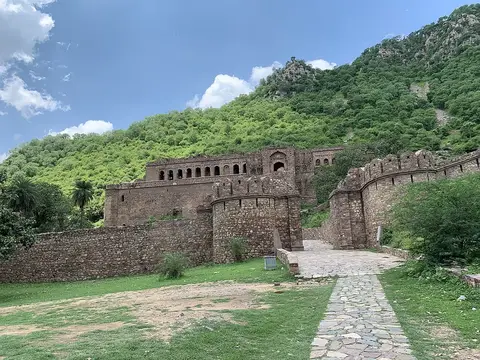
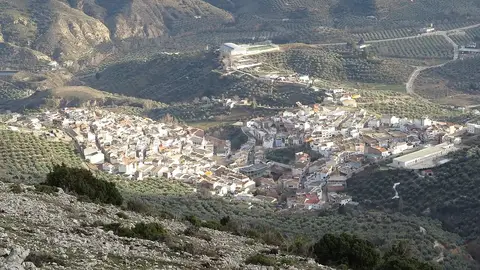
Kuldhara lies about 18 km southwest of Jaisalmer in the Thar Desert: some 400 roofless sandstone houses laid out along three long streets around a temple, with the remains of a town wall, wells, a step-well and three cremation grounds with carved memorial stones. It was a village of Paliwal Brahmins, a community of farmers, traders and bankers who migrated from Pali. Memorial inscriptions show the village was settled by the early 13th century, and an inscription records a step-well commissioned by a Kuldhara Brahmin named Tejpal in 1757.
The famous legend tells of a sudden end. A cruel minister of Jaisalmer State, Salim Singh (sometimes Zalim Singh), demanded crushing taxes – and, in the best-known version, the hand of the village headman’s daughter. Rather than give her up, the Paliwals of Kuldhara and 83 neighbouring villages slipped away in a single night, leaving everything behind, and laid a curse that no one would ever settle there again. Those who try, the story goes, are driven out by strange happenings.
The historical record tells of a slower decline. Historian S. A. N. Rezavi estimated the village’s 17th–18th-century population at about 1,600; the British officer James Tod recorded 800 people in 1815; by 1890 only 37 remained. Drying wells along the seasonal Kakni river, falling harvests and unrelenting tax demands are the likeliest reasons people left. A 2017 study in the journal Current Science by geologist A. B. Roy and colleagues argued that collapse patterns in the ruins of Kuldhara and other Paliwal villages point to an early 19th-century earthquake as well.
From the late 20th century the curse legend made Kuldhara a famous “haunted village.” Local people say they do not believe the ghost stories but tell them to attract visitors. In the early 2010s the Indian Paranormal Society, led by Gaurav Tiwari, spent a night there and claimed to have recorded moving shadows and voices. The Rajasthan government has since developed the site for heritage tourism, and in 2016 officials discussed allowing overnight tented stays. The ruins and cremation grounds are memorials to a real community, and visitors are asked to treat them that way.
What people report
Visitors and ghost hunters report footsteps and voices in the empty lanes, shadows moving between the houses and a sense of being watched. The legend holds that anyone who tries to live in the village is driven away by the Paliwals’ curse. The claims are anecdotal.
Where and when
The roofless houses along the main streets, the central temple, the step-well and the cremation grounds with their memorial stones, particularly at dusk and after dark.
Timeline of the haunting
- 1235The earliest memorial stone Kuldhara, Rajasthan
A devali (memorial stone) inscription records the death of a resident in 1235 CE, showing the village was already settled.
- 1815Tod counts 800 people Kuldhara, Rajasthan
The British officer James Tod records 800 residents in 200 households; by this time most of the village wells had dried up and families were already leaving.
- 1890Only 37 remain Kuldhara, Rajasthan
Records show the population has fallen to 37 – evidence of a gradual decline rather than a single night’s flight.
- December 2015A facelift for the ‘haunted’ village Jaisalmer, Rajasthan
India Today reports that the state has approved Rs 4.5 crore to develop Kuldhara for tourists and to prevent theft of antiquities.
- February 2016A night in the haunted village? Jaisalmer, Rajasthan
The Times of India reports plans for tented overnight stays at Kuldhara, playing on its reputation.
- January 2017The earthquake theory India
A paper in Current Science argues that destruction in the deserted Paliwal villages around Jaisalmer is evidence of a 19th-century earthquake.
What could explain it?
- Population records from 1815 and 1890 show a decline over decades, not an overnight exodus.
- Failing water supplies, poor harvests and heavy taxation – and possibly an earthquake – explain why the Paliwals left.
- The curse story explains a real puzzle (why such a well-built village stands empty) in folk terms, and local people say they tell it for visitors.
- Wind through the empty houses, desert animals and the sheer silence of the site at dusk produce the sounds and feelings visitors report.
Ghost tours, books and screen
Kuldhara features in countless Indian ghost-story lists, TV paranormal shows and YouTube videos, often alongside Bhangarh Fort. It has been used as a film location – controversially in 2011, when a Bollywood crew was fined for defacing the ruins – and is now developed as a heritage site near Jaisalmer.
Where it’s reported
Kuldhara in the news
No recent headlines about Kuldhara. Our news desk checks every day — see all the latest paranormal news.
Sources
- Current Science (A. B. Roy et al.): Deserted nineteenth century Paliwal villages around Jaisalmer – historical evidence of palaeoseismicity (2017)
- S. A. N. Rezavi: The medieval site of Kuldhara in Jaisalmer (Internet Archive)
- India Today: Jaisalmer’s ‘haunted’ village to be developed and opened for tourists (18 December 2015)
- The Times of India (Rachna Singh): Game for night out at ‘haunted’ Kuldhara? (8 February 2016)
- Wikipedia: Kuldhara
First published · Updated