Country file · Asia & the Middle East
Haunted places in Japan
What are the most haunted places in Japan? The best-known are Kuchisake-onna, The Okiku Doll, Masakado’s Mound (Masakado-zuka) and Hachiōji Castle Ruins, among 6 on file.
Japan has one of the richest ghost traditions in the world. Its yūrei – pale, long-haired spirits in white burial robes – took their classic form in Edo-period kabuki and woodblock prints, and stories of onryō, vengeful spirits who must be honoured to stop them causing harm, reach back more than a thousand years. Summer is ghost season: during Obon, families welcome ancestral spirits home, and television, magazines and storytellers revive the art of kaidan, the ghost tale.
- 6 hauntings
- 12 recorded sightings
Haunted places in Japan
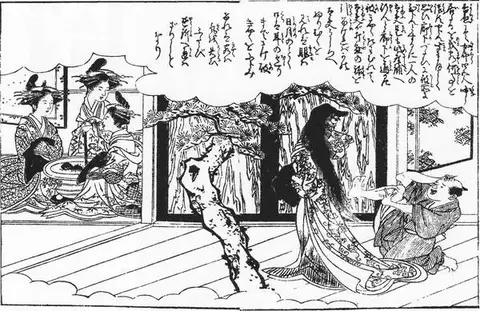
Kuchisake-onna
A masked woman who stops children at dusk to ask “Am I pretty?” – the urban legend that swept Japan in 1979 and led schools to walk pupils home. FolkloreThe Okiku Doll
A small Japanese doll at a Buddhist temple in Hokkaido whose bobbed hair is said to keep growing – believed by her family to hold a little girl’s spirit. Regional legend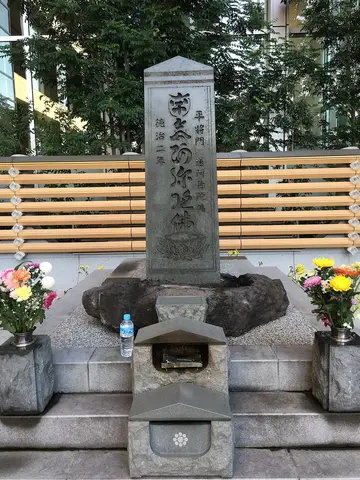
Masakado’s Mound (Masakado-zuka)
A small memorial to the rebel warrior Taira no Masakado amid Tokyo’s office towers – a site so revered and feared that the city has built around it. Widely reported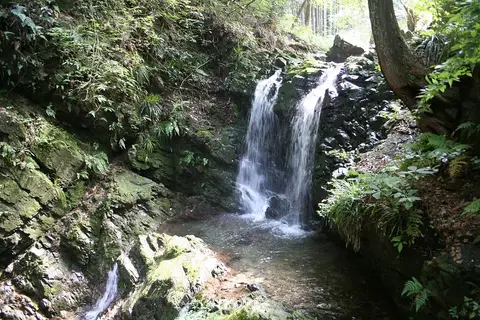
Hachiōji Castle Ruins
A Hōjō mountain castle west of Tokyo that fell in a single day in 1590 – now a quiet historic site and one of the capital’s best-known ghost spots. Regional legend
Shadow People
Dark human-shaped figures glimpsed at the edge of sight or standing over the bed – and the sleep-paralysis research that explains many of them. Widely reported
Will-o’-the-Wisp
Pale flickering lights over marshes and bogs that lure travellers off the path – folklore’s ghost lights, and a puzzle chemists are still trying to solve. FolkloreThe ghost lore of Japan
Many of the most famous stories are tied to real places and real deaths. In Tokyo, office workers still bow at the mound of the 10th-century rebel Taira no Masakado, and the ruins of Hachiōji Castle, which fell in a single day in 1590, are among the city’s best-known shinrei supotto (spirit spots). Others are modern: the masked Kuchisake-onna swept the country as a schoolchildren’s rumour in 1979, and the Okiku doll at a Hokkaido temple is said to keep growing its hair.
Visitors should remember that many “haunted” sites are shrines, temples and graves where people come to pray. Japan’s safe-messaging norms also matter: some places promoted online as ghost spots are associated with suicide, and Haunting Map does not feature them. Where a place is a working temple or shrine, the respectful way to engage with its story is as a visitor, not a ghost hunter.
Ghost-hunting hotspots
- Yotsuya, Tokyo
The setting of Tōkaidō Yotsuya Kaidan (1825), Japan’s most famous ghost play, where shrines to its heroine Oiwa are still visited by actors before staging it.
- Himeji Castle, Hyōgo
The castle’s Okiku Well is linked to the legend of Banshū Sarayashiki, in which a servant’s ghost counts plates at night.
- Higashiyama, Kyoto
Rokudō Chinnō-ji temple, traditionally seen as a gateway to the underworld, holds the Rokudō mairi each year on 7–10 August, when visitors ring its bell to call ancestral spirits home for Obon.
- Tōno, Iwate
The rural valley whose ghost and folk tales Kunio Yanagita collected in Tōno Monogatari (1910), the founding text of Japanese folklore studies.
Timeline
- 1938Entrusted to Mannenji The Okiku Doll
When the family moves to Karafuto, they leave the doll with Mannenji temple. After the Second World War it is formally given to the temple for permanent memorial care.
- 1940The memorial stone returns Masakado’s Mound (Masakado-zuka)
The commemorative stone damaged in the 1923 earthquake is re-erected, after the mound itself was restored in 1927.
- 1951National Historic Site Hachiōji Castle Ruins
The castle ruins are designated a National Historic Site, and archaeological excavation and maintenance work begin.
- 26 January 1979First in print Kuchisake-onna
The Gifu Nichi Nichi Shimbun notes rumours circulating among local children about a woman with a split mouth. It is the earliest known printed mention.
- 23 March 1979The national weeklies arrive Kuchisake-onna
Shūkan Asahi reports the rumour, followed by Shūkan Shinchō in April. National coverage turns a regional story into a countrywide one.
- June 1979Escorts and patrols Kuchisake-onna
At the height of the scare, parents and teachers in some towns escort children home and police cars patrol school routes. A large Shūkan Asahi feature on 29 June marks the peak of media attention.
- August 1979The rumour fades Kuchisake-onna
With schools and cram schools closed for the summer holidays, the children’s word-of-mouth network breaks and the panic subsides.
- 1990sA weekly-magazine fixture The Okiku Doll
Women’s weeklies including Josei Jishin and Josei Seven run stories on the doll in 1990, 1991 and 1993, the last claiming its face had become more adult and its mouth was opening.
- 1990Restoration of the Goshuden Hachiōji Castle Ruins
Stone walls, the bridge over the moat and the entrance to the lord’s residence are reconstructed, opening the area most associated with the ghost stories to visitors.
- 2015Withdrawn from view The Okiku Doll
A magazine report, later catalogued in academic folklore research, says the doll has been taken off public display because of its fragile condition.
- July 2019A summer ghost feature Hachiōji Castle Ruins
Shūkan Josei’s online edition visits the ruins for a summer ghost-spot special, recounting the legend of the waterfall and a ghost-story performer’s experiences there.
- November 2020 – April 2021Renovation and an earthquake Masakado’s Mound (Masakado-zuka)
The preservation society closes the site for renovation. Bunshun Online reports that a small earthquake three days after work began prompted jokes and worries about the curse; the site reopens in spring 2021.
From other news sites
Latest from Japan
No recent paranormal headlines from Japan. See all the latest paranormal news.