Case file · Residual haunting · Castle or palace
Hachiōji Castle Ruins
Also known as Hachiōji-jō, 八王子城跡, Goshuden-no-taki
A Hōjō mountain castle west of Tokyo that fell in a single day in 1590 – now a quiet historic site and one of the capital’s best-known ghost spots.
On Mount Fukasawa, on the western edge of metropolitan Tokyo, lie the ruins of one of the largest castles of the Late Hōjō clan. Hōjō Ujiteru, younger brother of the clan head Ujimasa, began building it in the late 1570s or early 1580s to guard the roads from Kai Province into the Kantō plain, after his older castle at Takiyama had nearly fallen to the Takeda. He moved his seat there around 1587. Stone-faced terraces, a drawbridge across a dry moat and a hillside residence compound, the Goshuden, sat below a small summit keep.
The castle was still unfinished when Toyotomi Hideyoshi moved against the Hōjō in 1590. Ujiteru took most of his fighting men to defend the main Hōjō castle at Odawara, leaving behind a small garrison together with many peasants, women and children. A detached Toyotomi army under Maeda Toshiie and Uesugi Kagekatsu attacked at dawn on the 23rd day of the sixth month of 1590 (24 July in the modern calendar), and Hachiōji fell before nightfall. News of its fall helped persuade Odawara to surrender; Ujiteru was ordered to take his own life, and Tokugawa Ieyasu later had the castle dismantled.
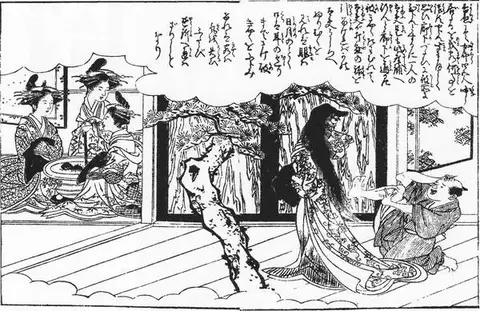
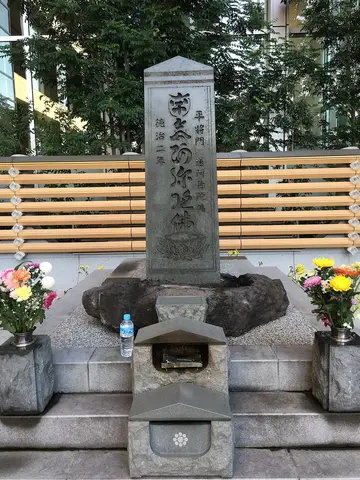
The ghost story is rooted in that day. Local tradition holds that many of the women of the castle took their own lives at the Goshuden waterfall on the Shiroyama River rather than be captured, and that the stream ran red for three days and nights. Histories of the site say the hill was long left abandoned afterwards because people believed it haunted. Modern ghost writers and TV crews have made the waterfall one of Tokyo’s most famous shinrei supotto (spirit spots), and the anniversary of the fall is said to be when activity peaks.
The ruins were designated a National Historic Site in 1951, excavation followed, and in 1990 part of the stonework, the bridge and the Goshuden gateway were restored. Today a guidance centre at the foot of the hill explains the castle’s history, and hiking trails climb to the summit. Hachiōji’s city education board, which manages the ruins, presents the fall as a local tragedy, and visitors are asked to treat the site as a place where real people died.
What people report
Rumours collected by writers include armoured warriors and a woman in white near the waterfall, and visitors describe the sound of horses, armour and battle cries in the woods, women’s voices or weeping near the waterfall, figures in old-style dress, sudden heaviness or nausea, and photographs with strange shapes. A 2019 Shūkan Josei feature quoted ghost-story performer Tanishi Matsubara, who said a companion behaved strangely during a visit. All the reports are anecdotal.
Where and when
Most stories centre on the Goshuden-no-taki waterfall below the restored residence compound, the Hikibashi bridge and the Goshuden gate, and the wooded trail to the summit. The traditional anniversary of the fall – the 23rd day of the sixth lunar month, or late July – is when reports are said to increase.
Timeline of the haunting
- 24 July 1590 (Tenshō 18, 6th month, 23rd day)The castle falls in a day Hachiōji, Musashi Province
A Toyotomi force of about 15,000 storms the lightly defended castle at dawn and takes it the same day. Many defenders and non-combatants are killed or die in the fall, the event behind the ghost tradition.
- 1951National Historic Site Hachiōji, Tokyo
The castle ruins are designated a National Historic Site, and archaeological excavation and maintenance work begin.
- 1990Restoration of the Goshuden Hachiōji, Tokyo
Stone walls, the bridge over the moat and the entrance to the lord’s residence are reconstructed, opening the area most associated with the ghost stories to visitors.
- July 2019A summer ghost feature Hachiōji, Tokyo
Shūkan Josei’s online edition visits the ruins for a summer ghost-spot special, recounting the legend of the waterfall and a ghost-story performer’s experiences there.
What could explain it?
- The castle’s violent end is real history, and stories of the dead lingering at battle sites are a long Japanese tradition of mourning the unquiet dead rather than evidence of ghosts.
- The site is a forested mountain valley with running water, wildlife and deep shade, which produces echoing sounds and eerie light, especially at dusk.
- Japanese TV and magazines rank and revisit “spirit spots” every summer, and expectations created by the coverage shape what visitors report.
- Stories that the river runs red, or that all the women died at the waterfall, come from oral tradition rather than contemporary records.
Ghost tours, books and screen
Hachiōji Castle is a mainstay of Japanese summer ghost specials, ghost-story books and YouTube channels, and it is often listed alongside Tokyo’s other famous spirit spots. It is also one of the Japan Castle Foundation’s 100 Fine Castles of Japan (2006), popular with history fans who collect castle stamps.
Places to visit
Free visitor centre at the foot of the hill with displays on the castle and its fall; about 20 minutes on foot from the Reien-mae/Hachiōji-jōseki bus stop.
Where it’s reported
Hachiōji Castle Ruins in the news
No recent headlines about Hachiōji Castle Ruins. Our news desk checks every day — see all the latest paranormal news.
Sources
First published · Updated