Case file · Other · Hospital or asylum
Pennhurst State School and Hospital
Also known as Pennhurst Asylum, Pennhurst
A Pennsylvania institution for people with disabilities, open 1908–1987 and exposed for neglect, now a haunted attraction whose fame follows its history.
Pennhurst opened in 1908 as the Eastern Pennsylvania Institution for the Feeble-Minded and Epileptic on a campus near Spring City, in Chester County, that grew to 1,400 acres. It was part of a national movement that segregated people with intellectual and developmental disabilities from their families and communities. The first resident was admitted on 23 November 1908. Over its eight decades more than 10,500 people lived there, and the population peaked above 3,500. Pennsylvania lawmakers declared in 1913 that people with such disabilities were a danger to society, and the institution was soon overcrowded and under-staffed, receiving people who could not be housed elsewhere, including some orphans and immigrants.
Residents were sorted by ability and sex, and many worked on the farm and in other campus enterprises, work that critics likened to peonage. Families and advocacy groups pressed for reform from the 1940s. In 1968 a five-part WCAU-TV series, “Suffer the Little Children”, reported by Bill Baldini, exposed neglect and abuse and gave the campaign for change a national audience. In 1974 a resident, Terri Lee Halderman, became the lead plaintiff in a federal suit; in 1977 Judge Raymond Broderick ruled that conditions violated residents’ constitutional rights. The case, Halderman v. Pennhurst, went to the Supreme Court and was settled in 1984 with a plan for community-based services, nine employees were indicted over assaults on residents in 1983, and the institution closed on 9 December 1987.
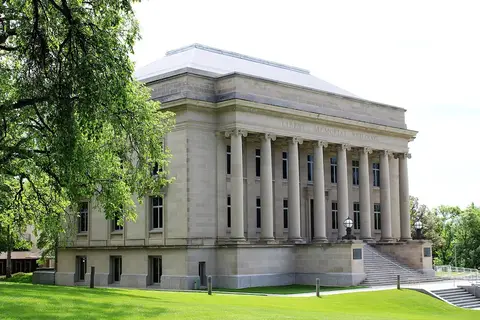
After the closure the buildings decayed, and the state sold the site to a developer. The sale prompted protests and the creation of the Pennhurst Memorial and Preservation Alliance, which has campaigned for a museum, and the campus was named an International Site of Conscience in 2007. In 2010 a state historical marker was dedicated. The ghost reputation is a later layer. From 2010–11 part of the former administration building has housed a commercial Halloween attraction called Pennhurst Asylum, which added history tours, photography tours and overnight paranormal investigations in 2017, with proceeds said to help maintain the grounds.
Television crews have visited, including Ghost Hunters, Ghost Adventures and A&E’s World’s Biggest Ghost Hunt (2019) and Travel Channel’s Destination Fear in 2019. The sources consulted describe this reputation rather than specific named witnesses or dated incidents, and the attraction is controversial locally because many former residents, families and advocates see the building as a place of suffering rather than entertainment. This entry treats the story as legend, and puts the people who lived there, not an apparition, at its centre.
What people report
The sources consulted describe a general reputation for paranormal activity, fed by the haunted attraction and television investigations, but name no individual witness or dated report.
Where and when
The haunted attraction and tours are held in the former administration building and its tunnels; most of the rest of the campus is closed to the public.
Timeline of the haunting
- 23 November 1908First resident admitted Spring City, Pennsylvania
The institution opened for people the state then labelled feeble-minded and epileptic.
- 1968“Suffer the Little Children” Philadelphia, Pennsylvania
A five-part television series by Bill Baldini exposed neglect and abuse at Pennhurst.
- 1977Court finds residents’ rights violated Philadelphia, Pennsylvania
In Halderman v. Pennhurst, Judge Raymond Broderick ruled that conditions were unconstitutional; the case ended in a 1984 settlement.
- 9 December 1987Pennhurst closes Spring City, Pennsylvania
The last residents left after a court-ordered move to community-based services.
- 2010–2011Haunted attraction opens Spring City, Pennsylvania
A commercial Halloween haunt began in the former administration building, a decision that remains controversial locally.
What could explain it?
- Entertainment shapes belief: the ghost reputation grew largely after the closure, from a commercial Halloween attraction and television programmes rather than from historic reports.
- Atmosphere: a vast, decaying institutional complex with tunnels and empty wards invites fear and misinterpretation of ordinary noise.
- Real suffering as a source of horror: the reality of neglect and abuse, documented in court, is what makes the site feel haunted, and critics say that turning it into entertainment misrepresents residents as monsters or victims.
- No documentation: none of the sources consulted gives a dated, named account of any specific apparition.
Ghost tours, books and screen
Pennhurst has been featured in A&E and Travel Channel programmes and, as a fictional model, in the 2019 film Scary Stories to Tell in the Dark and the fourth season of Stranger Things. Documentaries such as Pennhurst (2023) and novels such as James McBride’s The Heaven & Earth Grocery Store (2023) engage with its real history.
Places to visit
A ticketed Halloween attraction with daytime history and photography tours; the rest of the campus is closed to the public.
Where it’s reported
Sources
First published · Updated