Country file · Asia & the Middle East
Haunted places in Indonesia
What are the most haunted places in Indonesia? The best-known are Lawang Sewu and Pontianak.
Indonesia’s spirits – hantu – are a vivid part of popular culture. The kuntilanak (the Malay pontianak), the shrouded pocong, the hairy genderuwo and the child-spirit tuyul are known across the archipelago, and Javanese spiritual tradition (kejawen) closely links violent death to the places where it happened. Indonesian horror films and TV mystery shows are hugely popular, and many have been shot at real “haunted” locations.
- 2 hauntings
- 7 recorded sightings
Haunted places in Indonesia
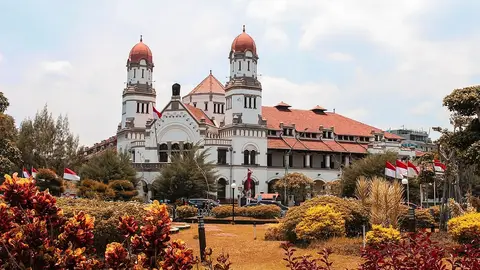
Lawang Sewu
Semarang’s old railway headquarters, “the thousand doors,” whose wartime basement and years of neglect made it Indonesia’s most famous haunted building. Widely reportedPontianak
The long-haired woman in white of Malay and Indonesian folklore – a spirit of childbirth announced by a baby’s cry and the scent of frangipani. FolkloreThe ghost lore of Indonesia
Colonial buildings and wartime sites carry many of the most famous stories. Lawang Sewu in Semarang – the “thousand doors,” headquarters of the Dutch East Indies railway – became the country’s best-known haunted building after decades of neglect and memories of the Japanese occupation, until a 2011 restoration turned it into a busy museum. In Jakarta’s old town, buildings tied to colonial violence have similar reputations.
Belief in spirits remains part of daily life for many Indonesians, and stories are often told with a mix of fear and humour. Visitors should respect religious and cultural practice at cemeteries and keramat (sacred graves), and keep to opening hours at heritage sites.
Ghost-hunting hotspots
- Kota Tua, Jakarta
The old Batavia quarter, including the former city hall (now the Jakarta History Museum) and its dungeons, is the centre of the capital’s colonial ghost stories.
- Semarang, Central Java
Home to Lawang Sewu and an old Dutch quarter, Kota Lama, of crumbling warehouses and churches.
- Jeruk Purut Cemetery, Jakarta
A South Jakarta cemetery famous for the urban legend of a headless pastor.
Timeline
- 23 October 1771A city named for a ghost Pontianak
Syarif Abdurrahman Alkadrie founds the settlement that becomes Pontianak. Its founding legend says he drove away the pontianak haunting the riverbank with cannon fire.
- 1907The railway palace opens Lawang Sewu
The main building of the Nederlandsch-Indische Spoorweg Maatschappij headquarters is completed; the rest of the complex follows by 1919.
- 1942–1945Japanese occupation Lawang Sewu
The Japanese army takes over the building. Local memory holds that prisoners were held, tortured and killed in the basement of Building B – the root of the ghost stories.
- October 1945The Five-Day Battle Lawang Sewu
Fighting between Indonesian fighters and Japanese troops who refused to surrender their arms reaches Lawang Sewu, and several young railway workers are killed. A monument in front of the building commemorates them.
- 2007Lawang Sewu: Dendam Kuntilanak Lawang Sewu
A horror film about young people who anger the building’s spirits makes Lawang Sewu a household name as a haunted site.
- 5 July 2011Restored and reopened Lawang Sewu
First Lady Ani Yudhoyono inaugurates the renovated complex, which media coverage presented as a fresh start for a building long known for ghosts.
- December 2013Losing the spooky image Lawang Sewu
The Jakarta Post reports city plans to eliminate the building’s haunted image to attract more visitors.
From other news sites
Latest from Indonesia
No recent paranormal headlines from Indonesia. See all the latest paranormal news.