FIELD REPORT · BOOKS
A historian’s new book reads America’s ghost stories as history
In ‘This Haunted Land,’ Betsy Gaines Quammen visits a buried uranium town, a Spanish fort and a boarding school to ask what ghost stories remember.
Most ghost stories are told for the shiver. In a new book, the historian Betsy Gaines Quammen tells them for what they remember. This Haunted Land: Reckoning with Ghosts and the Stories That Shape America, published by Torrey House Press in September, travels to places with haunted reputations – a uranium town that no longer exists, a Spanish fort in Florida, a former Indian boarding school in Oklahoma – and asks what their stories say about the history underneath. Exploring American ghost stories, she told the Deseret News in a profile published on October 20, she came to see them as “reflections of our collective memory, or lack thereof.”
A historian on the ghost trail
Quammen lives in Bozeman, Montana, and holds a doctorate in environmental history from Montana State University; her earlier books, American Zion and True West, dealt with land, faith and myth in the West. The Bozeman Daily Chronicle, which covered a talk she gave in July, reports that the new book has 12 chapters set in different parts of the country, from Arkansas and Oklahoma to Florida and Montana. Her argument, as she put it to the paper, is that the country is haunted by what it would rather forget: “assimilation programs, dispossession of lands, colonialism, extinction, extraction, violence.”
The book opens in Ketchum, Idaho, at the house where Ernest Hemingway lived at the end of his life and where he died by suicide in 1961. Quammen was a writer-in-residence there in 2022, and according to the Deseret News she describes a door pushed open and the feeling of something grabbing her firmly by the shoulders – experiences unsettling enough that she moved to a hotel. The house belongs to The Community Library in Ketchum and is not open to the public.
I wanted to be so careful and respectful when telling these mini ghost stories that I tell in this book.
Betsy Gaines Quammen, speaking in Bozeman (Bozeman Daily Chronicle)
The records behind the stories
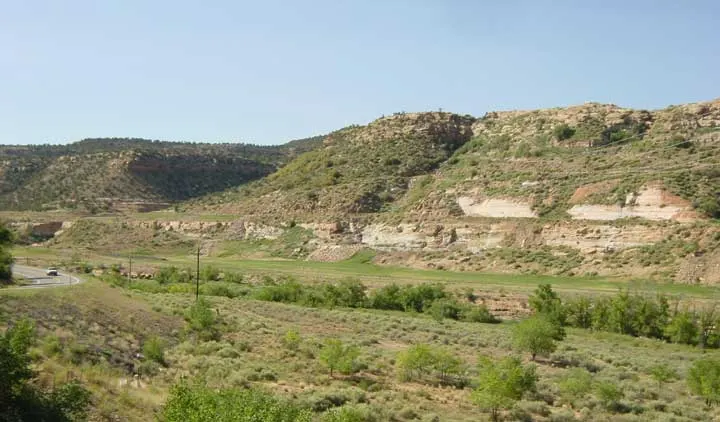
Several of her places come with a documented history that is grim enough without a ghost. Uravan, in western Montrose County, Colorado, was a company town built around a uranium and vanadium mill. The U.S. Environmental Protection Agency says the mill supplied radium for Marie Curie’s research and uranium for the Manhattan Project before it shut down in 1984. The site was declared a Superfund site in 1986, and a cleanup that cost more than $120 million buried the debris of more than 50 mill structures and over 13 million cubic yards of contaminated material in disposal cells on the site. The town’s roughly 800 residents moved away and its buildings are gone. Quammen describes the place as “haunted by promises unsustained.”
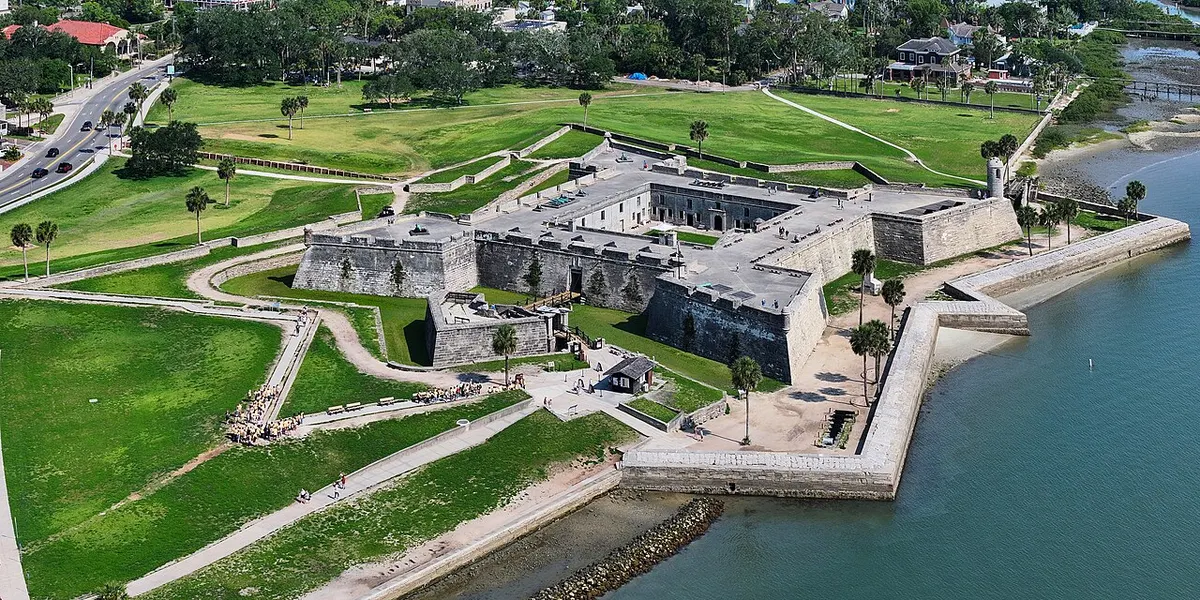
The place she calls the most haunted of all is the Castillo de San Marcos in St. Augustine, Florida, the oldest masonry fort in the continental United States, begun in coquina stone in 1672. Under U.S. control, as Fort Marion, it held Native American prisoners: the Seminole leader Osceola during the Second Seminole War; Southern Plains men sent there from 1875 after the Red River War; and, in 1886 and 1887, about 491 Apaches, most of them women and children. The Plains prisoners were supervised by Lt. Richard Henry Pratt, whose program at the fort led him to found the Carlisle Indian Industrial School in 1879 – a model for the federal boarding schools that followed. (St. Augustine’s better-known ghost stories include the St. Augustine Lighthouse across the bay.)
One of those schools was Concho, near El Reno, Oklahoma, which taught Cheyenne and Arapaho children from 1909 to 1983 on a strict, military-style model; students were punished for speaking their own languages. The Deseret News reports that the Cheyenne and Arapaho Tribes now own the site, and that Quammen is critical of paranormal tours that turn its pain into entertainment, pointing instead to murals by the artist Steven Grounds that honor tribal ancestors and elders.
Not every chapter is about loss. In Cokeville, Wyoming, on May 16, 1986, a former town marshal, David Young, and his wife, Doris, took 154 people hostage at the town’s elementary school – 136 children and 18 adults. A bomb went off; the Youngs died, and every hostage survived. Some of the children later said angels had warned them, and the event is remembered locally as the “Miracle of Cokeville.” Quammen calls it “astonishing.”
What the book does and doesn’t claim
Quammen, who told the Chronicle “I totally believe in ghosts,” does not set out to prove that they exist, and she is open about where the record falls short of the legend. The Deseret News notes that she found little evidence for the familiar Western tale of workers entombed in the concrete of big dams; deaths on those projects were real, she found, but the bodies are mostly outside the foundations, upstream and downstream of the dams. That is the same test we apply on this site: start with the documented history, attribute every ghost report as a claim, and say so plainly when a story isn’t supported by the record.
The sensations visitors describe at haunted places also have ordinary explanations worth knowing – our field report on infrasound, carbon monoxide and the science of feeling haunted looks at the research – and belief itself is common: 39% of Americans told Gallup in 2025 that they believe in ghosts, and 45% told YouGov this September that ghosts exist, as our report on two new surveys found. Quammen’s question is a different one. Whatever people saw or felt, she asks why particular places keep producing ghost stories, and what history those stories carry. Utah Public Radio’s Access Utah, which interviewed her on October 13, framed the book around the publisher’s question: “Why do humans need ghosts?”
Sources
- Deseret News: America’s haunted history: Reckoning with the country’s ghosts (October 20, 2026)
- Bozeman Daily Chronicle: Bozeman author explores America’s haunted history in new book (July 22, 2026)
- Utah Public Radio, Access Utah: ‘This Haunted Land’ with Betsy Gaines Quammen (October 13, 2026)
- Torrey House Press: Betsy Gaines Quammen
- U.S. EPA: Cleanup of historic Uravan uranium mill completed (September 29, 2008)
- Wikipedia: Uravan, Colorado
- National Park Service: Castillo de San Marcos National Monument
- Wikipedia: Castillo de San Marcos
- Wikipedia: Carlisle Indian Industrial School
- Wikipedia: Concho Indian Boarding School
- Wikipedia: Cokeville Elementary School hostage crisis
- Wikipedia: Ernest and Mary Hemingway House