Country file · Europe
Haunted places in Spain
What are the most haunted places in Spain? The best-known are Bélmez Faces and Palacio de Linares.
Spain’s most famous paranormal case unfolded on a kitchen floor. From 1971 faces seemed to appear in the cement of a house in Bélmez de la Moraleda, in Jaén – a sensation that drew crowds for thirty years, and that investigators concluded was a hoax made with paint and chemicals. In Madrid, the gilded Palacio de Linares on the Plaza de Cibeles is said to be haunted by the child of a forbidden marriage, a tale no record supports but which the palace’s long years of abandonment kept alive.
- 2 hauntings
- 10 recorded sightings
Haunted places in Spain
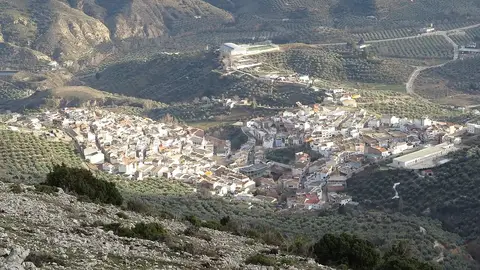
Bélmez Faces
From 1971, faces seemed to appear on a kitchen floor in an Andalusian village – Spain’s most famous paranormal case and, investigators say, a hoax. Hoax / debunked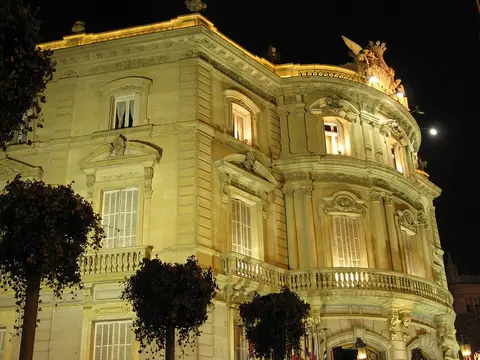
Palacio de Linares
A gilded palace on Madrid’s Plaza de Cibeles, said to be haunted by ‘Raimundita’, child of a forbidden marriage – a tale the records don’t support. Regional legendThe ghost lore of Spain
Spain’s folklore of the dead runs deep, especially in the northwest, where the Santa Compaña – a midnight procession of hooded souls – is part of Galician and Asturian tradition. The Romantic poet Gustavo Adolfo Bécquer set several of his supernatural Leyendas in the lanes and churches of Toledo, and TV programmes such as Cuarto Milenio have made ‘misterio’ a popular genre.
Ghost walks run in Madrid, Toledo and other historic cities, and Galicia’s villages keep their traditions of the Santa Compaña.
Ghost-hunting hotspots
- Galicia
The land of the Santa Compaña, the procession of the dead said to walk village paths at midnight.
- Toledo
The old imperial city where Bécquer set several of his 19th-century tales of the supernatural.
- Madrid’s historic centre
Ghost walks wind through the old Habsburg quarter and past the Palacio de Linares on the Plaza de Cibeles.
Timeline
- 1872The site is bought Palacio de Linares
José de Murga and Raimunda de Osorio buy the plot beside the Paseo de Recoletos from Madrid city council and commission a palace to rival any in the capital.
- 1884The marquises move in Palacio de Linares
The couple take up residence, though decoration continues until 1900. Raimunda dies in October 1901 and José in April 1902; his will declares that the marriage was childless.
- 23 August 1971The first face Bélmez Faces
María Gómez Cámara reports a face forming on her kitchen floor. When it is chiselled out and replaced, the family says a new one appears.
- Easter 1972Crowds descend on the village Bélmez Faces
Hundreds of visitors arrive to see the ‘House of the Faces’, and the case becomes a national sensation in Spain.
- 6 June 1990Luca de Tena’s article Palacio de Linares
Torcuato Luca de Tena publishes an article in ABC on the palace’s history, rejecting much of the incest-and-murder legend then widely repeated.
- 1992Reopened as Casa de América Palacio de Linares
After a major restoration, the palace opens as a cultural centre during Madrid’s year as European Capital of Culture.
- July 1993The forgery hypothesis in print Bélmez Faces
Luis Ruiz-Noguez reviews the chemical analyses in the Journal of the Society for Psychical Research, arguing that paint or an oxidising chemical best explains the images.
- February 2004Death of María Gómez Cámara Bélmez Faces
The woman at the centre of the case dies aged 85. New faces soon reported in another house are exposed by El Mundo as fakes that November.
- May 2007Los Caras de Bélmez Bélmez Faces
Journalists Javier Cavanilles and Francisco Máñez publish a book-length investigation concluding that the faces were a long-running fraud.
- March 2017The marquises return Palacio de Linares
Francisco Pradilla’s 1888 portraits of the couple, absent for about 75 years, are returned to the palace in collaboration with the Prado Museum.
From other news sites
Latest from Spain
No recent paranormal headlines from Spain. See all the latest paranormal news.