Case file · Poltergeist · House or mansion
The Bridgeport Poltergeist
Also known as Goodin family poltergeist
In 1974 a Bridgeport couple and their young daughter drew police, firefighters, clergy and the press to a house of banging noises and moving furniture.
The Bridgeport poltergeist is one of the best-known family cases in Connecticut, partly because so many outsiders were pulled into it. The household was Gerald and Laura Goodin and their adopted daughter Marcia, who lived in a small house in Bridgeport. According to accounts retold by researchers and local storytellers, tapping and pounding noises began around 1971, stopped for a while, then returned. Police, the fire department and city engineers who looked at the house are said to have found no cause. The house is private property, and this entry deliberately gives the town only.
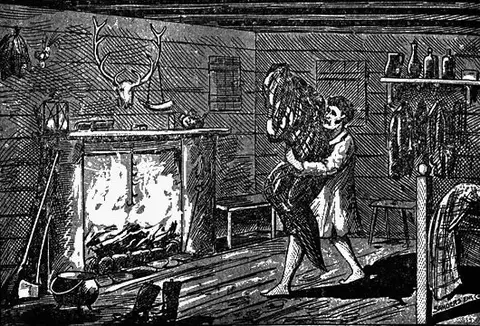
The case reached its peak on 24 November 1974. Reports say furniture toppled and was piled up, a heavy television fell and hurt Mr. Goodin’s foot, a crucifix shook on the wall and a refrigerator moved and struck a police officer. Officers named in tellings of the story include John Holsworth and a patrolman called Tomek, and a deputy fire chief and a local Catholic priest, Rev. Edward Doyle, who blessed the house, are also mentioned. A crowd gathered outside and the press arrived, so that the family’s home life became a local spectacle. A feature in the Bridgeport Post of 2 March 1975 by Herbert F. Geller is cited as a key contemporary account.
Ed and Lorraine Warren, the New England demonologist and medium team, came to the house and treated it as a genuine case. Ed Warren later suggested that eleven-year-old Marcia was the focus of the activity, tying it to a period she spent away from school after being kicked by a bully, and he described the events in terms of demonic influence. Others read the same facts very differently. William J. Hall, a Bridgeport native and professional magician, began as a skeptic and wrote a book-length study after reviewing recorded interviews, newspaper reports and public records; by his own account he concluded the case was not a simple hoax. The Goodins, however, are reported to have said afterwards that Marcia had staged the incidents out of boredom, and Ed Warren claimed that someone in authority had advised the family to say so to bring the crowds to an end.
Because the central witness was a child under intense pressure, and because accounts differ on what was seen and who said what afterwards, the case is best read as a well-documented public episode whose cause remains disputed rather than a settled event. It is remembered in Bridgeport as a night when ordinary officials found themselves unable to explain what they had seen, and as a reminder of how quickly a family’s private trouble can become a news story.
What people report
Banging and tapping noises over several years; on 24 November 1974 toppled chairs, a falling television, a shaking crucifix and a refrigerator said to have moved, reported by the family and by police and fire officials called to the scene.
Where and when
Inside a single-family house in Bridgeport, centred on the kitchen and living areas; activity was said to peak around the household’s young daughter.
Timeline of the haunting
- c. 1971Tapping and pounding begin Bridgeport, Connecticut
The family reported banging noises in the house; officials who inspected it found no ordinary source, according to later accounts.
- Late November 1974The Warrens investigate Bridgeport, Connecticut
Ed and Lorraine Warren visited and described the case as a poltergeist centred on the household’s daughter.
- 24 November 1974Police and fire officials called to the house Bridgeport, Connecticut
Furniture was reported overturned and a heavy television and refrigerator moved while officers and a deputy fire chief were present; crowds and reporters followed.
- 2 March 1975Bridgeport Post feature Bridgeport, Connecticut
Herbert F. Geller’s newspaper feature gave a contemporary account of the events.
What could explain it?
- Classic poltergeist cases often centre on a child or adolescent under stress, and investigators have long suggested the activity is caused by the child, consciously or not.
- The Goodins are reported to have said later that their daughter staged the events, though the Warrens said the family was advised to say so to end the publicity.
- Hall, who is a magician, concluded after reviewing public records and recorded interviews that a simple hoax did not fit all the reports; other readers remain unconvinced.
- Accounts of the heaviest objects moving rest on witness recollection and later retellings rather than film or physical evidence.
Ghost tours, books and screen
The case is covered in William J. Hall’s book on the Bridgeport poltergeist, in Paul Eno’s writing on the Warren cases, in the New England Legends podcast and in Connecticut ghost anthologies. It is often grouped with the Stratford, Connecticut, poltergeist cases.
Places to visit
The city’s local-history library holds newspaper clippings and records about the city’s past; the house itself is private and not open.
Where it’s reported
Sources
First published · Updated