Case file · Poltergeist · House or mansion
The Wizard Clip
Also known as Wizard’s Clip, Livingston haunting, The Clip
In 1790s Jefferson County, a German farmer’s home was said to be plagued by clipping shears after a stranger died unattended by a priest.
Middleway, in West Virginia’s Eastern Panhandle, has carried the nickname “Wizard Clip” for more than two centuries, and its people have been called Clippers. The name comes from a story about the family of Adam Livingston, a German immigrant farmer. The state historical marker near Kearneysville dates the beginning to 1794, when a stranger died at the Livingston farm; other accounts place it closer to 1800. In the usual version, the traveller fell ill during the night and asked for a Catholic priest, but Livingston, or in some tellings his wife, would not send for one. The man died and was buried nearby.
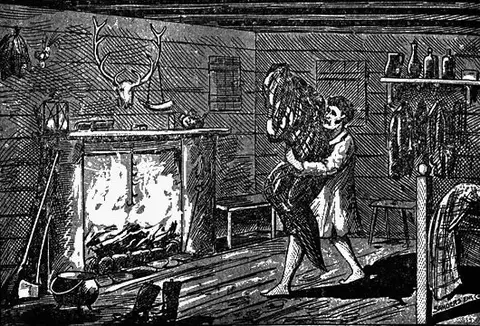
What followed is the heart of the legend. The West Virginia Encyclopedia, drawing on a 1903 local account, lists logs leaping out of the fireplace, a rope across the road that a knife could not cut, ducks beheaded by unseen shears, and clothing and linens cut into crescent shapes. The shears gave the haunting its name. Local clergymen could not help; the Livingstons eventually turned to a Catholic priest, Father Dennis Cahill, and according to church records quoted in a 2025 Shepherdstown Chronicle column, his prayers and masses brought quiet to the house. Livingston deeded land to the Catholic Church in 1802, and the property is now the Diocese of Wheeling-Charleston’s Priest Field Pastoral Center.
Historians read the story as much as a social document as a ghost tale. The Chronicle column points out that Virginia in the late eighteenth century was hostile to Catholics, and that the Church’s interest in acquiring land in the Panhandle is part of the context. It also notes parallels with German folk healing known as braucherei, and Appalachian beliefs in healers and witch masters. Whether the legend is a record of a poltergeist, a folk belief given a physical form, or a story shaped to demonstrate the Church’s spiritual authority is something the sources leave open.
The Wizard Clip is often called West Virginia’s earliest ghost story. Its fullest early printed telling in the sources consulted here is the 1903 local history cited by the state encyclopedia, and in 2019 the William G. Pomeroy Foundation and the West Virginia Humanities Council placed a marker for it. The farm itself is private property, so the marker is the place to read the story.
What people report
Reported rumblings, objects thrown, fires, dead livestock, and above all fabric and leather cut by unseen shears into half-moon shapes, centred on one German-American farm family.
Where and when
The Livingston farm near Middleway in Jefferson County; the land is now a church-owned retreat property and is not open for casual visits.
Timeline of the haunting
- 1794Death of a stranger at the Livingston farm Middleway, West Virginia
The state marker dates the start of the noises and garment clippings to this year; other sources say about 1800.
- 1802Livingston deeds land to the Church Middleway, West Virginia
According to a 2025 column citing church records, the farmer gave land to the Catholic Church after the disturbances ceased.
- 1903Printed in a local history Martinsburg, West Virginia
The legend appeared in The Strange Story of Harpers Ferry, the source cited by the West Virginia Encyclopedia.
- 2019Historical marker erected Kearneysville, West Virginia
The William G. Pomeroy Foundation and the West Virginia Humanities Council marked the story with a roadside sign.
What could explain it?
- The story reflects anti-Catholic prejudice and the Church’s growth on the frontier, and it may have been shaped to show the power of a priest over a haunted household.
- Cut cloth and killed livestock may have had ordinary causes, such as a prankster, a mischievous household member or illness, with tradition adding the supernatural.
- Dates and details vary between 1794 and about 1800, and the earliest record is a later retelling, so the original events cannot be checked.
- Folk beliefs such as braucherei, the Pennsylvania German practice of healing with scripture and charms, and Appalachian ideas about witch masters would have encouraged neighbors to explain misfortune in supernatural terms.
Ghost tours, books and screen
Local newspapers and television specials have retold the story, and the nickname “Clippers” for Middleway’s residents still survives.
Places to visit
A roadside marker on Leetown Road tells the story; the surrounding land is private.
Where it’s reported
Sources
First published · Updated