Case file · Poltergeist · House or mansion
The Surrency Poltergeist
Also known as Surrency haunting, The Surrency ghosts, Allen Surrency house
In the 1870s, furniture moved and objects flew at the home of Allen Surrency in southeast Georgia, drawing crowds and reporters until his death in 1877.
The best-known Georgia haunting of the nineteenth century happened in a small railroad settlement in what is now Appling County, near the Altamaha River swamp. The town of Surrency, incorporated in 1911, was named for the family, and the family’s home belonged to Allen Powell Surrency. The haunting centred on that house in the 1870s. A Milledgeville newspaper, the Union and Recorder, printed a reporter’s eyewitness account from the house on 30 October 1872, so the main events date to that autumn, although some later tellers place them in the late 1870s. The Atlanta Journal-Constitution says they continued until Allen Surrency’s death in 1877.
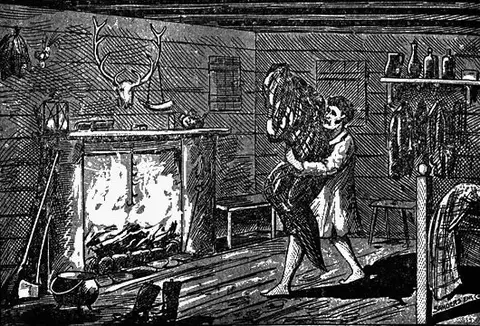
What people reported was the classic poltergeist repertoire: furniture moving without a hand on it, doors flying open, books falling from shelves, shattered glass, clocks running backwards, mirrors breaking and objects thrown at residents. Retellings add hot bricks falling and noises ranging from weeping to sudden laughter. The 1872 reporter, Peter Lindenstruth, named about ten men present when a glass broke, said the house clock was examined and found in perfect order, and estimated that some five hundred visitors had come, many on an extra Sunday train. He rejected the theory that a large magnet was to blame but could offer no other.
The most personal evidence is the family memory kept in the town. Phillip Dukes, a grocery store owner who died in 1985, did not believe in ghosts but said he trusted his grandmother, Mrs. Surrency’s sister, who regularly found her shoes moved into the hallway overnight. A postal carrier, Hershel Tillman, said relatives’ stories of the house had convinced him that something was there. The house burned, with sources giving 1912 or 1925, so nobody can look at it today.
No one has produced a convincing explanation. The case has been told as a possible hoax, a case of suggestion among crowds drawn by the publicity, or something unexplained. Whatever the truth, it was a story about a real household that spent the last years of a man’s life in the glare of newspapers, and the Appling County Heritage Center’s curator told the Atlanta Journal-Constitution in 2016 that few people there still discuss it.
What people report
Furniture and objects moving, doors opening, books falling, glass and mirrors breaking and noises, reported by the household, neighbours, relatives and visiting journalists.
Where and when
The Surrency family home beside the railroad in the settlement of Surrency, Georgia; the house has been destroyed by fire.
Timeline of the haunting
- 1872Disturbances reported Surrency, Georgia
One account dates the main phenomena and the arrival of investigators to this year.
- 30 October 1872Newspaper eyewitness report Milledgeville, Georgia
The Union and Recorder printed a reporter’s account of a night at the Surrency house.
- 1877Allen Surrency dies Surrency, Georgia
The haunting is said to have ended with the death of the home’s owner.
- 1912House burns Surrency, Georgia
Accounts give 1912 or the 1920s for the destruction of the house.
- 2016AJC column on the haunting Atlanta, Georgia
The Atlanta Journal-Constitution answered a reader’s question about the case.
What could explain it?
- Classic poltergeist cases often involve a stressed household , and may involve trickery by someone in the house; the 1872 report names no suspect.
- Crowds, reporters and visitors can encourage embellishment in a case that was retold over a century, so the details may have grown.
- Dates, the year the house burned and the identities of investigators are inconsistent between sources, which limits what can be verified.
Ghost tours, books and screen
The Surrency ghosts feature in Georgia ghost anthologies, in podcasts such as Southern Mysteries, and in a 2016 Atlanta Journal-Constitution column.
Where it’s reported
Sources
First published · Updated